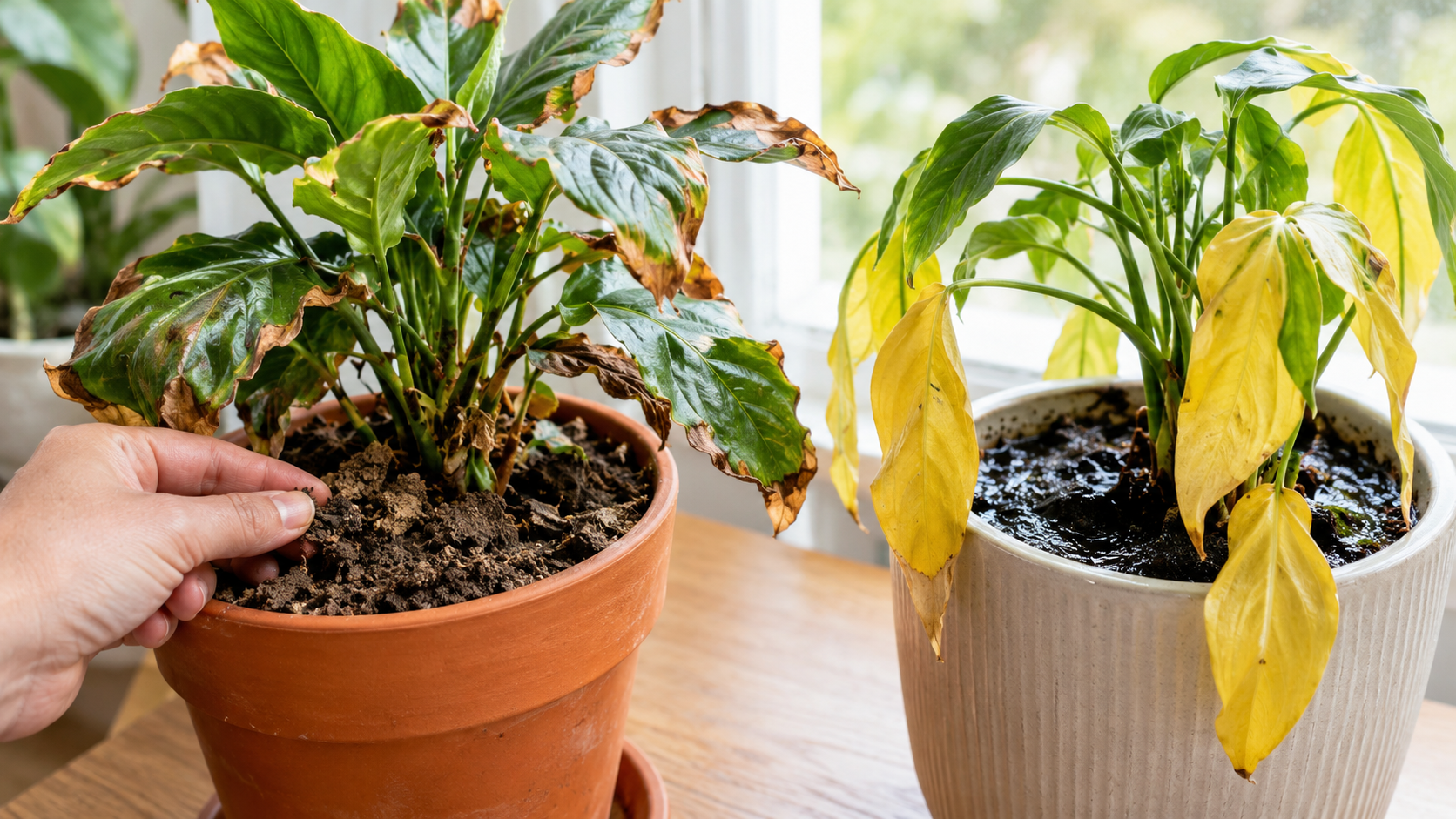
A plant with drooping leaves, yellowing foliage, or brown edges may be asking for water—or suffering because it has received too much. This is one of the most confusing problems in home gardening, especially when the plant looks unhealthy despite regular care.
The challenge is that underwatering and overwatering can produce similar symptoms. Both can cause wilting, leaf drop, and slow growth. The difference often becomes clearer when you examine the soil, check the roots, and consider how frequently the plant has been watered.
Learning to recognize these clues can help you avoid unnecessary watering, prevent further damage, and give your plant a better chance of recovering. Here is how to identify the problem and choose the right solution for your plant.
Why Underwatering and Overwatering Can Look So Similar
Plants need water to maintain their structure, transport nutrients, and carry out essential biological processes. Their roots must also receive enough oxygen to remain healthy.
When a plant receives too little water, its roots cannot absorb enough moisture to replace what the leaves lose through transpiration. The leaves may droop, curl, or become dry and brittle.
Overwatering creates a different problem. When potting soil remains saturated for too long, water fills the air spaces that roots need for oxygen. Damaged roots gradually lose their ability to absorb water effectively, so the plant may wilt even though its soil is wet.
This explains why watering a wilted plant without checking the soil can make the situation worse. If the roots are already struggling because of excess moisture, adding more water may accelerate root damage.
The most reliable starting point is to check the moisture inside the pot before deciding whether to water. Leaf appearance is useful, but it should never be your only diagnostic tool.
Signs Your Plant Is Dying from Underwatering

Underwatering occurs when a plant cannot access enough moisture to meet its needs. It can result from forgetting to water, using a pot that dries out quickly, or following a watering schedule that does not match the plant’s growing conditions.
Look for these common warning signs.
1. The Soil Is Dry Below the Surface
The surface of potting soil can look dry even when the deeper layers still contain moisture. Conversely, the surface may appear slightly damp while the root ball is dry farther down.
Insert a finger approximately 1–2 inches (2.5–5 cm) into the soil, adjusting the depth for the pot size and plant species. If the soil feels dry at the depth appropriate for that plant, underwatering may be responsible.
For larger containers, a clean wooden skewer can help you assess moisture deeper in the pot. If it emerges nearly clean and dry, the soil may need water. If damp soil clings to it, wait if the plant’s watering requirements call for further drying.
2. The Leaves Become Dry, Crispy, or Curled
A thirsty plant may develop leaves that curl, lose firmness, or develop brown, crispy edges. Older leaves may turn yellow or brown before falling.
Unlike the soft, sometimes translucent appearance associated with waterlogged tissue, drought-stressed foliage often feels dry and papery.
However, brown leaf edges can also result from low humidity, excessive fertilizer, heat, or unsuitable water quality. Check the soil and surrounding conditions before assuming that lack of water is the cause.
3. The Pot Feels Unusually Light
A container generally becomes lighter as water evaporates and the plant uses moisture from the growing medium.
If you lift the pot occasionally, you can learn the difference between its freshly watered weight and its weight when dry. This simple habit is particularly useful for small and medium-sized houseplants.
A very light pot combined with dry soil and drooping leaves is strong evidence that the plant needs water.
4. The Soil Has Pulled Away from the Pot
When some potting mixes become extremely dry, they shrink and separate from the container’s edges. Water may then run down the gap instead of soaking into the root ball.
This means that a quick watering may not fully rehydrate the soil, even if water immediately comes out of the drainage holes.
5. Growth Slows Down
A plant experiencing prolonged water shortage may stop producing new leaves, shed foliage, or develop increasingly dry stems and leaf tips.
These changes indicate stress, but they do not identify its cause on their own. Insufficient light, pests, temperature extremes, and root problems can also slow growth.
Signs Your Plant Is Dying from Overwatering

Overwatering is not simply the act of giving a plant a large amount of water once. Many plants tolerate thorough watering when excess water drains away. The bigger problem is watering again before the soil has dried enough for the species, or keeping roots in a poorly drained container.
Watch for these clues.
1. The Soil Stays Wet for Too Long
If the soil remains soggy for several days longer than expected, investigate the pot’s drainage, the potting mix, the plant’s light levels, and the temperature.
Wet soil alone does not prove that the plant is overwatered. Some tropical plants naturally prefer consistently moist conditions. The concern is prolonged saturation, especially when accompanied by yellowing, wilting, or declining roots.
2. Leaves Turn Yellow and Feel Soft
Yellowing foliage is a common symptom of excessive moisture, particularly when older and newer leaves are affected together. Leaves may feel unusually soft, lose their normal firmness, or fall before they dry completely.
If the soil is wet and the plant is yellowing, do not automatically add more water because the leaves are drooping.
3. Stems Become Soft or Dark
A stem base that becomes mushy, blackened, or unusually weak may indicate serious tissue damage, including rot.
Inspect the area close to the soil line without pulling or squeezing the plant aggressively. A soft stem base combined with persistently wet soil is a reason to investigate the roots promptly.
4. The Soil Develops an Unpleasant Smell
Healthy potting soil can have an earthy smell. Persistently waterlogged soil may instead develop a sour or rotten odor as oxygen becomes scarce and microbial activity changes.
An unpleasant smell is not conclusive evidence of a particular disease, but it strengthens the case for checking drainage and root health.
5. Small Flying Insects Appear Around the Pot
Fungus gnats often occur around consistently moist potting mixes. Adult insects may fly around the soil surface, while their larvae develop in the growing medium.
Their presence does not automatically mean that the roots are rotting. However, frequent fungus gnat activity combined with soil that rarely dries suggests that watering habits and drainage deserve attention.
How to Tell Which Problem Your Plant Has
The best diagnosis comes from combining several observations rather than relying on one symptom.
| What you notice | More consistent with underwatering | More consistent with overwatering |
|---|---|---|
| Soil condition | Dry at the appropriate depth | Persistently saturated |
| Pot weight | Unusually light | Remains heavy |
| Leaf texture | Often dry, crisp, or curled | Often soft, yellow, or limp |
| Root appearance | May be dry, shriveled, or damaged | May be dark, soft, or decaying |
| Soil smell | Usually earthy or little noticeable smell | May be sour or unpleasant |
| Soil pulling from pot edges | Common in very dry mixes | Less typical |
These are patterns, not absolute rules. Different species respond differently, and a plant may experience both problems at different times.
Inspect the Roots When Symptoms Are Severe
If the soil is wet but the plant continues to wilt, examining the roots may provide important clues. Remove the plant gently from its container only when necessary, such as when there is persistent waterlogging, a foul smell, or rapidly worsening symptoms.
Healthy roots are generally firm, although their color varies by species. White, cream, or light-colored roots are common in many houseplants. Some healthy roots are naturally tan or darker.
Damaged roots are often brown or black, soft, slimy, and easy to pull apart. A rotten smell may accompany advanced deterioration.
Avoid cutting roots simply because they are dark. Compare their texture and condition, and consider the species before deciding what to remove.
How to Save an Underwatered Plant
If the soil is dry and the plant shows signs of dehydration, the priority is to restore moisture without causing additional stress.
Follow these steps:
- Check the soil thoroughly. Confirm that the root zone is dry, not just the surface.
- Water slowly and evenly. Apply water across the soil surface until it begins to drain from the bottom of the pot.
- Rehydrate extremely dry soil gradually. If water runs straight through, apply it in several small rounds. Alternatively, place the nursery pot in a shallow container of water for a short period, allowing moisture to enter through the drainage holes. Remove it once the soil has rehydrated, and let the excess water drain.
- Empty the saucer. Do not leave the container sitting in standing water after watering.
- Allow time for recovery. Keep the plant in suitable light and temperature conditions, and avoid further watering until its moisture requirements indicate that it is needed.
Some leaves may remain brown or damaged even after the plant recovers. These tissues will not become green again, but healthy stems and new growth can indicate improvement.
How to Save an Overwatered Plant
An overwatered plant needs improved root conditions, not another watering session.
Step 1: Stop watering temporarily
If the soil is saturated, pause watering and allow it to drain and dry to the level appropriate for the species. Remove standing water from saucers and decorative outer pots.
Do not leave a moisture-loving plant completely dry for an extended period simply because overwatering was suspected.
Step 2: Check drainage
Make sure the container has functional drainage holes. If the holes are blocked or the soil has become dense and compacted, water may not escape efficiently.
A pot without drainage can make moisture management much more difficult.
Step 3: Inspect damaged roots when necessary
If the plant has a rotten smell, a mushy stem base, or persistent wilting in saturated soil, gently inspect the root ball.
When root rot is evident, remove clearly dead, soft roots using clean tools. If much of the root system is damaged, recovery may be difficult, and healthy cuttings may be worth preserving if the species can be propagated that way.
Step 4: Repot if the growing medium is failing
If the potting mix is badly degraded, persistently waterlogged, or associated with extensive root damage, repotting may help.
Choose a container appropriate to the remaining root system and use a fresh, well-draining mix suited to the plant. Avoid placing a small root system in an unnecessarily large pot because excess soil can remain wet for too long.
Step 5: Delay fertilizing
Do not try to fix a struggling plant with extra fertilizer. Damaged roots may be unable to absorb nutrients effectively, and concentrated fertilizer can create additional stress.
Resume normal feeding only after the plant shows signs of recovery and is entering an appropriate growth period.
Why Plant Species and Growing Conditions Matter
There is no universal watering schedule that works for every plant.
- Succulents and cacti: Many prefer their growing medium to dry substantially between waterings. Persistently wet soil can be especially damaging.
- Tropical foliage plants: Some prefer evenly moist soil, while others need the upper layer to dry before watering again.
- Orchids: Many are grown in bark-based media that dry differently from ordinary potting soil. Their roots and growing medium require species-specific care.
- Outdoor container plants: Wind, sunlight, container size, and warm weather can make them dry out faster than indoor plants.
- Plants in low-light rooms: Reduced growth and lower water use can mean that the soil stays moist longer than expected.
Temperature, humidity, pot material, soil composition, and seasonal growth also influence how quickly water disappears. Terracotta pots, for example, generally lose moisture faster through their porous walls than glazed or plastic containers.
The safest approach is to understand the needs of each plant and check the growing medium rather than watering every pot on the same day.
Common Watering Mistakes to Avoid
Several habits can make it harder to diagnose and prevent moisture-related problems.
Watering on a fixed schedule without checking the soil: A weekly routine may work during one season but become excessive when temperatures fall or growth slows.
Giving a little water every day: Frequent small amounts may wet only the surface, leaving some roots dry while other parts of the pot remain too wet. Thorough watering followed by appropriate drainage is usually better for many potted plants.
Assuming every yellow leaf means overwatering: Yellowing can also result from natural aging, insufficient light, nutrient problems, pests, and other environmental stresses.
Moving a stressed plant into intense sunlight: A dehydrated or damaged plant may suffer additional stress from sudden heat and strong direct sunlight. Maintain appropriate light conditions instead.
Changing several things at once: Repeated watering, repotting, pruning, and fertilizing can make it difficult to understand how the plant is responding. Address the most likely problem first, unless severe root damage requires immediate intervention.
How to Prevent the Problem from Returning
A simple observation routine can make plant care more consistent without requiring expensive equipment.
- Check the soil moisture before watering.
- Learn the preferred moisture level of each species.
- Use pots with adequate drainage.
- Empty saucers and cachepots after watering.
- Monitor plants more frequently during hot weather and active growth.
- Reduce watering frequency when growth slows, while still meeting each plant’s needs.
- Keep notes about watering dates and how quickly each pot dries.
- Watch for changes in leaf texture, color, and growth.
A moisture meter can be useful in some situations, but readings depend on the device and growing medium. Use it alongside direct soil checks and knowledge of the plant rather than treating a single reading as definitive.
The Best Way to Help a Struggling Plant Recover
When a plant begins to wilt, resist the urge to water immediately. First, check the soil, assess the pot’s weight, and look for other clues that explain what is happening.
Dry soil combined with brittle foliage often points toward underwatering. Persistently wet soil, yellowing leaves, and soft or damaged roots suggest that excess moisture may be the problem.
Neither pattern is conclusive on its own, so consider the plant’s species and growing conditions before taking action. Once you have addressed the likely cause, give the plant time to respond and avoid making repeated changes without checking its progress.
The most important principle is simple: water according to the plant’s needs, not just its appearance or the calendar. With careful observation, you can often identify moisture problems earlier and give your plants a better chance of recovering.