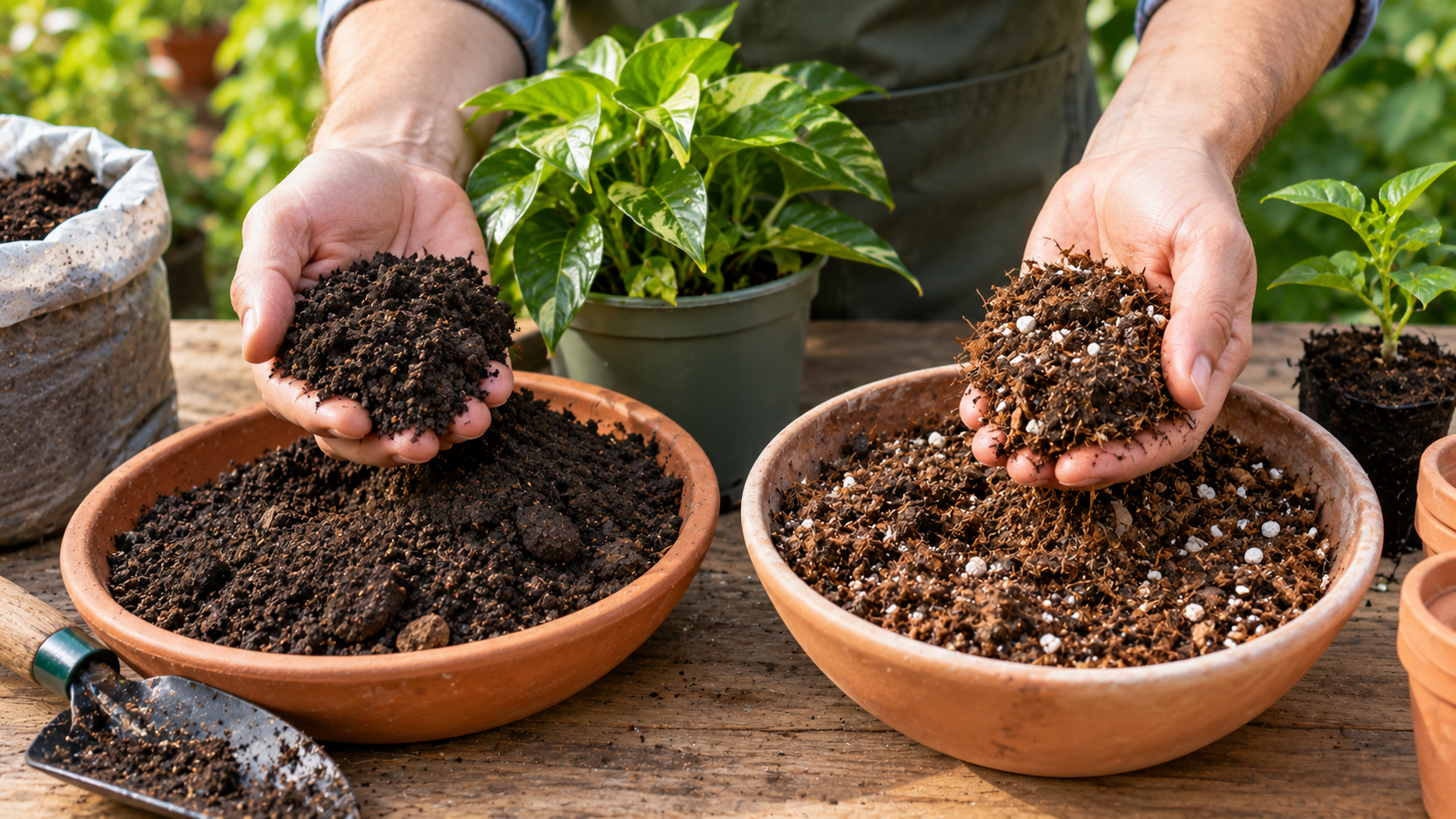
Although the products may look alike in a bag, their physical properties make them behave differently once watered and planted.
| Feature | Garden soil | Potting mix |
|---|---|---|
| Main purpose | In-ground planting and improving garden beds | Growing plants in pots and containers |
| Weight | Usually heavier | Usually lighter |
| Drainage in a container | May be slow or uneven | Formulated to balance drainage and moisture retention |
| Aeration in a pot | Can compact and reduce air spaces | Usually maintains more air spaces |
| Nutrient content | Depends on the original soil and amendments | Depends on ingredients and any added fertilizer |
| Weed seeds and pests | May be present, especially in untreated soil | Commercial mixes are often produced to reduce these risks |
| Best starting point | Garden beds and suitable outdoor planting areas | Houseplants, balcony gardens, and container vegetables |
These are general differences, not guarantees about every bag. Product labels and ingredient lists matter because terms such as “garden mix,” “planting soil,” and “potting soil” are not always used consistently.
Why Garden Soil Often Performs Poorly in Pots
A garden bed and a flowerpot create different growing conditions. In the ground, water can move through a larger soil profile, and roots can spread beyond the immediate planting area. A container restricts both the volume of soil and the space available for roots.
When ordinary garden soil is placed in a pot, its structure may change. Handling and watering can collapse some of the larger air spaces between particles. The result may be a dense medium that holds too much water around the roots.
Signs that the growing medium is too dense
Look for several clues rather than relying on one symptom:
- Water remains on the surface or drains unusually slowly.
- The pot stays heavy and wet for an extended period.
- The soil becomes hard or compacted as it dries.
- The plant develops yellowing leaves or weak growth despite apparently adequate watering.
- The roots look brown and soft rather than firm and healthy, although root color varies by species.
These symptoms do not automatically mean the soil is responsible. A pot without drainage holes, frequent watering, insufficient light, or a damaged root system can cause similar problems. Check the container and watering routine before deciding to replace the growing medium.
Which Growing Medium Should You Use for Each Situation?
For outdoor garden beds
Use the existing garden soil as your starting point, then improve it according to its actual condition. Adding suitable organic matter, such as mature compost, can improve soil structure and contribute nutrients. The amount needed depends on the soil, plants, and purpose of the bed.
Avoid assuming that every garden needs large quantities of sand, compost, or fertilizer. For example, adding a small amount of sand to heavy clay soil may not improve its structure and can produce an undesirable texture. If drainage is consistently poor, investigate the site and soil conditions before adding amendments.
For houseplants
A quality potting mix is usually the better starting point for most common houseplants. Choose a mix that suits the plant’s water needs and the growing conditions inside your home.
Plants that prefer evenly moist soil may benefit from a mix with good moisture retention. Plants that are sensitive to prolonged wetness may need a coarser, more aerated medium. A mix that works for a peace lily may not be ideal for a cactus or a succulent.
For vegetables and herbs in containers
Choose a potting mix labeled for container vegetables or general container gardening. Vegetables such as tomatoes need enough growing volume for their roots, while shallow-rooted herbs and leafy greens may grow well in appropriately sized smaller containers.
Make sure the container has unobstructed drainage holes. A suitable mix cannot compensate for a pot that traps excess water.
For seed starting
Seeds and young seedlings need consistent moisture, oxygen, and a fine enough texture for delicate roots to establish. A seed-starting mix is often a convenient choice because it is designed for germination and early growth.
Avoid filling seed trays with heavy garden soil. It may compact in small cells, drain poorly, and introduce weed seeds or organisms that affect seedlings.
How to Choose a Good Potting Mix
The most expensive bag is not automatically the best, and a dark color alone does not indicate quality. Read the label and look for a product designed for your type of planting.
Use these criteria when comparing products:
- Check the intended use. Choose a container mix for pots, houseplants, or vegetables rather than a product intended mainly for in-ground beds.
- Read the ingredient list. Coir, peat moss, composted bark, perlite, and vermiculite can serve different purposes. Their proportions influence how quickly the mix drains and how much water it retains.
- Consider fertilizer content. Some mixes contain starter nutrients or slow-release fertilizer, while others contain little fertilizer. Follow the label before adding more.
- Look for a loose, workable texture. A mix that is extremely dense, heavily clumped, or full of very fine material may not provide the air space needed by container roots.
- Match the mix to your climate and routine. A small pot in a hot, windy balcony may dry quickly, while a large indoor pot in low light may remain wet for much longer.
A quality mix should retain enough water to support the plant while allowing excess water to drain. Neither a medium that dries almost immediately nor one that stays saturated for days is ideal for every plant.
Can You Mix Garden Soil With Potting Mix?
Yes, but the best approach depends on the container, the plants, and the materials involved. Adding garden soil to a standard potting mix can make the final blend heavier and denser, potentially reducing aeration. For most ordinary houseplants and small containers, using a suitable potting mix without garden soil is the simpler option.
In very large planters or specialized growing systems, some gardeners incorporate mineral soil or other amendments. However, there is no universal ratio that works for every soil and plant. The texture of the original soil, the particle size of the other ingredients, and the container’s drainage all affect the result.
If you want to prepare a homemade potting mix, start with a recipe from a reliable horticultural extension service that suits your plants. Measure ingredients by volume, mix them thoroughly, and avoid adding garden soil collected from an area with unknown contamination, persistent weed problems, or a history of plant disease.
Do not assume that adding more sand, compost, or fertilizer automatically improves a mix. Each ingredient changes the balance, and too much of one material can create new problems.
Step-by-Step: Prepare a Pot Before Planting
Once you have chosen an appropriate growing medium, prepare the container carefully.
- Inspect the pot. Confirm that it has drainage holes and that water can escape freely. If you reuse a container, remove old plant debris and clean it before planting.
- Prepare the mix. If the potting mix is extremely dry, moisten it gradually before use. Some peat-based products can be difficult to rewet when completely dry.
- Cover only large drainage openings if necessary. A piece of permeable mesh can help prevent the mix from escaping without blocking water flow.
- Avoid a gravel layer at the bottom. Gravel does not reliably improve drainage inside a pot and reduces the space available for roots. Use a suitable growing medium throughout the container.
- Fill loosely. Add the mix without pressing it down hard. Leave a little space below the rim so you can water without spilling material.
- Position the plant correctly. Set the root ball at an appropriate depth for the species. Cover the roots without burying the stem or crown more deeply than recommended.
- Water gently and observe. Water until the mix is evenly moist and excess water exits through the drainage holes. Empty any saucer that holds standing water when appropriate for the plant.
After planting, monitor moisture before watering again. Do not follow a rigid daily schedule without considering the plant, pot size, light, temperature, and humidity.
Common Mistakes to Avoid
Choosing by price or color alone
A cheap, heavy bag may be intended for filling outdoor beds rather than growing plants in containers. Compare the stated use and ingredients instead of relying on appearance or price.
Using the same mix for every plant
A moisture-loving tropical plant and a drought-tolerant succulent do not have identical needs. A general-purpose potting mix can be a useful starting point, but some plants benefit from a more specialized medium.
Adding fertilizer before checking the label
Some commercial products already contain nutrients. Extra fertilizer may be unnecessary at first and can damage roots if applied too heavily. Check the packaging and follow the product instructions.
Treating drainage as a watering problem alone
If a pot has blocked drainage holes or the mix has compacted, reducing watering may not solve the underlying issue. Check the container, the growing medium, and the plant’s condition together.
Reusing old mix without inspection
Old potting mix can break down, compact, accumulate fertilizer salts, or contain pests and disease organisms. Whether it can be reused depends on its condition and the health of the previous plant. Avoid reusing mix from plants that suffered unexplained root disease or serious pest problems.
Frequently Asked Questions
Is potting mix the same as potting soil?
Not necessarily. The terms are often used interchangeably on packaging, but many potting mixes contain no natural mineral soil. They are blends of materials designed to support roots in containers. Check the ingredients rather than relying on the product name.
Can I use garden soil for indoor plants?
It is generally not recommended as the sole growing medium for ordinary houseplants. Garden soil can become compacted in a pot, restricting air movement and slowing drainage. A suitable potting mix is usually a more reliable choice.
Does potting mix contain nutrients?
Some products include fertilizer or compost, while others provide little nutrition. Check the label for the ingredients and the expected feeding period. Plants may need additional nutrients as they grow, but the timing and amount depend on the plant and product.
When should I replace potting mix?
Consider repotting when the mix has broken down, drains poorly, becomes difficult to rewet, or no longer supports healthy root growth. Repotting may also be appropriate when the plant has outgrown its container. Not every plant needs fresh mix on a fixed annual schedule.
Let the Plant’s Growing Environment Guide Your Choice
The simplest rule is to match the growing medium to the place where the plant will live. Garden soil is generally intended for in-ground planting, while potting mix is formulated to balance air, moisture, and root space in containers.
Before planting, check the product label, the pot’s drainage, and the plant’s needs. Afterward, watch how quickly the mix dries and how the plant responds. These observations will help you decide whether your watering routine or growing medium needs adjustment.