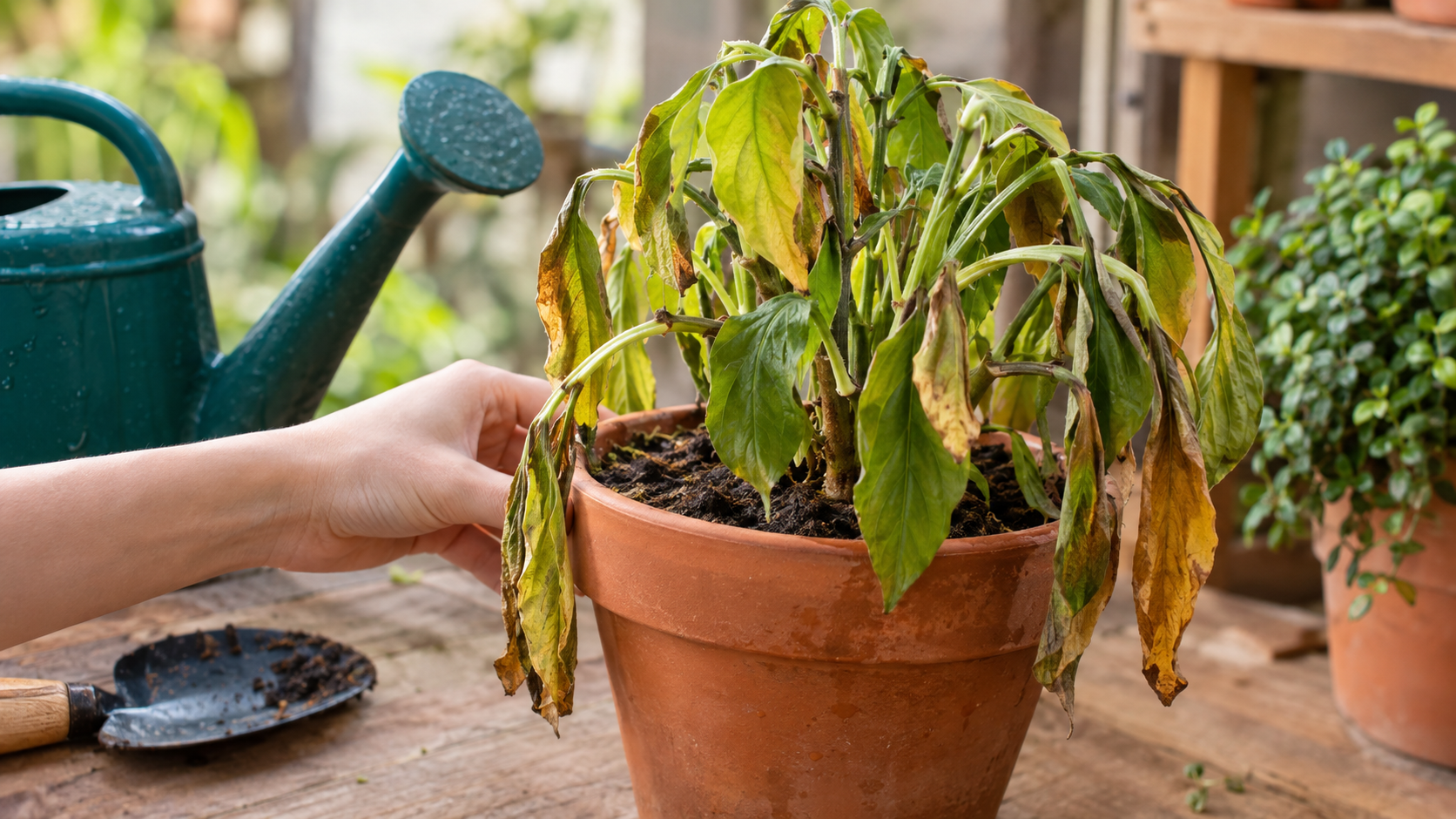
You water your houseplant, expecting its leaves to become firm and upright again, but hours later, it still looks weak and droopy. Some leaves may be turning yellow, the stems may be bending, and the soil may feel damp. It is easy to assume the plant needs even more water, but that decision can sometimes make the problem worse.
One of the most common explanations is that the roots can no longer absorb and transport enough water to the leaves. This may happen because the soil is too dry, the roots have been damaged by excess moisture, or the growing conditions are preventing the plant from recovering.
The good news is that wilting does not always mean a plant is beyond saving. By examining the soil, roots, drainage, and leaves together, you can narrow down the likely cause and choose a more appropriate solution.
Why Does a Plant Wilt Even When the Soil Is Wet?
Roots perform several essential functions. They absorb water and dissolved nutrients, anchor the plant, and exchange gases with the surrounding soil. For most common houseplants, healthy roots need both moisture and oxygen.
When the potting mix remains saturated for too long, water fills the spaces that would normally contain air. Roots may become oxygen-starved, lose their ability to function properly, and eventually die. Damaged roots cannot supply enough water to the foliage, even when plenty of water surrounds them.
This creates a confusing situation: the plant can show symptoms of drought while sitting in wet soil. Adding more water does not solve the underlying problem and may accelerate root deterioration.
However, wet soil is not the only possible explanation. A severely dried-out root ball, compacted potting mix, restricted roots, excessive heat, or a sudden environmental change can also cause wilting.
5 Root-Related Causes of Persistent Wilting
1. Root rot caused by excess moisture
Root rot is one of the first problems to investigate when a plant remains wilted despite frequent watering. It can involve several soilborne pathogens, including fungi and fungus-like organisms, particularly when the growing medium stays wet and drainage is poor.
Typical warning signs include:
- Yellowing leaves, especially lower or older leaves.
- Brown or black roots that feel soft or mushy.
- An unpleasant smell coming from the soil or root system.
- Slow growth, leaf drop, or a collapsing stem base.
- Soil that remains wet for an unusually long time.
Healthy roots are generally firm, although their natural color varies by plant species. Diseased roots often become dark and soft, and their outer tissue may separate easily.
These signs strongly suggest root damage, but appearance alone cannot identify the exact pathogen. For practical home care, the immediate priority is to correct excessive moisture and remove severely damaged tissue when appropriate.
2. A root ball that is too dry to absorb water properly
A plant may also wilt because its root ball has dried out excessively. When some potting mixes become very dry, they can shrink away from the sides of the container or become difficult to rewet.
Water may then run down the gap between the soil and the pot, escaping through the drainage holes without thoroughly moistening the roots.
In this situation, the surface can look wet immediately after watering while the center of the root ball remains dry.
Look for these clues:
- The pot feels unusually light.
- The soil is dry several centimeters below the surface.
- Water drains away almost immediately.
- The potting mix has pulled away from the container walls.
If the mix is genuinely dry, water it slowly in several passes, allowing time for absorption. Check that moisture reaches the root zone rather than simply running around it.
3. Compacted or poorly draining potting mix
Potting mix changes over time. Organic materials decompose, fine particles accumulate, and the medium can become denser than it was when the plant was first potted.
A compacted mix may hold excessive water, drain slowly, and provide too little air around the roots. In other cases, water may move unevenly through the container, leaving some areas saturated and others dry.
This problem is especially likely when a pot has no drainage holes, the soil is heavy garden soil, or the container sits in a saucer filled with standing water.
A suitable potting mix depends on the species. Many tropical houseplants grow well in a moisture-retentive but airy medium, while cacti and many succulents require substantially faster drainage.
4. Roots crowded inside the pot
A plant that has outgrown its container may struggle to obtain enough water between waterings. Its root system occupies most of the pot, leaving little growing medium to store moisture.
Possible signs include:
- Roots emerging from drainage holes.
- A dense mass of roots circling the inside of the pot.
- Water passing through quickly.
- The plant wilting again soon after proper watering.
- Growth slowing despite otherwise suitable conditions.
Crowded roots do not automatically mean a plant needs repotting. Some species tolerate restricted roots well. Consider the overall condition of the root system, how quickly the pot dries, and whether growth has declined.
If the roots are healthy but severely crowded, moving the plant into a container only modestly larger than the existing root ball may help.
5. Root damage from fertilizer or accumulated salts
Excess fertilizer can injure roots, and soluble mineral salts can build up in potting mix over time. Damaged roots may struggle to absorb water normally, causing leaf edges to brown, growth to slow, or the whole plant to wilt.
A white crust on the soil surface or around the rim of a pot can indicate mineral accumulation, although it does not prove that salts are the cause.
If the problem began soon after fertilizing, stop additional applications while you assess the plant. Do not attempt to correct the situation by adding more fertilizer. Depending on the severity of the damage and the drainage conditions, replacing the old mix may be safer than flushing the pot with more water.
How to Check Whether the Roots Are the Problem
Before repotting or pruning anything, examine the plant systematically. The goal is to distinguish a dry root system from one damaged by excess moisture.
Step 1: Check the moisture deeper in the pot
Do not rely on the soil surface alone. Insert a clean wooden stick several centimeters into the potting mix, avoiding the main stem and visible roots.
- Dry soil and a light pot: underwatering or a poorly rehydrated root ball may be responsible.
- Wet soil and a heavy pot: excess moisture or poor drainage is more likely.
- Wet soil with yellowing leaves: investigate the drainage system and consider inspecting the roots.
The appropriate moisture level varies by species. A succulent generally needs a more substantial drying period than a moisture-loving tropical plant.
Step 2: Inspect the drainage holes
Check whether the container has open drainage holes. If it sits inside a decorative outer pot, remove it and look for trapped water.
Empty the saucer after watering. A pot should not remain immersed in drainage water because this can keep the root zone saturated.
Step 3: Examine the roots if necessary
If the plant continues to deteriorate and the soil remains wet, gently slide the root ball out of the container.
Healthy roots are usually firm and intact. Depending on the species, they may be white, cream, tan, or naturally darker.
Damaged roots may be brown or black, soft, slimy, or unpleasant-smelling. Some plants naturally have darker roots, so firmness and tissue condition matter more than color alone.
If the root system appears healthy, avoid unnecessary pruning or repotting. Investigate watering technique, light, temperature, and other environmental factors instead.
How to Treat a Plant With Damaged Roots
If your inspection suggests root rot or serious root damage, focus on removing the conditions that caused it rather than trying to revive the plant with additional water.
Materials you may need
- A clean container with drainage holes.
- Fresh potting mix suited to the plant species.
- Clean pruning scissors or shears.
- Gloves, if appropriate.
- A clean surface for examining the root ball.
A practical recovery procedure
- Remove the plant carefully. Support the base of the plant and loosen the root ball without pulling forcefully on the stems.
- Inspect the root system. Identify roots that are clearly mushy, decomposing, or detached from their healthy tissue.
- Trim severely damaged roots. Use clean, sharp tools to remove rotten portions while preserving firm, healthy roots. Avoid cutting healthy tissue unnecessarily.
- Choose an appropriate container. Use a pot with drainage holes that fits the remaining root system. An excessively large pot can retain more moisture than the plant can use.
- Replace the damaged growing medium. Use fresh, appropriate potting mix rather than reusing soil from a plant with suspected root rot.
- Water according to the plant’s needs. Do not automatically soak the plant or leave the new mix completely dry. Follow the moisture requirements of the species and allow excess water to drain freely.
If most of the roots have deteriorated, recovery may be difficult. Some plants can be propagated from healthy stems or leaves, depending on the species. Severely diseased plants may be better discarded to reduce the risk of spreading pathogens.
Why You Should Not Keep Watering a Wilting Plant
The most common mistake is treating every drooping leaf as proof that the plant needs water.
Imagine two plants with similar symptoms. The first has dry soil because its root ball has been neglected. The second has saturated soil and roots damaged by prolonged moisture.
The first may improve after thorough watering. The second may deteriorate if watered again.
Other common mistakes include:
- Watering on a fixed schedule: seasonal changes in light, temperature, and growth affect how quickly soil dries.
- Adding gravel to the bottom of a pot: a gravel layer does not reliably improve drainage through the growing medium and can interfere with water movement.
- Fertilizing a stressed plant: extra fertilizer may increase root stress rather than restore damaged roots.
- Repotting without checking the cause: disturbing healthy roots can add unnecessary stress.
- Moving the plant into intense sunlight: a weakened plant may suffer additional stress from heat and excessive light.
The best approach is to identify the moisture condition first, then make one or two targeted changes.
How to Prevent Root Problems in Different Types of Plants
Not all plants should be treated the same way.
Tropical foliage plants
Plants such as pothos and many philodendrons generally benefit from a growing medium that retains some moisture while allowing excess water to drain. Let the upper portion of the mix dry to the extent appropriate for the species before watering again.
Succulents and cacti
These plants generally need a more freely draining mix and longer intervals between waterings. A consistently damp root zone can be particularly damaging. Check the entire potting mix rather than watering simply because the leaves look slightly different.
Flowering plants and herbs
Their water requirements depend on the species, pot size, stage of growth, and environmental conditions. Plants growing rapidly in warm, bright locations may use water faster than those in cool, shaded areas.
For all these groups, use a container with functional drainage and avoid leaving standing water beneath the pot.
Frequently Asked Questions
Can a plant recover from root rot?
Yes, some plants recover if enough healthy roots and viable stem tissue remain. Success depends on the severity of the damage, the plant species, and whether the underlying moisture problem is corrected. Extensive root loss reduces the likelihood of recovery.
Should I remove all the soil from the roots?
Not necessarily. If the roots are healthy, there is usually no reason to strip away all the growing medium. When root rot is suspected, remove enough of the affected medium to inspect and manage the damaged roots without causing unnecessary injury.
How long does it take for a wilted plant to recover?
There is no universal recovery time. A mildly dehydrated plant may regain firmness relatively quickly after appropriate watering, while a plant with damaged roots may take considerably longer to produce visible improvement. Existing yellow or brown leaves may not return to their former condition.
Should I cut off wilted leaves?
Remove leaves that are dead, extensively decayed, or clearly beyond recovery. Avoid removing every drooping leaf simply because it looks unhealthy. Green foliage can still support the plant while new roots develop.
Is yellowing always a sign of overwatering?
No. Yellow leaves can result from underwatering, inadequate light, temperature stress, nutrient problems, pests, natural aging, and root disease. Consider the overall pattern of symptoms and the condition of the growing medium before deciding what to change.
Give the Roots the Right Conditions to Recover
When a plant remains wilted after watering, the next step should not automatically be another watering. Check the moisture deeper in the pot, make sure excess water can escape, and inspect the roots if the symptoms persist or worsen.
The most important principle is to match the treatment to the actual problem. Dry roots need access to water; damaged roots need suitable moisture, oxygen, and time to recover. With careful observation and gradual adjustments, you can make a more informed decision about how to care for your plant and reduce the risk of the same problem returning.