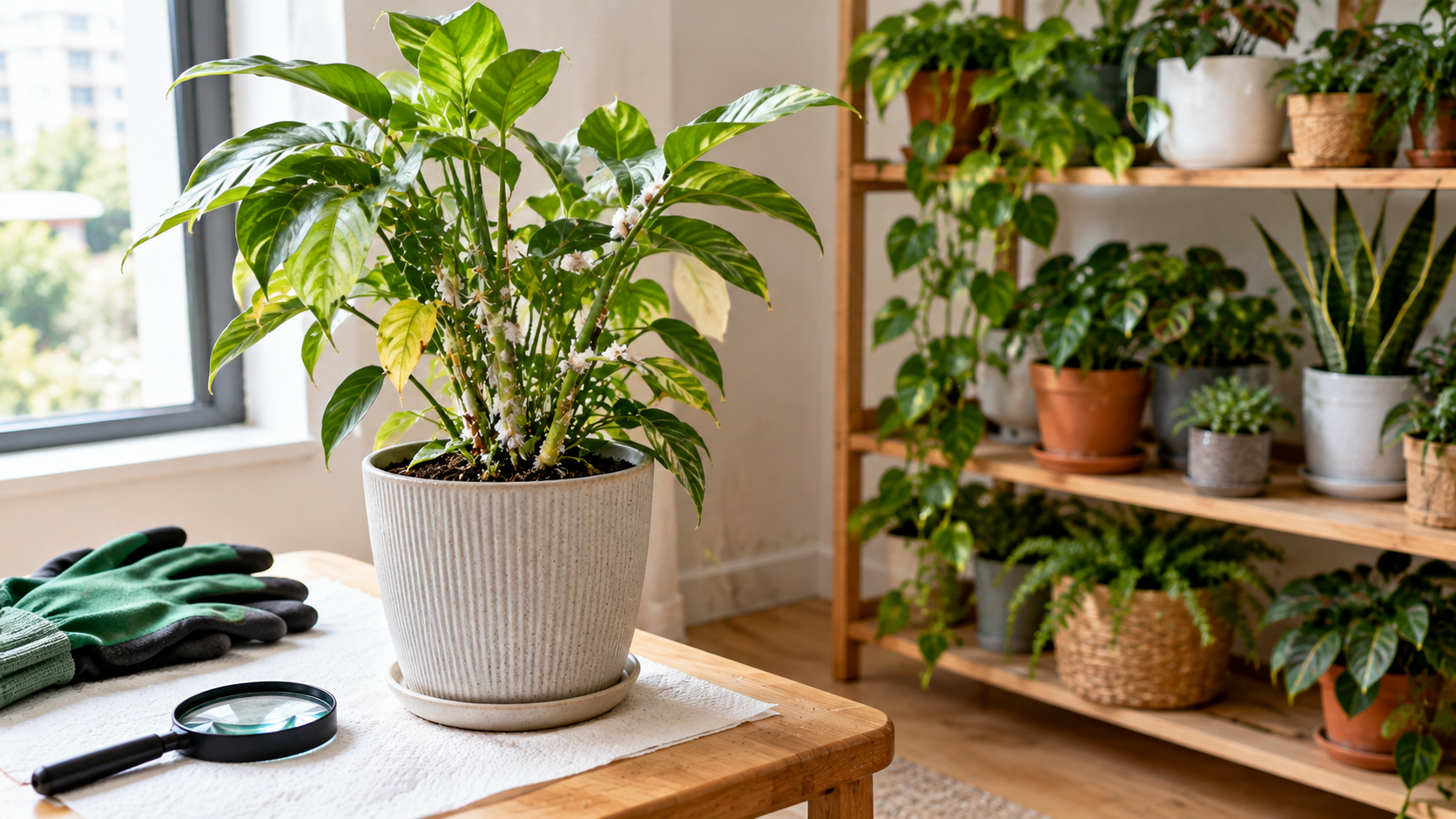
Finding tiny insects, sticky leaves, fine webbing, or unusual spots on a houseplant can be worrying when you have several plants growing close together. Some pests spread to nearby plants, while certain diseases can move through contaminated tools, plant debris, or water. Acting quickly can reduce the risk, but moving one pot to another corner of the same shelf may not provide enough separation.
The safest approach is to isolate the affected plant, inspect the plants around it, and identify the likely problem before choosing a treatment. Good quarantine practices protect healthy plants while giving you time to monitor the infestation and decide whether the plant can be treated successfully.
Why Isolating an Infested Plant Matters
Many common houseplant pests can move between plants or spread when people handle them. Mealybugs, aphids, whiteflies, thrips, and spider mites can be difficult to detect early because they may hide under leaves, around stem joints, or in other sheltered areas. Fungus gnat larvae, by contrast, develop in moist growing media, so the problem may be concentrated in the soil rather than on the foliage.
Plant diseases require a slightly different approach. Some spread through infected plant material, contaminated tools, or splashing water, while others depend on particular environmental conditions. Not every discolored leaf indicates a contagious disease, so avoid assuming that every symptom means the whole collection is infected.
The University of Minnesota Extension recommends isolating plants when insect pests are detected and inspecting plants regularly. Early action is generally easier than managing a widespread infestation.
1. Recognize the Warning Signs Before Moving the Plant
Before treating a plant, take a few minutes to examine it carefully. Accurate identification helps you choose a suitable response and avoid unnecessary chemical applications.
Signs that may indicate an infestation
Look for the following clues:
- White, cotton-like clusters: These may indicate mealybugs, especially around leaf joints, stems, and protected crevices.
- Fine webbing and tiny moving specks: These may indicate spider mites, particularly when leaves also show pale stippling.
- Sticky residue: Aphids, mealybugs, and some scale insects produce honeydew that can accumulate on leaves, pots, or nearby surfaces.
- Small insects that fly when disturbed: These may be whiteflies or another flying insect; identify them before selecting a treatment.
- Silvery or scraped-looking leaf surfaces: Thrips can cause this type of damage, sometimes accompanied by tiny dark specks.
- Small flies emerging from the soil: Fungus gnats are often associated with persistently moist potting mix.
These signs are clues, not definitive diagnoses. A magnifying glass can help you distinguish insects from dust, mineral deposits, or harmless debris. Inspect both leaf surfaces, new growth, stems, the pot rim, drainage holes, and the soil surface.
Check whether the problem is spreading
Inspect nearby plants, especially those that touch the affected plant or share a shelf. Pay particular attention to plants with similar symptoms or species that are known to be vulnerable to the suspected pest.
Do not automatically treat every plant in the room. Instead, separate confirmed infestations from plants that merely need closer observation. This distinction helps you avoid unnecessary treatments and keeps the response manageable.
2. Move the Plant to a Separate Quarantine Area
Once you suspect an infestation, move the affected plant away from the collection as soon as practical. The goal is to reduce contact with other plants and make inspection and treatment easier.
Where should you put it?
Choose a location that is genuinely separate from your other plants. A different room is ideal when available. If that is not possible, use the greatest practical distance and avoid placing the plant beside shared shelves, curtains, or foliage that can touch it.
Keep the plant in conditions suitable for its species. Isolation should not expose a tropical plant to cold drafts, leave a light-loving plant in deep darkness, or place a humidity-sensitive plant in an unsuitable environment.
A few precautions help:
- Keep the plant away from shared watering trays and decorative containers.
- Do not let leaves or stems touch plants outside the quarantine area.
- Avoid moving the plant repeatedly between locations.
- Keep fallen leaves and plant debris contained until they can be discarded.
- If the infestation involves flying insects, consider a suitable sticky monitoring trap near the isolated plant.
Sticky traps help detect certain flying pests, but they do not control every life stage or replace inspection and treatment.
UMN Extension
+1
What if you have no spare room?
Use a separate, easy-to-clean surface as far from the collection as your home allows. A bathroom, laundry area, or bright corner may work if the plant’s light, temperature, and humidity needs can still be met. Avoid putting a plant in a sealed bag for extended periods; trapped humidity and poor airflow can encourage other problems.
If the plant is heavily infested and cannot be separated adequately, assess whether treatment is worthwhile. For a severely damaged plant with a pest that is difficult to control, safe disposal may be the most practical option.
3. Prevent the Infestation from Spreading During Handling
Moving an infested plant can spread pests if insects fall, crawl, or transfer to hands, tools, and surfaces. Establish a simple routine before you begin treatment.
Prepare the area
Gather only what you need:
- Disposable paper towels or a washable cloth.
- A magnifying glass, if available.
- Clean pruning scissors, when pruning is appropriate.
- A container or bag for infested plant debris.
- Gloves if the plant has irritating sap, spines, or substances that may bother your skin.
- A suitable treatment product, if identification shows one is needed.
Work on a surface that can be cleaned afterward. Avoid placing removed leaves, soil, or tools on the same table used for healthy plants.
Clean tools and surfaces
After handling the affected plant, remove plant debris from tools and clean them before using them elsewhere. Follow an appropriate disinfection method for the tool material, and let it dry before the next use. Clean the surface around the pot, including the saucer and any area where leaves or soil may have fallen.
Wash your hands after handling the plant, even if you wore gloves. If you use cloths or reusable gloves, clean them before they return to general plant-care use.
Do not reuse contaminated potting mix, and do not move the plant’s runoff water to other pots. These measures are particularly important when the suspected problem may involve soil-dwelling pests or plant disease.
4. Treat the Plant According to the Pest You Find
Isolation limits exposure; it does not eliminate an infestation by itself. The right treatment depends on the organism, how widespread it is, and the plant’s sensitivity.
For mealybugs, aphids, and visible insects
For a small infestation, physically removing the pests may be a reasonable first step. Use a damp disposable towel or tweezers where suitable, and inspect hidden joints and the undersides of leaves. Change towels frequently so you do not transfer insects from one part of the plant to another.
A gentle rinse can help remove some pests from plants that tolerate water. Protect the potting mix if excessive wetting would be harmful, and allow the plant to dry appropriately afterward. Plants with delicate, fuzzy leaves may be damaged by wiping or strong water pressure, so choose a gentler method.
For larger infestations, consider a product specifically labeled for the identified pest and for use on indoor ornamental plants. Insecticidal soaps and horticultural oils can be useful in some situations, but they must contact the target pest and may require repeated applications. Always follow the label, including directions for plant sensitivity, ventilation, protective equipment, and repeat treatment. Test on a small area first when the label permits and the plant is known to be sensitive.
For spider mites and thrips
These pests can be difficult to control because they are small and may hide in protected areas. Inspect leaf undersides, young growth, and crevices closely. Remove severely affected leaves only when doing so will not unduly weaken the plant, and dispose of the debris in a closed bag.
Avoid assuming that a single spray will solve the problem. Eggs or hidden individuals may survive, so monitoring and treatment according to the product label are important. If symptoms continue despite repeated, correctly applied measures, seek help identifying the pest before switching products.
For fungus gnats
Adult fungus gnats are often a sign that the potting mix remains moist for long periods. Allow the mix to dry to the level appropriate for that plant between waterings, without dehydrating species that require more consistent moisture. Yellow sticky traps can help monitor adult flies, but they do not address larvae in the soil.
If the problem persists, review drainage, watering frequency, and the condition of the potting mix. Soil-directed treatments should be used only when labeled for the intended indoor use and target pest.
5. How Long Should You Keep a Plant in Isolation?
For many houseplants, a quarantine period of about three weeks is a useful starting point, but a plant with a confirmed infestation may need to remain isolated longer. Some pests have life stages that are difficult to see, and symptoms may take time to appear.
Penn State Extension recommends isolating new plants and plants returning indoors, while the University of Minnesota Extension advises monitoring plants regularly and separating those with detected pests.
During quarantine:
- Inspect the plant every few days, checking new growth, leaf undersides, stems, and the soil surface.
- Look for new insects, fresh webbing, sticky residue, or worsening damage.
- Follow the treatment label’s schedule if you are using a pest-control product.
- Inspect nearby plants regularly, even if they appear healthy.
- Keep the plant separated until you have completed treatment and no new signs of activity appear over an appropriate monitoring period.
There is no universal date that guarantees a plant is pest-free. The length of quarantine depends on the pest, treatment effectiveness, plant condition, and whether new signs continue to appear. If the infestation returns, continue isolation and reassess the diagnosis rather than immediately returning the plant to the collection.
6. Mistakes That Can Put the Rest of Your Collection at Risk
Even well-intentioned care can spread an infestation if important precautions are overlooked.
- Keeping the plant on the same shelf: A small gap may not be enough when leaves touch or pests can move between neighboring plants.
- Treating without identifying the problem: A product effective against one pest may not work on another, and an unnecessary treatment can damage sensitive foliage.
- Using the same tools on every plant: Clean tools between plants, especially after pruning or removing affected tissue.
- Stopping treatment as soon as insects disappear: Hidden individuals or eggs may remain. Continue inspections and follow the label.
- Overwatering during treatment: Excess moisture can stress roots and encourage fungus gnats or other moisture-associated problems.
- Applying household cleaning products to leaves: Detergents, disinfectants, and improvised mixtures may injure plants. Use only suitable, labeled treatments.
- Ignoring apparently healthy neighbors: Early infestations can be hard to detect, so inspect the surrounding plants even when they show no obvious symptoms.
If a plant has severe damage, a rapidly spreading disease, or a persistent infestation that cannot be controlled safely, disposal may be more responsible than risking the entire collection. Seal the plant and its debris for disposal, avoid composting potentially infested material unless the method is known to be appropriate, and clean the area afterward.
Frequently Asked Questions
Can I isolate an infested plant outdoors?
You can, if the weather and light suit the species and the location does not expose the plant to other vulnerable plants. However, moving an indoor plant outdoors may introduce additional pests or cause sun and temperature stress. A separate indoor room is often easier to manage.
Should I repot an infested plant immediately?
Not always. Repotting may help when the problem involves soil-dwelling pests or contaminated growing media, but it can also stress the plant. First identify the likely pest and assess whether the potting mix is involved. If repotting is warranted, use a clean pot and fresh, suitable growing medium, and discard the old mix safely.
Can pests spread from one plant to another without touching?
Yes. Some pests can crawl between nearby plants, while flying insects can move through a room. Tools, hands, plant debris, and contaminated growing media can also contribute to spread. Separation and hygiene reduce these routes of transmission.
When is it safe to return the plant to the collection?
Return it only after appropriate treatment and a sustained period without new evidence of the pest. The necessary monitoring period varies by pest, so do not rely on appearance alone after one inspection.
Protect Your Collection with a Consistent Quarantine Routine
When a plant shows signs of infestation, separate it promptly, inspect the surrounding collection, and identify the likely cause before treating it. Keep tools and surfaces clean, monitor the plant throughout quarantine, and choose treatment methods that are suitable for both the pest and the plant.
A calm, systematic response is more effective than treating every plant indiscriminately. By combining early detection, proper isolation, and repeated inspection, you can reduce the chance of a small problem spreading through your indoor garden.