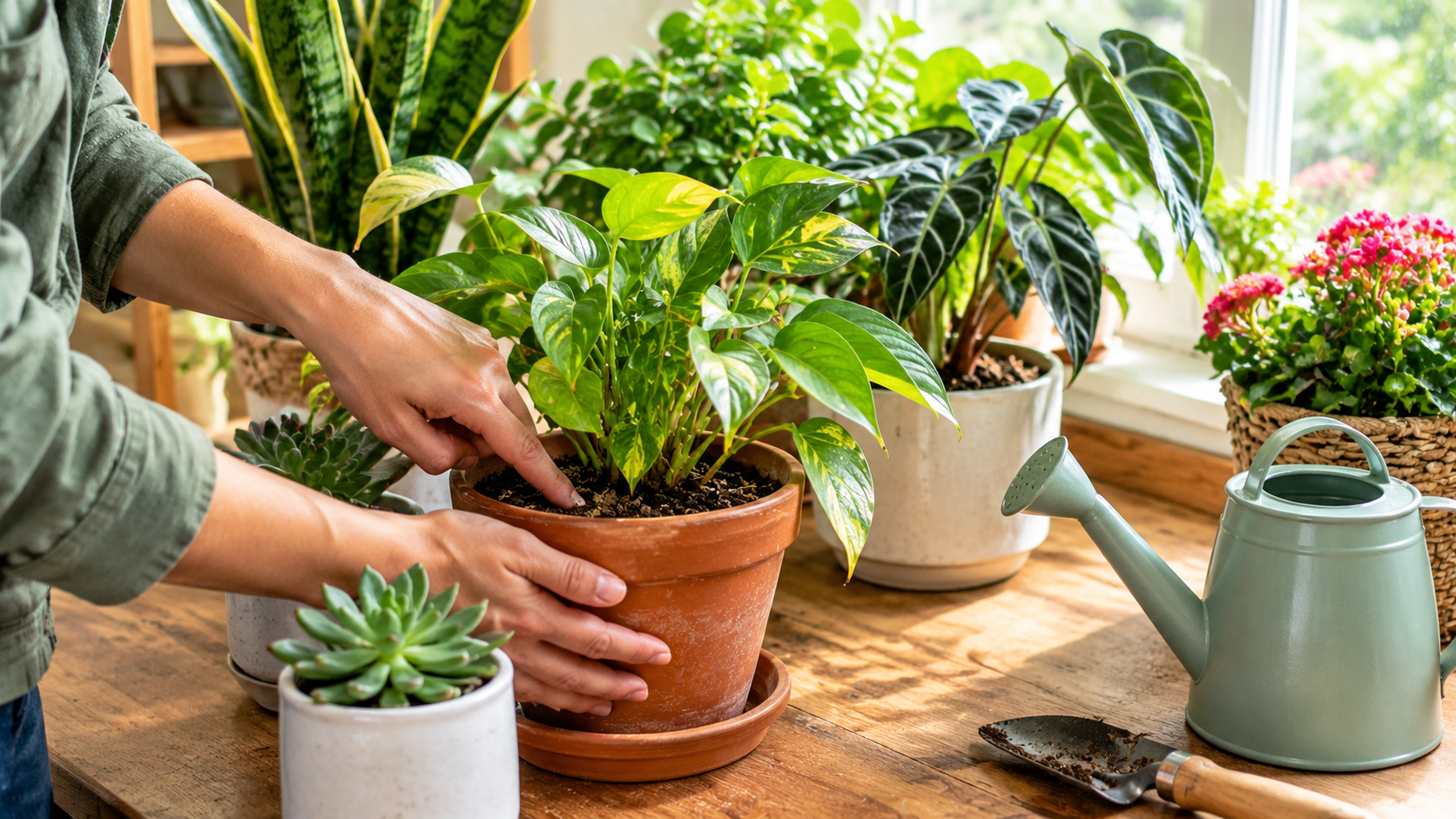
Watering houseplants every Monday or giving every pot a drink on the weekend may seem like a convenient way to stay organized. However, a routine that works for one plant can leave another thirsty or waterlogged. Soil dries at different rates depending on the plant, pot size, sunlight, temperature, humidity, and growing medium.
The solution is not to abandon routines altogether. It is to build a flexible watering routine based on observation rather than fixed dates. By checking soil moisture, learning how your plants respond, and recognizing changes in their environment, you can make better watering decisions with less guesswork.
This approach also makes plant care easier to maintain. Instead of watering automatically, you create a regular opportunity to inspect your plants and give each one water only when it needs it.
Why a Fixed Watering Calendar Often Fails
A calendar can remind you to check your plants, but it cannot accurately predict how quickly every pot will dry out.
A plant near a sunny window may use water faster than the same species in a dim room. A small terracotta pot may dry much sooner than a large plastic container because the materials lose moisture differently. Warm, dry air and moving air can also increase water loss.
Seasonal changes matter, too. Many houseplants grow more actively when light levels are higher and temperatures are warm. During cooler, darker periods, growth may slow and the soil may remain moist for longer.
The plant itself makes a difference. Succulents and cacti generally need the growing medium to dry more thoroughly between waterings than many tropical foliage plants. Seedlings, newly planted containers, and moisture-loving plants may need more frequent attention.
A fixed schedule ignores these differences. If you water because the calendar says it is time, you may add water to soil that is still wet. Repeating this mistake can deprive roots of oxygen and contribute to root damage.
Use the calendar to remember when to inspect, not to decide automatically when to water.
Learn the Signs That a Plant Needs Water
Before creating your routine, learn how to assess the moisture around the roots. No single sign works perfectly for every plant, so combine several observations.
Check the soil beneath the surface
The surface of a potting mix can look dry while the lower layers remain moist. Conversely, the top may appear dark after a light watering even though the root zone is still dry.
For many common houseplants, insert a clean finger a few centimeters into the growing medium. Feel whether it is moist, slightly damp, or dry. For a larger pot, check deeper because the surface alone may not represent the moisture around the roots.
The appropriate depth depends on the plant. A shallow-rooted plant and a large plant in a deep container should not necessarily be assessed in the same way.
Learn to recognize pot weight
A pot usually feels heavier after thorough watering and lighter as its growing medium dries. Once you become familiar with the difference, lifting the pot can provide a quick additional clue.
This method works particularly well for smaller containers. For large or heavy pots, use soil checks and visual inspection instead.
Observe leaves without relying on them alone
Drooping leaves, curled foliage, and dry leaf edges can indicate insufficient water. However, wilting can also occur when roots are damaged by excess moisture or cannot absorb water effectively.
Yellow leaves and leaf drop are equally ambiguous. They may result from watering problems, poor light, temperature stress, pests, or natural aging.
If a plant looks wilted, check the soil before watering. Adding water to already saturated soil can make the problem worse.
Group Plants by Their Watering Needs
A useful routine begins by organizing plants into practical categories. You do not need a separate calendar for every pot, but you should avoid treating plants with very different requirements as if they were identical.

Tropical foliage plants
Many common tropical houseplants prefer some moisture in their growing medium, but they still need adequate drainage. Check the soil and water when the upper portion has dried to a degree appropriate for the species.

Cacti and succulents
These plants generally need a more pronounced drying period between waterings. Their requirements vary by species, season, and growing conditions, so do not water simply because nearby foliage plants need attention.

Seedlings and newly established plants
Small root systems and limited amounts of growing medium can dry quickly. Check them more frequently and maintain moisture appropriate for the plant’s growth stage without leaving the soil waterlogged.

Outdoor pots and hanging baskets
These containers can dry rapidly in hot, sunny, or windy weather. Their needs may change considerably from one day to the next, especially during warm seasons.
These groups are starting points, not strict rules. A tropical plant in a cool, low-light room may dry more slowly than one in a warm, bright space. Always confirm the needs of individual species.
Build a Simple Watering Routine in Five Steps
The goal is to make checking plants a predictable habit while keeping the decision to water flexible.
Step 1: Choose regular inspection days
Select one or two convenient times each week to inspect your collection. For example, you might check your plants on Tuesday and Saturday mornings.
These are inspection days, not automatic watering days. If a plant’s soil is still too wet, leave it alone and check again later. If a pot dries quickly, you may need to inspect it more often than the rest.
During very hot weather, periods of rapid growth, or the establishment of new plants, increase the frequency of checks.
Step 2: Inspect each plant before watering
For every pot, check:
- Soil moisture at an appropriate depth.
- Pot weight, when practical.
- The condition of the leaves and stems.
- Whether the container has drainage holes.
- Whether water remains in the saucer or decorative outer pot.
If the growing medium is still wet, do not add water just because the plant is on your list. If it is dry to the depth appropriate for that species, watering may be necessary.
When the soil is wet but the plant is wilting, investigate possible root or drainage problems instead of assuming it needs more water.
Step 3: Water thoroughly when needed
For most established plants in containers with drainage holes, water slowly and evenly over the surface of the growing medium. Continue until excess water drains from the bottom.
This helps moisten the root zone rather than just the top layer. If the mix has become extremely dry and water runs straight down the sides, apply water gradually in stages so the medium has time to absorb it.
Some plants have specialized requirements, so follow species-specific guidance where necessary.
After watering, allow the container to drain completely. Empty the saucer or outer pot rather than leaving the roots standing in excess water.
Step 4: Record what happened
A simple note can help you understand your plants without creating a rigid schedule.
Record the date, plant name, soil condition, and whether you watered. You might also note unusual heat, recent repotting, or a change in location.
For example:
| Plant | Soil check | Action |
|---|---|---|
| Pothos | Upper layer dry; deeper mix slightly damp | Recheck soon |
| Cactus | Growing medium dry throughout | Water if consistent with species needs |
| Fern | Root-zone mix still moist | Do not water yet |
This is an illustrative example, not a universal prescription. Your own observations will show how each plant behaves in its particular environment.
Step 5: Adjust the next inspection
If a pot repeatedly becomes dry before your next planned check, inspect it more frequently. If it remains wet for many days, examine the pot size, growing medium, drainage, light, and temperature.
Do not solve slow drying by automatically adding more water. The better response may be to improve drainage or provide more suitable growing conditions.
Adjust Your Routine When Conditions Change
A reliable routine changes with the environment.
During warmer, brighter periods
Higher temperatures, stronger light, and moving air can increase water loss. Check plants more frequently, especially those in small pots, terracotta containers, hanging baskets, or exposed outdoor locations.
Do not assume that every plant needs water daily. Test the growing medium first.
During cooler or darker periods
Many houseplants grow more slowly when light levels fall. The soil may take longer to dry, so watering intervals often become longer.
Reduce unnecessary watering rather than following the same frequency used during active growth. Continue checking, particularly if indoor heating makes the air dry or if a plant is near a warm window.
After repotting or moving a plant
Repotting changes the amount and structure of the growing medium around the roots. A larger pot may retain moisture longer than the previous one, while a very airy mix may dry more quickly.
A move to a brighter, warmer, or windier location can also increase water use. After any major change, pay closer attention until you understand the new drying pattern.
Common Mistakes to Avoid
A flexible routine works best when you avoid these habits:
- Watering every plant at once: A shared inspection time does not mean every pot needs water.
- Judging only by the surface: Check below the top layer to understand root-zone moisture.
- Using wilting as the only signal: Both dry soil and damaged, waterlogged roots can cause wilting.
- Leaving pots in standing water: Excess water can reduce the oxygen available to roots.
- Making several changes at once: If a plant struggles, changing its watering, light, fertilizer, and location simultaneously makes it difficult to identify what helped.
- Ignoring drainage: Containers without suitable drainage need special attention. For most ordinary potted plants, drainage holes are strongly preferable.
- Following reminders without checking: An app or alarm can prompt inspection, but it cannot assess the actual moisture in a pot.
How to Know Whether Your Routine Is Working
A successful watering routine is not one in which every plant receives water at predictable intervals. It is one in which plants remain appropriately hydrated, their growing medium dries at a suitable rate, and you notice problems before they become severe.
Look for steady growth appropriate to the species, firm stems, and leaves that generally maintain their usual appearance. Occasional older leaves may still yellow or fall naturally, so assess the overall pattern rather than expecting every leaf to remain perfect.
Review your notes every few weeks. If a plant consistently needs checking more often, move it into a more frequent inspection group. If another remains moist for long periods, investigate its growing conditions.
Remember that the purpose of a routine is to create consistency in observation, not uniformity in watering. A few minutes spent checking soil, pot weight, drainage, and plant condition can prevent both unnecessary watering and avoidable drought stress.
Frequently Asked Questions
Is it better to water plants in the morning or evening?
For outdoor plants, early morning is often a practical choice because less water may be lost to evaporation and foliage has time to dry. For indoor plants, the most important considerations are watering when needed, wetting the root zone appropriately, and allowing excess water to drain.
Can I use a moisture meter instead of checking the soil by hand?
A moisture meter can provide an additional indication, but readings depend on the device and growing medium. Use it alongside touch, pot weight, and knowledge of the plant. Do not assume that one reading applies equally to every pot or species.
Should I water a plant if its leaves are drooping?
Not automatically. First check the growing medium. If it is dry and the plant’s requirements indicate that watering is due, water appropriately. If it is wet, inspect drainage and consider root stress, heat, or other causes.
How often should I review my watering routine?
Check plants regularly, then reassess your approach when seasons change, plants grow, or you move or repot them. A short weekly review of your notes can help you spot patterns without turning your routine into a rigid calendar.
Make Observation Your Most Reliable Gardening Habit
Start with a manageable inspection routine, group plants by their general needs, and record what you find. Water when the moisture level and the plant’s requirements indicate it is appropriate, then let the container drain and observe how it responds.
Over time, you will learn which plants dry quickly, which prefer longer intervals, and how your home or garden affects them. That knowledge is far more useful than a calendar that tells every plant to drink on the same day.