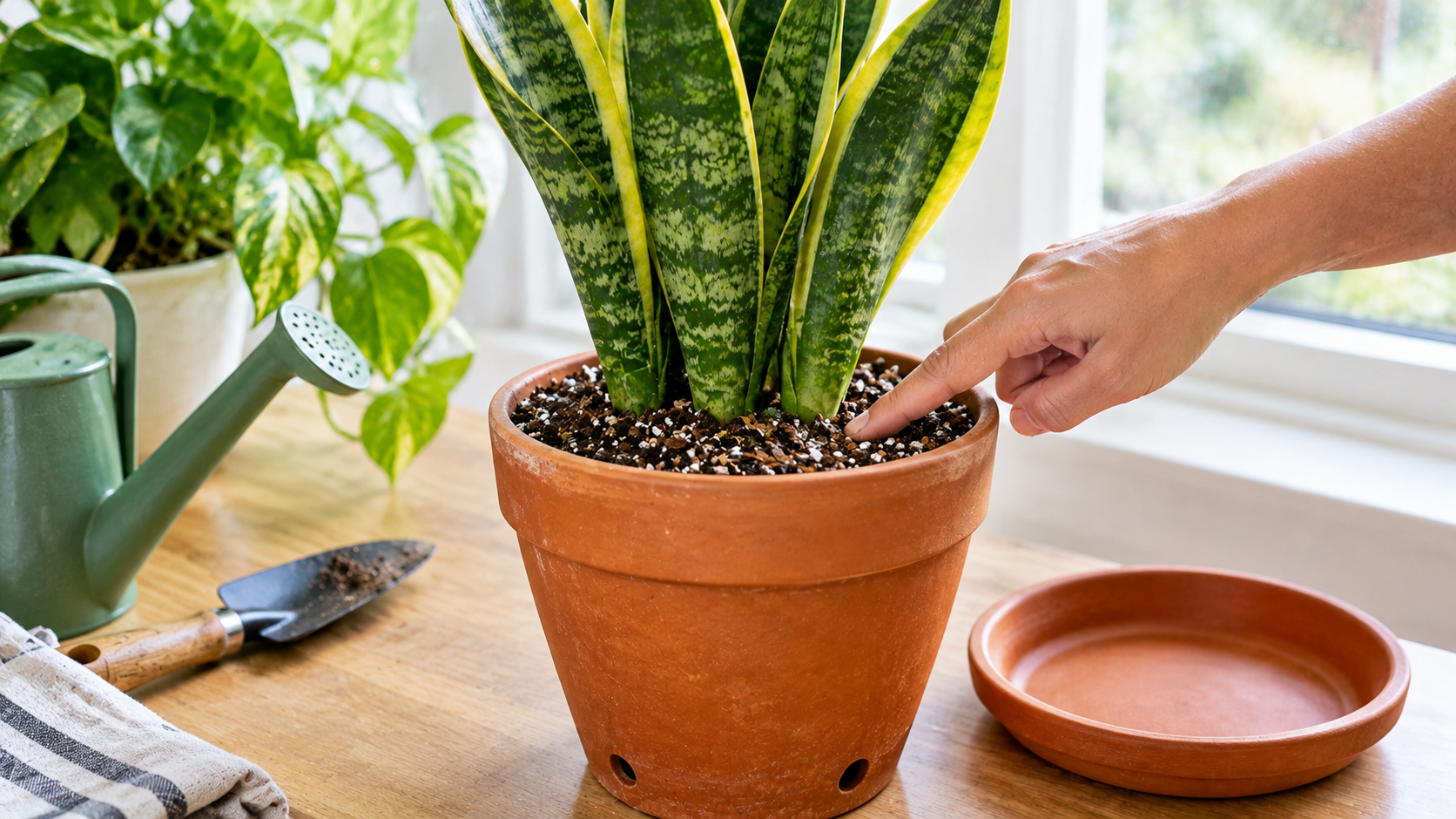
Saint George’s sword, also known as the snake plant (Dracaena trifasciata, formerly Sansevieria trifasciata), is popular for its upright leaves, adaptability, and relatively simple care requirements. However, one mistake can undermine all these advantages: watering too frequently or without checking whether the soil is ready for more moisture.
If your plant has yellowing leaves, soft stems, brown patches, or leaves that begin to lean, watering may be part of the problem. Yet these symptoms do not always have the same cause. Pot size, drainage, light, temperature, and the type of potting mix can all influence how quickly the roots dry out.
The key is to stop following a rigid watering calendar and learn to assess the plant and its growing conditions. With a few practical checks, you can reduce the risk of root rot, recognize signs of stress earlier, and establish a routine that suits your particular plant.
1. Why Saint George’s Sword Needs Careful Watering
Saint George’s sword stores moisture in its thick, fleshy leaves and underground rhizomes. This adaptation allows it to tolerate periods of dryness better than many common tropical houseplants.
Its ability to withstand missed waterings can create a false sense of security, though. A plant that tolerates dry soil does not necessarily tolerate soil that remains wet for days or weeks.
When the potting mix stays saturated, air becomes less available around the roots. Prolonged poor aeration can damage the root system and encourage rot. Once the roots are impaired, the plant may struggle to absorb water even when its leaves appear to need it.
The main watering principle is simple: let the potting mix dry thoroughly before watering again, and make sure excess water can escape freely. The exact interval depends on the environment rather than a universal number of days.
2. The Most Common Watering Mistakes
Watering on a fixed schedule
Watering every Sunday, every ten days, or on the first day of each month may seem convenient. However, indoor conditions change throughout the year, so a schedule that works in one season may be unsuitable in another.
A plant near a bright window in a warm room may use moisture faster than one in a cool corner with limited light. A small pot can also dry more quickly than a large container filled with moisture-retentive soil.
Instead of watering because the calendar says it is time, check the soil before each watering. Use the schedule only as a reminder to inspect the plant.
Adding small amounts of water too frequently
Giving the plant a little water every few days can keep part of the root zone continually damp without evenly moistening the entire pot when watering is actually needed.
This habit also makes it difficult to judge how much moisture remains in the mix. The surface may look dry while the lower layers are still wet.
When the plant genuinely needs water, water the potting mix evenly and allow the excess to drain. Then wait until the mix has dried sufficiently before repeating the process.
Leaving the pot standing in water
Water that collects in a saucer or decorative outer pot can keep the bottom of the growing medium wet. Even if the surface feels dry, the lower root zone may remain saturated.
After watering, allow the container to drain completely. Empty the saucer and check that no water remains trapped inside a cachepot.
A decorative pot without drainage holes can still be used as an outer cover, but the plant should remain in a removable nursery pot with drainage holes. Take the inner pot out to water it, let it drain, and only then return it to the outer container.
Using soil that retains too much moisture
Some general-purpose potting mixes are designed to retain water for plants with higher moisture requirements. In a snake plant pot, a dense mix can remain wet longer than the roots can comfortably tolerate.
Choose a well-draining houseplant mix, such as a suitable cactus and succulent blend. If your current mix stays wet for a long time, consider replacing it with a more open, aerated medium rather than attempting to compensate solely by changing the watering schedule.
3. How to Tell When Your Plant Needs Water
The best approach combines several observations instead of relying on one signal.
Check the soil below the surface
Insert a clean finger into the potting mix, ideally a few centimeters deep. If it still feels damp, wait and check again later. If the root-zone mix is dry, the plant may be ready for watering.
For a deep pot, the surface alone can be misleading. A wooden skewer inserted carefully into the soil can help reveal whether the lower mix remains moist. Remove it and inspect for damp soil clinging to the wood.
Moisture meters can also be useful, but results depend on the device, growing medium, and where the probe is inserted. Treat a meter as one source of information rather than an unquestionable instruction.
Consider the pot’s weight
Lift the pot after watering and notice its weight. As the growing medium dries, the container becomes lighter.
Over time, comparing the weight of a recently watered pot with that of a dry one can provide a practical reference. This method is especially helpful when the surface is dry but moisture deeper in the container is difficult to assess.
Observe the leaves without relying on them alone
Healthy leaves are generally firm and upright. Soft, yellowing, or collapsing leaves can indicate excessive moisture and root damage, but they may also result from other growing problems.
Wrinkled or puckered leaves can suggest that the plant has been dry for an extended period. However, root rot can also prevent water uptake and create symptoms resembling dehydration.
Check the soil and drainage before deciding that a struggling plant needs more water. Adding water to a plant with damaged roots may worsen the underlying problem.
4. How to Water Saint George’s Sword Correctly
Once the soil has dried sufficiently, follow a consistent method.
- Check the pot. Confirm that it has unobstructed drainage holes and that the soil is not already damp beneath the surface.
- Apply water slowly. Pour water evenly over the potting mix, avoiding unnecessary accumulation around the base of the leaves.
- Allow excess water to escape. Continue until water begins to drain from the bottom. This helps moisten the root zone more evenly than repeatedly adding tiny splashes.
- Empty the saucer. Do not leave the container sitting in drained water.
- Wait before watering again. Let the growing medium dry thoroughly, then repeat the soil check.
Avoid pouring water into the center of a tightly packed leaf cluster and allowing it to sit there. Focus on the potting mix instead.
If the soil has become extremely dry and water runs straight down the sides without soaking in, apply water slowly in several passes. If the mix remains difficult to rehydrate or has deteriorated, replacing it may be more effective than repeatedly trying to wet it.
5. How Seasons and Indoor Conditions Affect Watering
There is no single watering interval that suits every Saint George’s sword. These environmental factors help explain why the frequency changes.
Spring and summer
In warmer months, a plant receiving brighter light may grow more actively and use water faster. Check the soil regularly, but do not assume that warm weather means the plant needs water every few days.
A plant in a bright, warm room may dry faster than one in a shaded, air-conditioned space.
Autumn and winter
Growth often slows when daylight decreases, particularly in cooler rooms. Water may evaporate more slowly, so the interval between waterings may become substantially longer.
Do not water more often simply because the leaves look dusty or the room feels dry. Check the soil first. If the plant is kept in a warm, bright room throughout winter, its needs may differ from those of a plant in a cool, dim location.
Light, humidity, and airflow
Low light usually means slower growth and lower water use. High humidity can also slow drying, while warmer conditions and air movement may accelerate moisture loss.
Avoid placing the plant in a dark location just because it tolerates low light. Moderate to bright indirect light generally supports better growth, while harsh direct sun can scorch leaves if the plant is not acclimated.
6. Choose a Pot and Potting Mix That Help Prevent Overwatering
Good watering habits are much easier when the container and growing medium support proper drainage.
Choose a pot with drainage holes. The container should be large enough to accommodate the roots but not excessively oversized. A pot filled with far more soil than the root system needs can retain moisture for too long.
Terracotta pots allow moisture to evaporate through their porous sides and may dry faster than plastic or glazed ceramic containers. Plastic pots can work well too, provided the soil drains properly and watering is adjusted to the slower drying rate.
Use a loose, well-draining potting mix. A commercial cactus and succulent mix may be appropriate, depending on its composition. Avoid adding a layer of gravel to the bottom of the pot as a substitute for drainage holes; it does not solve a poorly draining soil problem.
7. What to Do If You Suspect Overwatering
If your plant develops soft, yellowing leaves or the soil remains wet for an unusually long time, do not immediately add more water or fertilizer.
First, check the moisture level and drainage. If the mix is only slightly damp and the plant otherwise looks healthy, allow it to dry before watering again.
If the soil smells unpleasant, the base of the leaves becomes mushy, or several leaves collapse while the mix remains wet, root rot may be developing. In that situation, inspect the root system.
- Remove the plant carefully from its pot.
- Examine the roots and rhizomes. Healthy tissue is generally firm; rotten tissue may be brown or black, soft, and unpleasant-smelling.
- With clean, sharp tools, remove clearly rotten roots and damaged tissue.
- Repot the plant in a clean container with drainage holes and fresh, well-draining mix.
- Keep it in a suitable warm location with moderate to bright indirect light, and avoid watering again until the new mix and the plant’s condition justify it.
Recovery depends on how much healthy root and rhizome tissue remains. Do not assume every yellow leaf means root rot, and do not repeatedly disturb the roots if there is no clear reason to suspect damage.
8. Common Questions About Watering
Can I water my plant once a month?
Possibly, but once a month is not a universal rule. Some plants in cool, low-light rooms may need water less often, while those in warmer, brighter conditions may dry sooner. Soil moisture should determine the decision.
Should I mist the leaves?
Misting is generally unnecessary for Saint George’s sword. It does not replace proper root watering, and it can leave moisture sitting between tightly grouped leaves. Wipe dusty foliage with a soft, slightly damp cloth instead.
Why are the leaves drooping even though the soil is wet?
Wet soil and drooping leaves can indicate damaged roots that cannot absorb water effectively. Check for poor drainage, persistent moisture, and soft or discolored roots before considering additional watering.
Is underwatering dangerous?
Extended dryness can cause leaves to wrinkle or lose firmness, especially if the plant has been neglected for a long time. However, this plant is generally tolerant of dry periods. Check the soil and root condition before correcting suspected underwatering.
Build a Watering Routine Around What You Observe
The most reliable way to care for Saint George’s sword in a pot is to combine a well-draining container, an appropriate potting mix, and a habit of checking soil moisture before watering. Avoid fixed schedules, never leave the pot standing in drained water, and pay attention to changes in light and temperature.
Start by checking your plant’s soil and drainage today. Make one adjustment at a time, then observe how quickly the pot dries and how the leaves respond. This approach helps you make better watering decisions without adding unnecessary moisture or disturbing a plant that is already growing well.