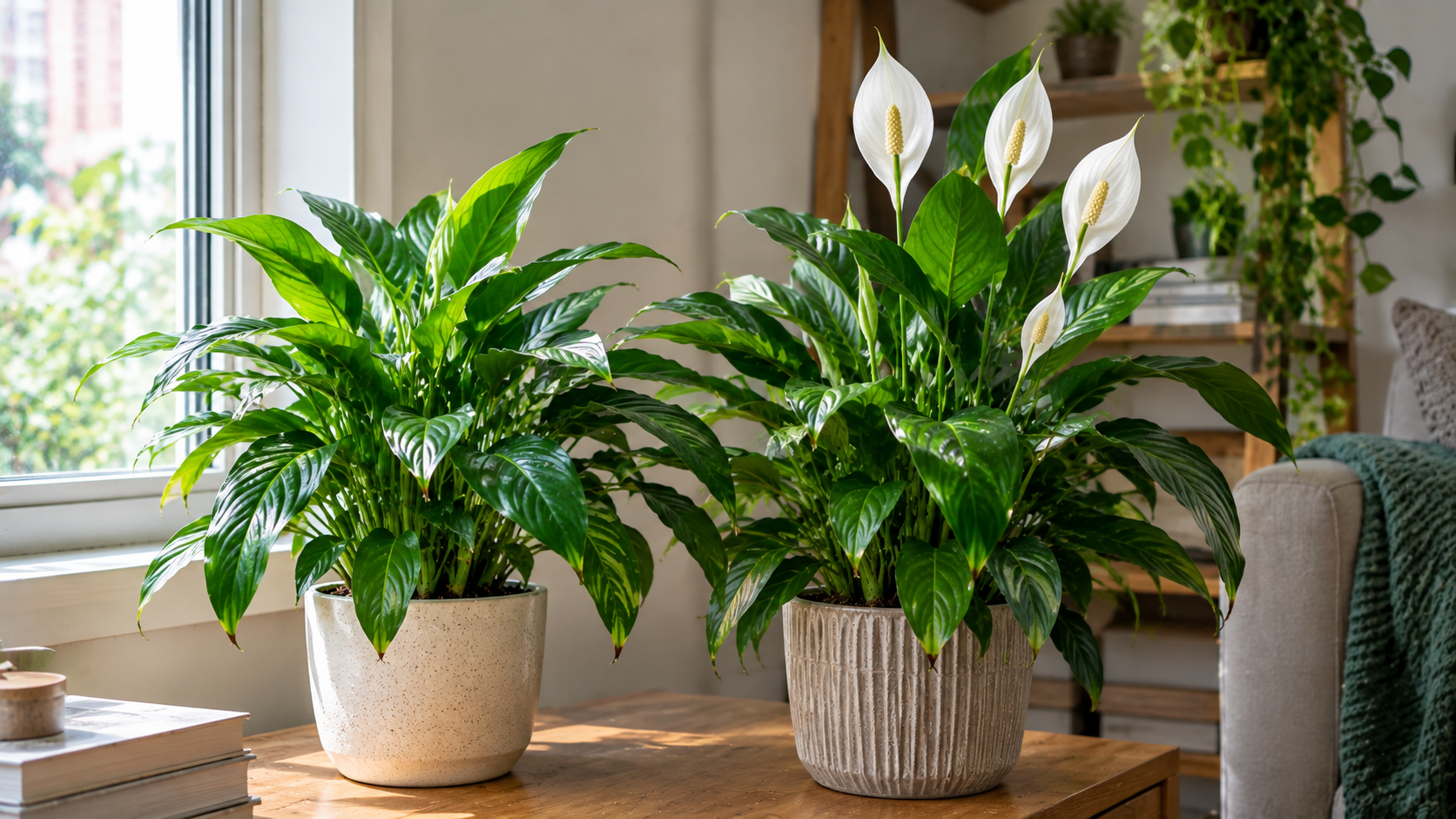
A peace lily can produce glossy green leaves for months or even years without developing its familiar white blooms. This can be confusing, especially when the plant looks healthy and receives regular watering. However, healthy foliage does not automatically mean that a peace lily has enough light, maturity, or suitable growing conditions to flower.
The most useful approach is to evaluate the plant’s environment before changing its care routine. Light is often a major factor, but age, cultivar, watering practices, root health, and fertilizer use can also influence flowering. Understanding these factors helps you make sensible adjustments without stressing the plant or wasting money on products that promise instant blooms.
Why a Peace Lily May Stop Flowering
Peace lilies (Spathiphyllum species) are tropical foliage plants that can tolerate relatively low indoor light. Yet tolerating low light is not the same as having enough light to flower reliably. Plants may survive in a dim corner while producing few or no blooms.
The structures commonly called flowers are actually flower clusters surrounded by a white, leaf-like bract called a spathe. The small true flowers grow along the central spike, known as the spadix. As the bloom ages, the white spathe may turn green and eventually brown; this is a normal part of its development.
According to the University of Missouri Extension, peace lilies adapt to low-light conditions but generally need medium light to flower. The University of Florida IFAS Extension also identifies bright, indirect light and suitable moisture as important elements of indoor peace lily care.
Before attempting to encourage flowering, determine whether your plant is growing under conditions that support it.
1. Assess the Amount of Light the Plant Receives
Light is one of the first factors to investigate when a peace lily produces leaves but no blooms. A room may appear bright to people while providing relatively little usable light for a plant, especially when the pot is far from a window.
How to recognize insufficient light
Look at the plant’s overall growth rather than relying on a single leaf.
Possible clues include:
- Little new growth over an extended period.
- Long or weak leaf stalks that lean toward a window.
- Smaller new leaves compared with previous growth.
- A plant that remains alive but rarely produces flower stalks.
These signs are not definitive on their own. Root problems, nutrient issues, and other stresses can also slow growth. Still, if the plant is healthy but sits in a dark hallway or far from a window, insufficient light is a reasonable possibility.
Where should you place a peace lily?
Choose a location with bright, indirect natural light. Near an east-facing window can work well, while a position near a bright north-facing window may be suitable in some homes. The ideal placement depends on the hemisphere, season, window size, outdoor obstructions, and intensity of sunlight.
Avoid moving the plant straight into harsh direct sun. Strong sunlight can scorch the leaves, leaving bleached or brown patches.
Try these steps:
- Observe the room during the day and identify where natural light is strongest without intense direct sun.
- Move the plant closer to that source of light, while protecting it from harsh rays.
- Keep its watering routine responsive to soil moisture rather than automatically increasing watering.
- Observe new growth over the following weeks and months.
Flowering may take time, and improved light does not guarantee an immediate bloom. A gradual, stable change is more useful than repeatedly moving the plant from one location to another.
Can artificial lighting help?
Yes. If the room receives little daylight, a suitable full-spectrum grow light can supplement natural light. Follow the manufacturer’s guidance on distance and duration, and avoid placing a powerful lamp so close that it overheats the leaves.
Artificial lighting can be particularly useful in interior rooms, apartments with shaded windows, or homes where daylight varies considerably through the year.
2. Consider the Plant’s Age and Variety
A young peace lily may need more time to reach flowering maturity. Plants sold in stores often have blooms because they were grown under controlled nursery conditions selected to encourage flowering. Once they enter a home, their growth pattern may change as they adjust to different light, temperatures, and watering routines.
A recently purchased plant that has stopped flowering is not necessarily unhealthy. It may be adapting to its new environment, or it may need time to mature before producing another set of blooms.
Different Spathiphyllum cultivars can also vary in size, growth habits, and flowering performance. A compact variety may produce smaller blooms than a larger cultivar, while individual plants may flower at different intervals.
What to do: Focus on maintaining healthy foliage and steady new growth rather than expecting flowers on a fixed schedule. If the plant is very young, patience may be more helpful than intensive feeding or frequent repotting.
3. Check Watering and Root Health
Peace lilies prefer evenly moist growing medium, but their roots should not remain waterlogged. Both excessive dryness and prolonged saturation can stress the plant and interfere with growth.
Signs that watering may be a problem
Look for several clues together:
- Drooping leaves with dry soil: The plant may need water.
- Drooping leaves with persistently wet soil: Roots may be struggling because of excess moisture or poor drainage.
- Yellowing leaves and a sour smell from the pot: These can indicate root or growing-medium problems.
- Brown leaf tips: Possible causes include fertilizer salt buildup, inconsistent watering, low humidity, or water quality.
Drooping alone is not enough to diagnose the problem. Check the moisture a little below the surface before watering.
A practical watering routine
- Feel the upper layer of the potting mix before watering.
- When the surface begins to dry slightly, check deeper to confirm that the root zone is not still saturated.
- Water thoroughly so the mix becomes evenly moist, allowing excess water to escape through the drainage holes.
- Empty the saucer or decorative outer pot after drainage.
- Adjust the interval according to light, temperature, pot size, and how quickly the mix dries.
Avoid following a rigid schedule such as watering every three days regardless of conditions. A plant in bright indirect light may use water faster than one in a cool, dim room.
If the soil stays wet for unusually long periods, check the drainage holes and consider whether the container is too large or the mix too dense. Correcting those issues is more useful than withholding water indefinitely.
4. Review Fertilizer Use Before Adding More
Fertilizer supports healthy growth, but adding extra nutrients does not automatically encourage flowering. A peace lily growing in low light uses resources more slowly and may not need frequent feeding.
Overfertilization can cause salt buildup in the potting mix, damage roots, and produce brown leaf tips. Excessive fertilizer may also encourage leafy growth without resolving the real reason the plant is not flowering.
How to fertilize responsibly
- Use a balanced fertilizer intended for houseplants.
- Follow the product label, using a conservative rate when the plant is growing slowly.
- Fertilize primarily during active growth rather than repeatedly feeding a stressed plant.
- Avoid fertilizing when the potting mix is extremely dry or the roots appear unhealthy.
- If salt buildup is suspected and the pot drains well, flush the mix with water and let it drain completely.
University of Florida IFAS guidance recommends relatively modest fertilizer use for indoor peace lilies. The appropriate amount depends on the formulation, growing conditions, and plant response.
Be cautious with products marketed as “bloom boosters.” A fertilizer with a high phosphorus number is not a guaranteed solution for a plant that lacks sufficient light or has damaged roots. Correct the growing conditions first, then assess whether routine feeding is needed.
5. Check Temperature, Seasonal Changes, and Repotting
Peace lilies are tropical plants that generally prefer warm, stable indoor conditions. Cold drafts, air-conditioning vents, or sudden temperature changes can slow growth and contribute to stress.
Keep the plant away from cold windows during chilly weather and avoid placing it directly beside heating or cooling equipment. A stable environment is more useful than trying to trigger flowering with abrupt temperature changes.
Seasonal changes in daylight can also influence flowering. Some peace lilies flower more readily during particular parts of the year, and indoor conditions may shift as daylight hours change. Lack of blooms during one season does not necessarily indicate a serious problem.
Repotting deserves similar consideration. Moving a plant into a much larger container can leave a large volume of mix wet around a relatively small root system. Repot only when the roots have substantially filled the pot, the mix has deteriorated, or watering has become difficult to manage.
When repotting is necessary, choose a container with drainage holes and only a modest increase in size. Avoid repeatedly disturbing the roots in an attempt to force flowers.
6. A Step-by-Step Plan to Encourage Flowering
If your peace lily has healthy leaves but no blooms, use this sequence to identify the most likely limitation.
- Assess the light. Move the plant to a brighter location with indirect light if it is in a dim area.
- Check the growing medium. Confirm that it is moist but not continuously saturated, and that the pot drains freely.
- Inspect the plant’s condition. Look for pests, damaged roots, yellowing, or persistent wilting.
- Review fertilizer use. If the plant is healthy and actively growing, follow a modest feeding routine appropriate for the product.
- Keep conditions stable. Avoid repeated moves, unnecessary repotting, and sudden changes in watering.
- Track new growth. Note changes in leaf size, the appearance of new shoots, and the condition of the plant over several weeks and months.
A bloom may take time to appear, even after conditions improve. If the plant continues producing healthy leaves but does not flower, consider its maturity, cultivar, and the amount of light available before making further changes.
Frequently Asked Questions
Can a peace lily live without flowering?
Yes. Peace lilies can remain attractive foliage plants even when they do not bloom. If the leaves are healthy and the plant is growing steadily, the lack of flowers may reflect its light conditions, maturity, or natural flowering pattern rather than a serious health problem.
Should I cut off old peace lily flowers?
You can remove a flower stalk when its spathe has turned brown or is no longer attractive. Use clean scissors and cut the stalk close to the base without damaging nearby leaves or new shoots. A spathe turning green as it ages is normal and does not automatically mean the plant is unhealthy.
Does a peace lily need direct sunlight to flower?
No. Bright, indirect light is generally the safer choice. Strong direct sunlight can scorch leaves, so increase light exposure by moving the plant closer to a bright window while avoiding intense sunbeams.
How long does it take for a peace lily to bloom again?
There is no universal timeline. The interval depends on plant maturity, cultivar, light, season, and overall care. Improving the environment can support flowering, but it cannot guarantee that blooms will appear within a particular number of weeks.
Give Your Peace Lily the Conditions It Needs
When a peace lily refuses to flower, start with light and overall plant health rather than immediately adding fertilizer or repotting. A brighter position with indirect light, balanced watering, suitable drainage, and restrained feeding provides a sensible foundation for future blooms.
Make one change at a time and observe how the plant responds. Healthy new leaves and steady growth are useful signs that its environment is improving, even if flowers take longer to appear.