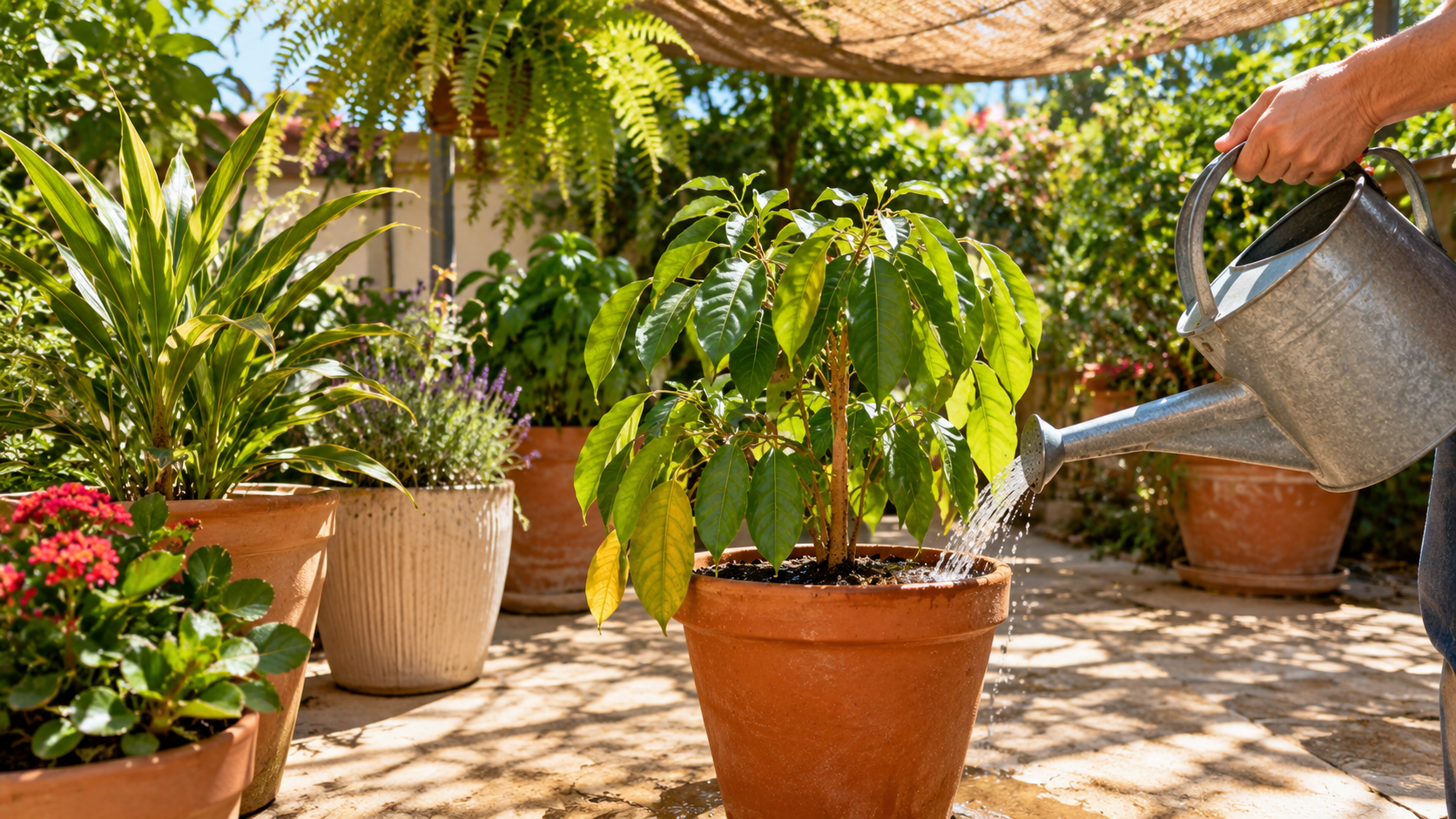
When temperatures rise, plants may begin to wilt, develop brown leaf edges, lose flowers, or dry out much faster than usual. Even a plant that looked healthy a few days earlier can struggle when intense sunlight, hot winds, and dry soil occur together.
The solution is not simply to water everything more often. Different plants respond to heat in different ways, and excessive watering can damage roots just as insufficient moisture can damage leaves. By adjusting watering routines, managing sunlight, protecting roots, and recognizing early signs of heat stress, you can help indoor and outdoor plants cope with hot weather.
Why Hot Weather Changes Plant Care
Plants lose water through a natural process called transpiration. Water moves from the roots to the leaves and escapes through tiny openings called stomata. This process helps regulate temperature and supports the movement of water and nutrients throughout the plant.
During hot or windy weather, transpiration can increase, especially when humidity is low. If roots cannot replace the water being lost quickly enough, leaves may droop, curl, or become dry.
Heat also affects the soil. Containers exposed to direct sunlight can become hot and lose moisture rapidly, while shallow roots may be particularly vulnerable to drying. Some plants tolerate these conditions well, but others need shade or more careful moisture management.
The goal is to maintain a balance: enough water for healthy roots, sufficient light for growth, and protection from temperatures or sunlight that exceed the plant’s tolerance.
How to Water Plants During Hot Weather
Watering is often the first adjustment gardeners make during a heatwave, but the method and timing matter as much as the amount.
Check the soil before watering
Do not rely on a fixed schedule alone. A pot that needs water every day during a hot spell may remain moist for several days in a cooler, shaded room.
Use these observations to guide your decision:
- Dry soil near the surface: Check deeper into the root zone before deciding whether to water.
- Drooping leaves and dry soil: The plant may need water.
- Yellowing leaves and persistently wet soil: Investigate poor drainage or overwatering.
- A pot that feels unusually light: This can indicate that the growing medium has dried substantially.
Plants with different root systems and moisture requirements need different approaches. Succulents generally tolerate drying between waterings, whereas many moisture-loving tropical plants need more consistent moisture.
Water at the right time
Early morning is usually a practical time to water outdoor plants because less water is lost to evaporation and plants can access moisture as the day warms. Evening watering can also be appropriate when necessary, although prolonged wet foliage overnight may encourage some fungal diseases.
Whenever possible, direct water toward the soil rather than spraying the entire plant. Apply it slowly enough to reach the roots instead of running off the surface.
Water thoroughly, but respect drainage
For many plants growing in containers, water until excess moisture begins draining through the bottom. Empty standing water from decorative outer pots or saucers after drainage.
If the potting mix has become extremely dry and water runs down the sides without soaking in, apply water gradually in several passes. This gives the medium time to absorb moisture.
Avoid keeping drought-tolerant plants continuously wet just because the weather is hot. Root health remains essential to recovery.
Protect Plants From Excessive Sunlight and Heat
Sunlight requirements do not disappear during summer, but the intensity of direct sunlight can become damaging.
Move vulnerable plants into suitable shade
Container-grown plants can often be moved to a location with bright indirect light or afternoon shade during extreme heat. This is especially useful for plants that naturally grow beneath trees or in sheltered environments.
However, do not place every plant in deep shade. Sun-loving species may become weak if deprived of the light they need. Instead, reduce exposure during the hottest part of the day while preserving appropriate light levels.
Recognize sunburn and heat stress
Common signs include:
- Bleached or pale patches on exposed leaves.
- Brown, crispy edges or irregular scorched areas.
- Leaves curling or drooping during the hottest hours.
- Flowers wilting or fading prematurely.
Wilting can also result from root damage or waterlogged soil, so inspect the growing medium before assuming the plant needs more water.
Protect outdoor plants without blocking all airflow
For sensitive plants, temporary shade cloth or a position beneath a suitable larger plant can reduce intense sunlight. Make sure the covering does not trap excessive heat or prevent adequate ventilation.
Avoid drastic changes from full sun to deep shade unless necessary to prevent further damage. Gradual adjustments are generally preferable when the plant is not in immediate danger.
Keep Roots Cooler and Reduce Moisture Loss
Roots are responsible for absorbing the water that plants need to survive hot weather. Protecting the soil around them can help maintain more stable growing conditions.
Use mulch in garden beds
A layer of organic mulch, such as shredded leaves, bark, or suitable composted material, can reduce evaporation and help moderate soil temperature.
For established outdoor plants, apply mulch over the root zone while keeping it away from direct contact with stems and trunks. Follow recommendations appropriate to the plant and local climate, and avoid covering the soil so deeply that water cannot penetrate.
Mulch is especially useful in exposed garden beds, vegetable gardens, and areas where the soil dries quickly.
Pay extra attention to plants in containers
Potted plants often dry out faster than plants growing in the ground because their roots have access to a smaller volume of growing medium.
During hot weather:
- Check small pots more frequently than large containers.
- Move vulnerable pots away from intense afternoon sunlight.
- Group containers in a sheltered location when appropriate.
- Make sure drainage holes remain unobstructed.
- Consider the material of the pot: unglazed terracotta generally loses moisture faster than many glazed or plastic containers.
A plant in a small pot on a sunny balcony may need water much more frequently than the same species growing in a large container in partial shade. Always check its actual moisture needs before watering.
Adjust Humidity and Airflow Indoors
Indoor plants can suffer when hot weather combines with dry air, particularly in rooms with strong air conditioning or direct sunlight through glass.
Brown leaf tips, curling leaves, and persistent wilting may indicate moisture stress, although these symptoms can have other causes.
To improve indoor conditions, consider the following measures:
- Group compatible plants together: Their combined transpiration can create a slightly more humid local environment.
- Use a humidifier when appropriate: This can help humidity-sensitive tropical species in dry rooms.
- Avoid hot air currents: Keep plants away from direct airflow from heaters or air-conditioning vents.
- Provide gentle ventilation: Fresh air can help prevent stagnant conditions, but strong hot winds can increase water loss.
Misting leaves is not a reliable long-term substitute for maintaining suitable humidity. It may provide only a temporary effect, and repeatedly wet foliage can encourage disease under certain conditions.
The correct approach depends on the species. Cacti and many succulents generally tolerate lower humidity than tropical plants with thin, delicate leaves.
Should You Fertilize or Prune During a Heatwave?
Fertilizing: avoid unnecessary feeding
Applying extra fertilizer will not solve heat stress. During a heatwave, plants may struggle to absorb water efficiently, and fertilizer salts can increase stress when applied incorrectly.
If a plant is visibly wilted, has dry soil, or shows signs of heat damage, first correct its growing conditions. Resume normal feeding when appropriate for the species and its active growth cycle.
Avoid fertilizing severely dry soil or using stronger concentrations in an attempt to stimulate new leaves. Follow the product label and the plant’s nutritional requirements.
Pruning: remove dead material carefully
Heavy pruning can expose previously shaded leaves and stems to intense sunlight. It may also force new growth when the plant needs to conserve resources.
Remove completely dead or badly damaged leaves with clean tools when necessary, but postpone major structural pruning until conditions improve, unless a specific plant-care need requires immediate action.
For flowering plants, remove spent flowers when appropriate for the species. Avoid stripping away large amounts of healthy foliage, which can still contribute to photosynthesis.
A Simple Daily Routine for Very Hot Days
Use this practical checklist to identify the plants that need attention first.
- Check the weather and sunlight. Identify pots or garden beds exposed to strong afternoon sun and move vulnerable containers if necessary.
- Inspect soil moisture. Check small pots, hanging baskets, seedlings, and recently planted specimens first because they can dry out quickly.
- Look at the leaves. Distinguish temporary midday drooping from persistent wilting, scorching, yellowing, or pest damage.
- Water selectively. Give plants water when their soil and species requirements indicate a need, ensuring it reaches the root zone.
- Review the plants again. Check whether foliage recovers during cooler hours and whether the soil remains appropriately moist.
A plant that droops in the afternoon but becomes firm again in the evening may be responding to temporary heat stress. If it remains wilted in the early morning, inspect the roots and soil more closely rather than assuming that more water is always the answer.
Frequently Asked Questions
Should I water plants every day in summer?
Not necessarily. Some plants in small containers may need daily watering during very hot weather, while larger pots, succulents, and plants in shaded locations may need much less frequent watering. Base the decision on soil moisture, container size, weather, and species.
Can plants recover from heat damage?
Many plants recover if their roots and growing points remain healthy and the damaging conditions are corrected. Scorched or completely dead leaf tissue will not become green again, but healthy remaining foliage and new growth may indicate recovery.
Is afternoon sunlight always harmful?
No. Many plants require several hours of direct sunlight. Problems arise when the intensity, duration, or temperature exceeds what a particular species can tolerate. Shade-sensitive species and newly acclimated plants may need extra protection during extreme heat.
Should I bring outdoor plants inside during a heatwave?
Only when the plant is suitable for indoor conditions and the new location offers appropriate light and temperature. For many outdoor plants, moving pots to sheltered partial shade is a better option than placing them in a dim indoor room.
Build a Heat-Ready Garden With Consistent Care
The best way to protect plants during the hottest days of the year is to anticipate changes rather than wait for severe wilting or leaf damage. Check soil moisture regularly, water thoroughly when needed, protect vulnerable roots, and adjust sunlight exposure to suit each species.
Start with the plants most likely to dry out quickly, especially small containers, hanging baskets, seedlings, and recently planted specimens. Then observe how each plant responds before making further changes.
Consistent, species-appropriate care is more effective than applying the same emergency treatment to every plant.