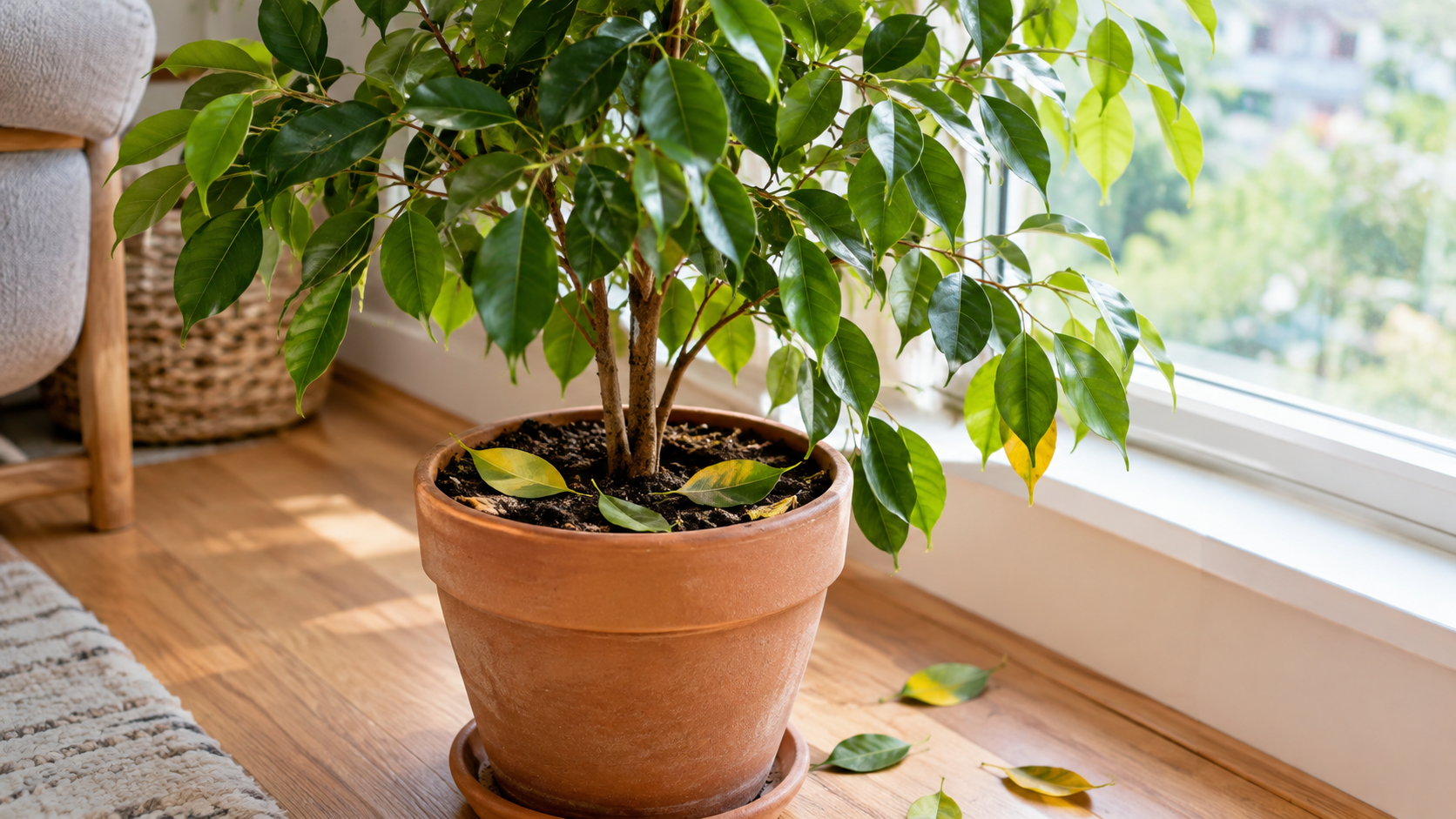
A houseplant that starts dropping leaves after being moved to another room, placed near a different window, or brought home from a garden center may be reacting to a sudden change in its environment. Although this can be worrying, leaf loss does not always mean the plant is dying. Many plants need time to adjust to different light levels, temperatures, humidity, and watering conditions.
The most important step is to identify what changed before trying to fix the problem. Giving a stressed plant extra water, fertilizer, or repeated changes of location can make matters worse. By observing its leaves, checking the soil, and providing consistent care, you can help it recover and reduce further leaf loss.
Why Do Plants Lose Leaves After Being Moved?
Plants adapt to the conditions in which they grow. When those conditions change suddenly, their leaves may no longer receive the light, moisture, or temperature they need to function normally.
According to Iowa State University Extension, sudden changes in light intensity, temperature fluctuations, inappropriate watering, and low humidity can all contribute to leaf drop in houseplants.
This reaction is sometimes described as environmental stress or transplant shock, although transplant shock more specifically refers to disturbance associated with repotting or transplanting.
Some plants are particularly sensitive to changes in their surroundings. Weeping figs, for example, may drop leaves after relatively small changes in light conditions. Other species may adapt with little visible damage.
A few older leaves falling while the rest of the plant remains healthy may be normal. However, widespread leaf loss, persistent wilting, or soft stems deserve closer attention.
The Main Causes of Leaf Drop After Relocation
1. A sudden change in light
Light is one of the most important factors affecting a plant’s ability to maintain its foliage. Moving a plant from a bright window to a dim corner can reduce the energy available for growth. Conversely, moving a shade-loving plant into intense direct sunlight can damage its leaves.
Look for these signs:
- Leaves gradually turning yellow and falling in a darker location.
- Brown, dry patches after exposure to stronger sunlight.
- Long, weak stems and smaller new leaves when light is insufficient.
- Leaf loss after bringing a plant indoors from a bright outdoor location.
What to do: Choose a location that provides the light appropriate for the species. If the plant needs more light, increase exposure gradually rather than moving it immediately into strong sunlight. When moving an indoor plant outdoors, begin in a sheltered, shaded area and acclimate it progressively.
2. Overwatering or underwatering
A change of location can alter how quickly the potting mix dries. A plant moved to a darker room may use less water, while one placed in a warmer, brighter spot may dry out faster.
Too much water can deprive roots of oxygen and encourage root rot. Too little water prevents roots from supplying enough moisture to the foliage. Both problems can cause yellowing, wilting, and leaf loss.
Check the soil before watering. If it is persistently wet, smells unpleasant, or remains saturated for a long time, drainage or root health may be a concern. If the mix is very dry and pulling away from the sides of the pot, underwatering may be responsible.
What to do: Water according to the plant’s needs and the moisture level of its growing medium, not according to a rigid weekly schedule. Ensure the pot has drainage holes and empty any water collected in the saucer or decorative outer pot.
3. Temperature changes and air currents
A plant moved beside an air conditioner, heater, frequently opened door, or drafty window may experience temperature fluctuations that encourage leaf drop.
Tropical plants can be particularly sensitive to cold exposure. A plant transported home during cold weather may also suffer damage even if the exposure was brief.
What to do: Keep the plant away from direct blasts of hot or cold air. Maintain a reasonably stable temperature suitable for its species, and protect it from sudden outdoor temperature changes.
4. Lower humidity
Some tropical plants grow best in humid environments. Moving one from a humid bathroom or sheltered greenhouse to a dry room can increase moisture loss from its leaves.
Brown leaf edges, dry tips, and falling leaves may indicate low humidity, although watering problems and root damage can produce similar symptoms.
What to do: If the species benefits from higher humidity, consider using a room humidifier or grouping compatible plants together. Avoid leaving the soil constantly wet in an attempt to compensate for dry air.
5. Natural leaf aging or hidden pests
Not every fallen leaf is evidence of relocation stress. Older leaves naturally age and drop, particularly when the plant continues producing healthy growth.
Pests can also become noticeable after a move. Inspect the undersides of leaves, stems, and leaf joints for fine webbing, sticky residue, small insects, or unusual spots. Spider mites, scale insects, and mealybugs can contribute to foliage deterioration.
If pests are present, identify them before selecting a treatment. Isolate an affected plant when practical to reduce the risk of spreading the infestation.
How to Help a Plant Adjust After Being Moved
The best recovery strategy is to provide suitable growing conditions and avoid unnecessary interventions. Follow these steps to determine what your plant needs.
Step 1: Check the plant’s overall condition
Examine the leaves, stems, and soil before making changes.
- A few yellow lower leaves: This may be natural aging or mild adjustment stress.
- Many leaves falling while still green: Consider a sudden environmental change, root stress, or temperature fluctuations.
- Yellow leaves with soggy soil: Investigate overwatering and drainage.
- Dry, curled leaves with very dry soil: Check for insufficient water or excessive heat.
- Spots, webbing, or sticky residue: Inspect for pests.
These signs help narrow down the possibilities, but no single symptom proves a specific cause.
Step 2: Choose a suitable permanent location
Select a place that matches the plant’s light requirements. Many tropical houseplants prefer bright, indirect light, but succulents, cacti, flowering plants, and shade-tolerant species have different needs.
Avoid placing the plant directly beside an air-conditioning vent or in a location exposed to intense midday sunlight unless those conditions are appropriate for the species.
Once you find a suitable location, try to keep it there while the plant adjusts.
Step 3: Adjust watering to the soil
Do not water simply because the plant has lost leaves. First, check the moisture level with your finger or a suitable moisture meter.
For many foliage plants, allowing the upper portion of the potting mix to dry slightly between waterings is appropriate. However, tropical plants that prefer consistently moist soil need different care from drought-tolerant succulents.
When watering is necessary, moisten the root ball thoroughly and let excess water drain away. Never leave the pot standing in collected water.
Step 4: Avoid unnecessary repotting and fertilizing
A plant already experiencing environmental stress may struggle with additional disturbances. Unless there is evidence of a serious problem, such as rotten roots or a container without adequate drainage, avoid repotting immediately after relocation.
Similarly, do not use fertilizer as an emergency treatment for falling leaves. Fertilizer cannot correct poor lighting, damaged roots, or inappropriate watering, and excessive amounts can worsen root stress.
If root rot is suspected, inspect the roots carefully. Healthy roots are generally firm, while rotten roots are often brown, soft, or mushy. If significant rot is present, removing damaged roots and repotting in an appropriate, well-draining medium may be necessary.
University of Maine Cooperative Extension
Step 5: Monitor the plant consistently
During recovery, observe the plant every few days without repeatedly changing its environment.
Record or photograph the condition of the foliage so you can distinguish continuing damage from stabilization. Remove fully dead leaves if necessary, but avoid aggressive pruning while the plant is stressed.
New, healthy growth is a useful sign of recovery. However, some plants take weeks or longer to resume active growth, depending on the species, season, and severity of the stress.
How Long Does It Take for a Plant to Adjust?
There is no universal recovery period. Some plants stabilize within days, while others continue dropping leaves for several weeks.
Iowa State University Extension notes that some recently relocated houseplants, including schefflera, can take two to three months to adjust to their new environment.
The time needed depends on several factors:
- Plant species: Sensitive plants may react strongly to small changes.
- Severity of the change: Moving from a bright greenhouse to a dim room is a larger adjustment than moving between similar rooms.
- Root health: Damaged or waterlogged roots can delay recovery.
- Season: Growth may slow during periods of lower light or reduced temperatures.
Rather than expecting the plant to recover by a specific date, look for signs that the situation is improving: fewer fallen leaves, stable stems, healthy remaining foliage, and eventually new growth.
Common Mistakes That Can Make Leaf Loss Worse

Watering every time a leaf falls
Fallen leaves do not necessarily mean the plant is thirsty. Check the soil first to avoid keeping the roots excessively wet.

Moving the plant repeatedly
Frequent relocation makes it harder to establish stable conditions. Choose an appropriate position and give the plant time to respond.

Adding fertilizer to force new leaves
Fertilizer is not a substitute for proper light, water, and root health. Wait until the plant is stable before resuming its normal feeding routine.
Another common mistake is assuming that every plant needs higher humidity or more light after being moved. The correct response depends on the species and the conditions it previously experienced.
How to Prevent Leaf Drop When Moving Plants
A little preparation can reduce the stress associated with relocation.
- Choose the destination first. Check the plant’s light, temperature, and humidity requirements before moving it.
- Transition gradually when necessary. Increase exposure to stronger light over several days or weeks, depending on the species and the difference between the old and new environments.
- Protect the foliage during transport. Avoid crushing leaves or exposing tropical plants to cold temperatures.
- Inspect for pests. Check the leaves, stems, and soil before placing a newly purchased plant near an established collection.
- Keep care consistent. Adapt watering to the new location rather than following the old schedule automatically.
Gradual acclimation is particularly important when moving houseplants outdoors for warmer weather or bringing them back indoors at the end of the season.
Frequently Asked Questions
Should I move my plant back to its original location?
Not automatically. If the original location provided suitable conditions, returning it may help. However, if the new location is better suited to the species, focus on improving its conditions there. Avoid moving it back and forth without identifying the problem.
Should I cut off yellow leaves?
You can remove completely yellow or dead leaves for appearance and easier maintenance. Use clean scissors and avoid removing large amounts of healthy foliage. A yellowing leaf will not normally become green again, so the priority is correcting the underlying cause.
Can a plant recover after losing most of its leaves?
Yes, some plants can recover if their stems, roots, and growing points remain healthy. Gently check whether stems are still firm and whether the roots show signs of decay. Recovery is less likely if the plant has extensive root damage or widespread stem deterioration.
When should I worry about serious damage?
Take a closer look if leaf loss accelerates, the stems become soft, the plant wilts despite moist soil, or pests become visible. These signs may indicate a problem beyond normal adjustment stress. Correct the underlying cause rather than treating leaf loss as an isolated symptom.
Give Your Plant Time to Recover
When a plant loses leaves after being moved, the most effective response is to identify the environmental change, correct any watering or drainage problems, and maintain conditions suited to its species. Avoid trying several treatments at once, because doing so makes it difficult to determine what is helping.
Observe the plant regularly and look for stabilization rather than expecting immediate new growth. If leaf loss continues or the stems and roots deteriorate, investigate other causes instead of assuming the plant simply needs more time. With appropriate, consistent care, many houseplants can adapt to their new surroundings.