When a plant grows into a dense clump, its leaves may become crowded, flowering can decline, and the center may begin to look weak. Dividing the clump can help rejuvenate many perennial plants, create new specimens, and give overcrowded roots more room to develop. However, dividing too early, cutting in the wrong place, or leaving the new sections with too few roots can make recovery much harder.
The key is to understand how the particular plant grows before separating it. Some plants can be gently pulled apart by hand, while others need a clean cut through a dense crown or root mass. Timing, root health, planting depth, and aftercare all influence how well each new section establishes itself.
What Is Plant Clump Division, and When Is It Useful?
Clump division is a propagation method in which an established plant is lifted or exposed, separated into smaller sections, and replanted. Each division must retain the structures needed to grow independently, such as healthy roots and viable shoots, buds, or growing points.
It is useful for many herbaceous perennials, including hostas, daylilies, some irises, ornamental grasses, and certain flowering garden plants. Depending on the species, division can reduce overcrowding, renew an aging clump, and produce plants that retain the characteristics of the parent.
Not every plant should be divided in the same way. Plants with a woody base, a single dominant taproot, or a root system that dislikes disturbance may respond poorly to ordinary clump division. Before starting, identify the species and check its recommended propagation method.
Signs that a plant may need dividing
Look for several signs rather than relying on size alone:
- Crowded growth: shoots compete for space, and the center becomes congested.
- Reduced flowering: a previously productive plant produces fewer flowers, although light, nutrients, and seasonal conditions can also explain this.
- A weak or bare center: the outer edges remain vigorous while the middle declines.
- Roots filling a container: the root mass is tightly packed, and water may pass through the pot too quickly.
- A clump spreading beyond its space: the plant is healthy but has outgrown its allotted area.
A large clump is not automatically a problem. Some species flower well when crowded or recover slowly after division. Divide only when the plant’s growth habit and condition make the procedure appropriate.
When Is the Best Time to Divide a Clump?
For many perennial plants, early spring or autumn is preferable because temperatures are often milder and the plant may be less vulnerable to heat and water loss. The best timing nevertheless depends on the species, local climate, and stage of growth.
Spring-flowering plants may need division after flowering, while some summer-flowering perennials can be divided in spring or autumn. Bearded irises, for example, are commonly divided in mid- to late summer, after flowering. Consult a species-specific guide before choosing a date.
In warm climates, avoid dividing during extreme heat or a prolonged dry spell whenever possible. In colder regions, allow enough time for roots to establish before severe freezing. If the soil is waterlogged, wait until it is workable; digging and replanting in saturated soil can damage its structure.
A practical rule: choose a mild, relatively cloudy day when the plant is not under obvious stress and you can replant the divisions promptly.
Tools and Materials to Prepare
Gather everything before lifting the plant, since exposed roots should not be left to dry out.
- A garden fork or spade for lifting the clump.
- A sharp, sturdy knife or clean pruning tool, when needed.
- Gardening gloves and a clean surface for inspecting the roots.
- Water and a watering can or hose with a gentle flow.
- Suitable soil or potting mix, appropriate for the species.
- Pots with drainage holes if the divisions will be grown in containers.
- Mulch for suitable outdoor beds, if needed to conserve moisture.
Clean tools before use, especially if you have been working with diseased plants. Remove soil and plant debris, then disinfect cutting surfaces with an appropriate product according to its label. This reduces the risk of transferring pathogens between plants.
How to Divide a Plant Clump Step by Step
The safest method is the one that preserves the greatest amount of healthy root tissue and the plant’s essential growing points.
1. Prepare the plant and its new location
Water the plant the day before if the soil is dry, so the root ball is easier to lift and less likely to crumble. Prepare the planting holes or pots in advance. Choose a location with the light, drainage, and soil conditions required by the species.
Do not divide a plant that is severely wilted, diseased, or struggling with root rot until you understand the cause. In some cases, division may spread disease or add stress to a plant that is already weak.
2. Lift the clump carefully
Insert a garden fork or spade into the soil around the plant, leaving some distance from the crown to reduce root damage. Work around the clump before gently lifting it from below.
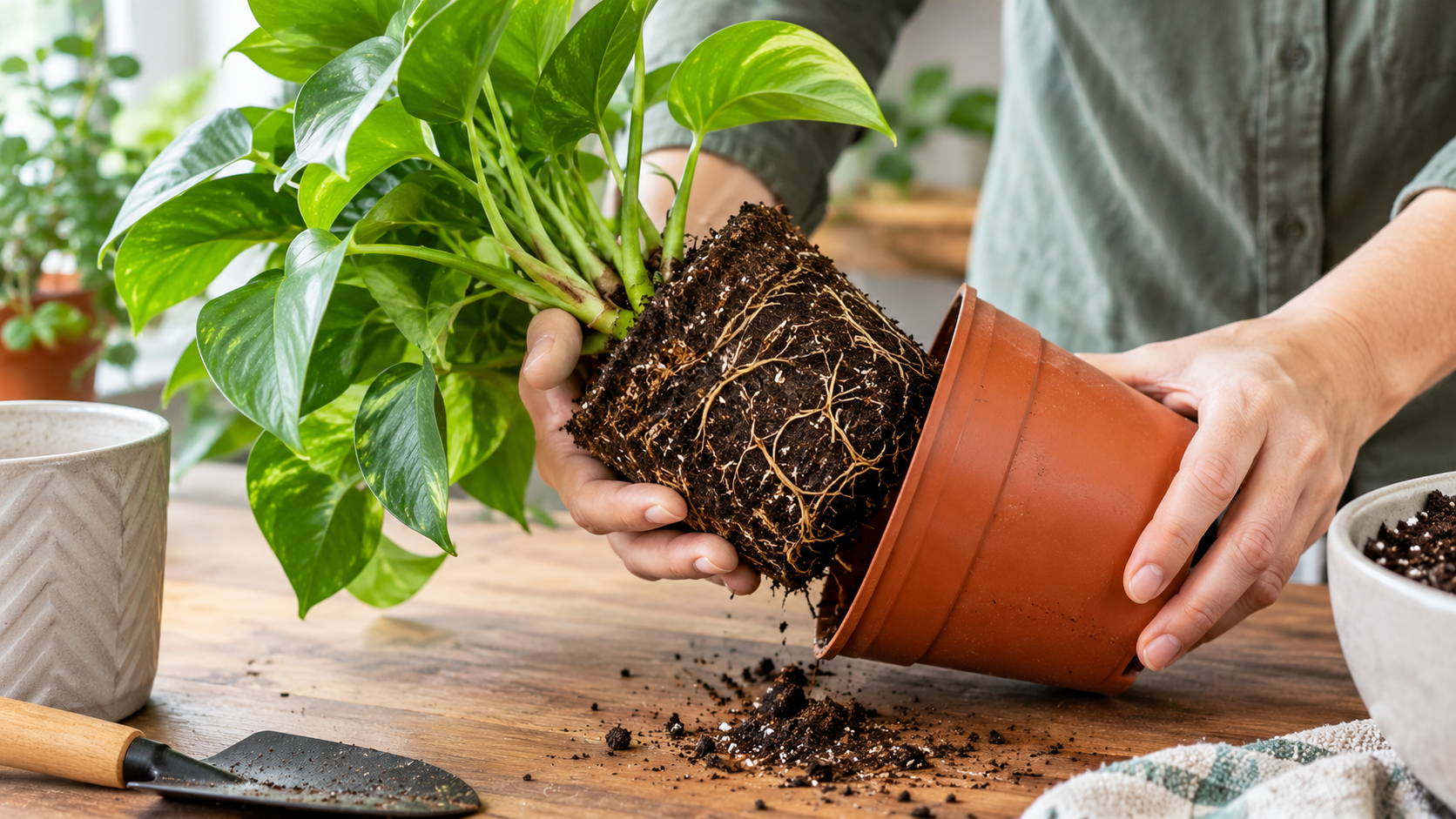
Avoid pulling the plant out by its leaves or stems. This can tear the crown or break important growing points. For a container-grown plant, turn the pot on its side and ease the root ball out while supporting the base.
3. Inspect the roots and identify natural divisions
Remove only enough loose soil to see how the plant is structured. Look for natural gaps between shoots, separate crowns, or groups of roots that can become independent sections.
Healthy roots are generally firm, although their color varies by species. Remove clearly dead or rotten material with a clean tool. If the roots are soft, foul-smelling, or extensively damaged, investigate possible rot before deciding how much of the plant can be saved.
4. Separate the clump using the right method
Choose the technique according to the plant’s root system.
- Gentle hand separation: suitable for loose clumps whose roots separate naturally. Ease the sections apart rather than pulling forcefully.
- Two garden forks: useful for large, dense clumps. Place the forks back-to-back in the center and gently lever them in opposite directions.
- A sharp knife or spade: appropriate when the crown or root mass is too dense to separate by hand. Make controlled cuts that preserve healthy roots and growing points.
Do not keep cutting simply to obtain more plants. A few strong divisions are usually a better choice than many tiny pieces that lack sufficient roots or buds.
5. Check that each division can grow independently
Before replanting, inspect every section. It should contain a healthy portion of the root system and the shoots, buds, crown, or other growing structures required by that species.
For many clump-forming perennials, retaining several vigorous shoots is a useful general guideline. Some species can establish from smaller sections, while others need larger divisions. There is no single minimum size that applies to every plant.
Discard sections that are badly rotten or have no viable growing points. If a division is small but healthy, consider growing it in a pot until it develops enough strength for the garden.
6. Replant promptly at the correct depth
Place each division in its prepared hole or pot as soon as possible. Spread the roots naturally rather than bending or tightly compressing them. Replant at approximately the original depth, following any species-specific instructions.
Burying the crown too deeply can encourage rot in some plants, while leaving roots exposed can cause them to dry out. Firm the soil gently around the roots to remove large air pockets without compacting it excessively.
7. Water and protect the new divisions
Water thoroughly after planting so the soil settles around the roots. In garden beds, a suitable layer of mulch can help conserve moisture, but keep it away from the crown when the species is sensitive to excess moisture.
If the divisions cannot be planted immediately, keep their roots shaded and protected from drying. Temporary storage should be brief; plant them as soon as practical.
Why Some Divisions Struggle After Replanting
Even when the separation itself goes well, newly divided plants may wilt, grow slowly, or fail to produce flowers immediately. Several causes are possible.
| Symptom | Possible cause | What to check |
|---|---|---|
| Wilting soon after planting | Root loss, heat, or inadequate moisture | Root condition, soil moisture, and sun exposure |
| Yellowing leaves | Transplant stress, waterlogging, or another growing problem | Drainage, watering, and the plant’s normal seasonal cycle |
| Soft, dark roots | Possible root rot | Soil saturation, drainage, and the extent of damage |
| Little new growth | Seasonal dormancy, small divisions, or slow establishment | Species growth cycle and viability of buds or crowns |
| No flowers in the next season | Recovery time, division size, or incorrect growing conditions | Plant maturity, light, and species-specific expectations |
These symptoms are clues, not definitive diagnoses. For example, wilting can occur in both dry soil and waterlogged soil because damaged roots may be unable to absorb enough water in either condition.
Aftercare: Helping Each Division Establish
The first weeks are especially important because the reduced root system must supply water to the remaining foliage while producing new roots.
Maintain consistent soil moisture
Check the soil near the roots rather than watering automatically every day. Water when the plant’s requirements and soil conditions indicate it is needed. The aim is to prevent the root zone from drying excessively without keeping it constantly saturated.
Container-grown divisions need particular attention because small pots can dry out quickly. At the same time, pots must have drainage holes so excess water can escape.
Adjust light and exposure when necessary
If the plant has been divided during warm weather, temporary protection from intense afternoon sun and drying winds may reduce stress, provided the species tolerates that adjustment. Do not move a sun-loving plant into deep shade for an extended period simply because it has been divided.
Delay unnecessary fertilizer
Freshly divided roots can be sensitive, and fertilizer cannot compensate for poor drainage, damaged roots, or incorrect planting depth. Avoid applying concentrated fertilizer directly to injured roots. Wait until the plant begins establishing new growth, then follow the feeding recommendations for that species and growing medium.
Be patient with flowering
A division may prioritize root development and foliage before producing flowers. Some perennials flower less in the first growing season after division and perform better later. The absence of immediate blooms does not necessarily mean the procedure failed.
Common Mistakes to Avoid
- Dividing at the wrong time: extreme heat, drought, or unsuitable seasonal timing can increase stress. Check the species’ requirements first.
- Making divisions too small: sections with few roots or no viable buds may struggle or fail.
- Leaving roots exposed: wind and sunlight can dry them while you prepare the remaining holes.
- Planting too deeply: burying the crown can damage species that need their growing points near the soil surface.
- Overwatering after division: keeping the soil constantly wet can deprive roots of oxygen and encourage rot.
- Fertilizing immediately to force growth: excessive nutrients do not repair damaged roots and may worsen stress.
- Dividing every plant in the same way: fibrous-rooted clumps, rhizomes, bulbs, and woody-rooted plants have different structures and propagation needs.
How Division Differs Between Common Plants
The plant’s structure determines how it should be separated.
Hostas generally form dense clumps that can be lifted and cut into sections, each with viable buds and roots. Spring and autumn are common division periods, depending on the climate and growing conditions.
Daylilies have dense root systems and can often be split with a sharp tool. Each section needs a healthy fan of leaves and sufficient roots to establish.
Bearded irises grow from rhizomes rather than ordinary clump roots. They are generally divided in mid- to late summer, and the rhizomes should not be buried too deeply. Their requirements differ from those of clump-forming irises.
Ornamental grasses vary considerably. Some form manageable fibrous clumps, while others develop tough root masses that require more effort. Divide only when the plant’s growth habit and season make it appropriate.
These examples are not interchangeable instructions. When a plant has bulbs, tubers, rhizomes, a woody crown, or a dominant taproot, use a guide specific to that plant rather than applying the standard perennial-division method.
Frequently Asked Questions
Can I divide a plant that is flowering?
It is usually better to wait until the recommended division period, often after flowering for spring bloomers. Dividing during active flowering can increase stress and may interrupt the current display. Some species have different schedules, so check their specific requirements.
Should I remove all the leaves before dividing?
No. Avoid removing healthy foliage unnecessarily. Leaves help the plant produce energy, although trimming damaged foliage or reducing excessive leaf area may be appropriate for certain species. Follow the needs of the plant rather than using a universal pruning rule.
Can I plant the divisions in pots instead of the garden?
Yes, if the species grows well in containers. Use pots with drainage holes and a suitable potting mix. Choose a container large enough for the roots without leaving the plant in an excessively large volume of wet soil.
How long does it take for a divided plant to recover?
Recovery varies with species, division size, temperature, light, and root condition. Some divisions resume growth relatively quickly; others establish slowly or may not flower until a later growing season. Watch for stable foliage and new growth rather than expecting a fixed recovery date.
Give Every Division the Best Chance to Grow
Successful clump division begins before the first cut. Identify the plant, choose a suitable time, prepare the new locations, and separate the clump in a way that preserves healthy roots and viable growing points. Replant promptly at the correct depth, then maintain appropriate moisture without saturating the soil.
Afterward, observe the plant before making further changes. If it wilts, check both soil moisture and root health instead of automatically watering or fertilizing more. A careful division and patient aftercare give each section a better opportunity to establish and develop into a healthy plant.