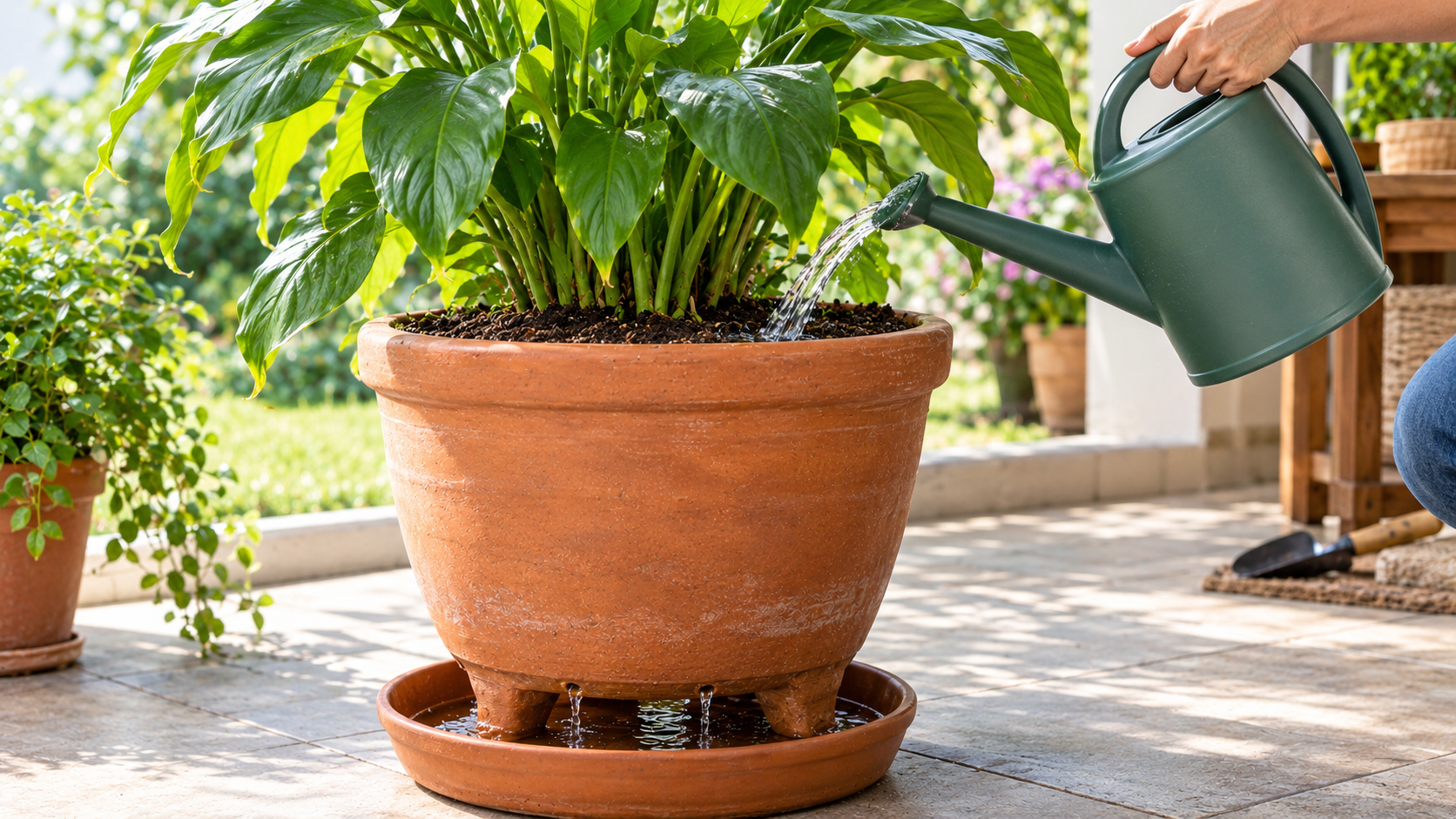
Watering a large planter can be surprisingly difficult. The surface may look dry and seem to need water, while the soil near the bottom remains wet for days. Adding more water without checking the deeper layers can leave roots in poorly aerated soil and increase the risk of root rot.
The solution is not simply to use less water. It is to understand how moisture moves through the container, check the root zone before watering, and make sure excess water can drain away. The right approach depends on the plant species, potting mix, container size, and growing conditions.
Why Large Pots Stay Wet at the Bottom
Large pots hold more growing medium than small containers, so they can store more water. This is useful for plants with substantial roots, but it also means that a large volume of soil may take longer to dry.
Three common factors explain why the bottom of a pot remains wet.
Poor drainage
Drainage holes allow excess water to escape. If they are missing, blocked, or pressed against a surface that prevents water from flowing out, moisture can accumulate around the roots.
A saucer that remains full of water can also keep the bottom of the growing medium excessively wet.
Dense or unsuitable potting mix
A compacted growing medium contains fewer air spaces for roots. Ordinary garden soil can become dense inside containers, especially when repeatedly watered.
A suitable potting mix should retain enough moisture for the plant while maintaining adequate air circulation around the roots.
A container that is too large
If a plant has a small root system in a very large pot, much of the growing medium may remain unused. The plant cannot draw water from all that soil quickly enough to prevent prolonged wetness.
A larger container is not always better. Choose a pot that accommodates the roots while allowing room for healthy growth.
How to Check Whether Your Pot Needs Water
The most reliable way to avoid waterlogged soil is to check moisture before watering rather than follow a fixed schedule.
Check below the surface
The top layer of soil usually dries faster than the deeper layers. Insert a clean wooden skewer into the growing medium, where practical, and examine it when you remove it. Damp soil may cling to the skewer, while a relatively dry section may come out clean.
For a deep planter, a long moisture probe can help you assess conditions farther down. Check several locations if possible because water does not always spread evenly.
The correct moisture level depends on the plant. Many tropical foliage plants prefer evenly moist soil, whereas cacti and many succulents need the growing medium to dry more thoroughly between waterings.
Use the pot’s weight as a guide
If the container is small enough to move safely, compare its weight after watering with its weight as the soil dries. A lighter pot often indicates that some water has been used by the plant or lost through evaporation.
With very large planters, do not attempt to lift the container unsafely. Use a moisture probe and observe how long the soil takes to dry instead.
Recognize signs of excessive moisture
Possible warning signs include:
- Soil that remains saturated for several days.
- Yellowing or dropping leaves.
- A persistent sour or musty smell from the growing medium.
- Soft, dark, or deteriorating roots.
These symptoms are not conclusive on their own. Nutrient problems, pests, temperature stress, and underwatering can produce similar changes. Examine the growing conditions before deciding that overwatering is the cause.
How to Water a Large Pot Correctly
The aim is to moisten the root zone evenly while allowing excess water to escape. Repeatedly adding small amounts can leave parts of the root ball dry while other areas remain saturated.
Follow these steps:
- Inspect the drainage holes. Check that they are open and that the pot is not sitting directly on a surface that blocks water from escaping.
- Water slowly. Use a watering can with a narrow spout and distribute water across the soil surface, concentrating on the root zone rather than pouring everything in one place.
- Pause between applications. Give the growing medium time to absorb the water. If it is extremely dry and water runs straight down the sides, apply smaller amounts in stages.
- Watch for drainage. For most plants that prefer thorough watering, continue until a little water emerges from the drainage holes. Avoid continuing to add water once the root zone is adequately moist.
- Empty the saucer. Allow excess water to drain, then remove the collected water so the pot does not remain in standing water.
- Check before watering again. Assess moisture at a depth appropriate for the plant instead of following a fixed daily schedule.
These steps should be adapted to the plant’s requirements. Moisture-loving species may need a more consistently moist root zone, while drought-tolerant plants need longer drying periods.
How to Improve Drainage in Large Containers
If the bottom remains wet for too long, changing your watering technique may not be enough. Inspect the container and growing medium first.
Raise the pot slightly
Pot feet or a stable stand can create space beneath the container, allowing water to escape freely. This is especially useful when the pot sits on a flat patio or balcony.
Make sure the container remains stable, particularly if it is tall or contains a heavy plant.
Replace unsuitable potting mix
If the growing medium has become dense or compacted, consider repotting when the plant’s condition justifies it. Use a container mix suited to the species, with enough air space for healthy root growth.
Materials such as perlite, pumice, and bark can improve the structure of some mixes, but the best combination depends on the plant. Avoid replacing the entire growing medium unnecessarily if the plant is healthy and the drainage problem can be corrected another way.
Illinois
+1
Avoid gravel at the bottom
Adding a layer of gravel beneath the soil does not reliably improve drainage. Instead, it can cause water to accumulate in the growing medium above the boundary between the two layers.
Use open drainage holes and an appropriate growing medium rather than relying on gravel to keep the roots dry.
Watering Needs Depend on the Plant and Environment
Not every large pot should dry out to the same degree.
- Tropical foliage plants: Many prefer evenly moist but well-aerated soil. Check moisture before watering and avoid allowing the root zone to remain saturated.
- Vegetables and flowering plants: Active growth, strong sunlight, and warm weather can increase water use. Check more frequently during hot periods.
- Cacti and succulents: Most require a fast-draining growing medium and a substantial drying period between waterings.
- Trees and shrubs: Large root systems may use considerable water, but drainage remains essential.
Container material also matters. Unglazed terracotta and fabric pots tend to dry faster than plastic or glazed ceramic containers. Wind, humidity, sunlight, and temperature can change how quickly the soil loses moisture
Common Mistakes to Avoid
Several habits can keep a large pot excessively wet:
- Watering automatically every day without checking the soil.
- Using dense garden soil instead of an appropriate container mix.
- Leaving the pot standing in a full saucer.
- Choosing a container much larger than the root system requires.
- Adding water repeatedly without checking whether deeper soil is already wet.
- Assuming yellow leaves always indicate a need for more water.
A plant can wilt even when the soil is wet if damaged roots cannot absorb water effectively. Check the root zone and drainage before increasing watering.
What to Do When the Bottom Is Already Soggy
If the soil is wet but the plant appears healthy, stop watering temporarily and allow excess moisture to drain. Keep the plant in conditions appropriate for its species and monitor the deeper soil before watering again.
If the plant continues to decline, inspect the drainage holes and look for signs of root damage. If roots are soft, dark, or deteriorating, repotting into fresh, suitable growing medium may be necessary. Remove clearly rotten roots with clean tools and avoid disturbing healthy roots more than necessary.
Do not try to dry the soil by exposing a shade-loving plant to harsh sunlight. Sudden changes in light or temperature can add stress.
A Better Routine for Healthier Roots
The key to watering large pots is to balance moisture retention with drainage. Check the deeper growing medium, water evenly when needed, let excess water escape, and empty the saucer.
If the bottom stays wet for unusually long periods, investigate the potting mix, drainage holes, and container size before changing your watering routine. Observing how the soil dries over several watering cycles will help you develop a routine suited to the plant and its environment.