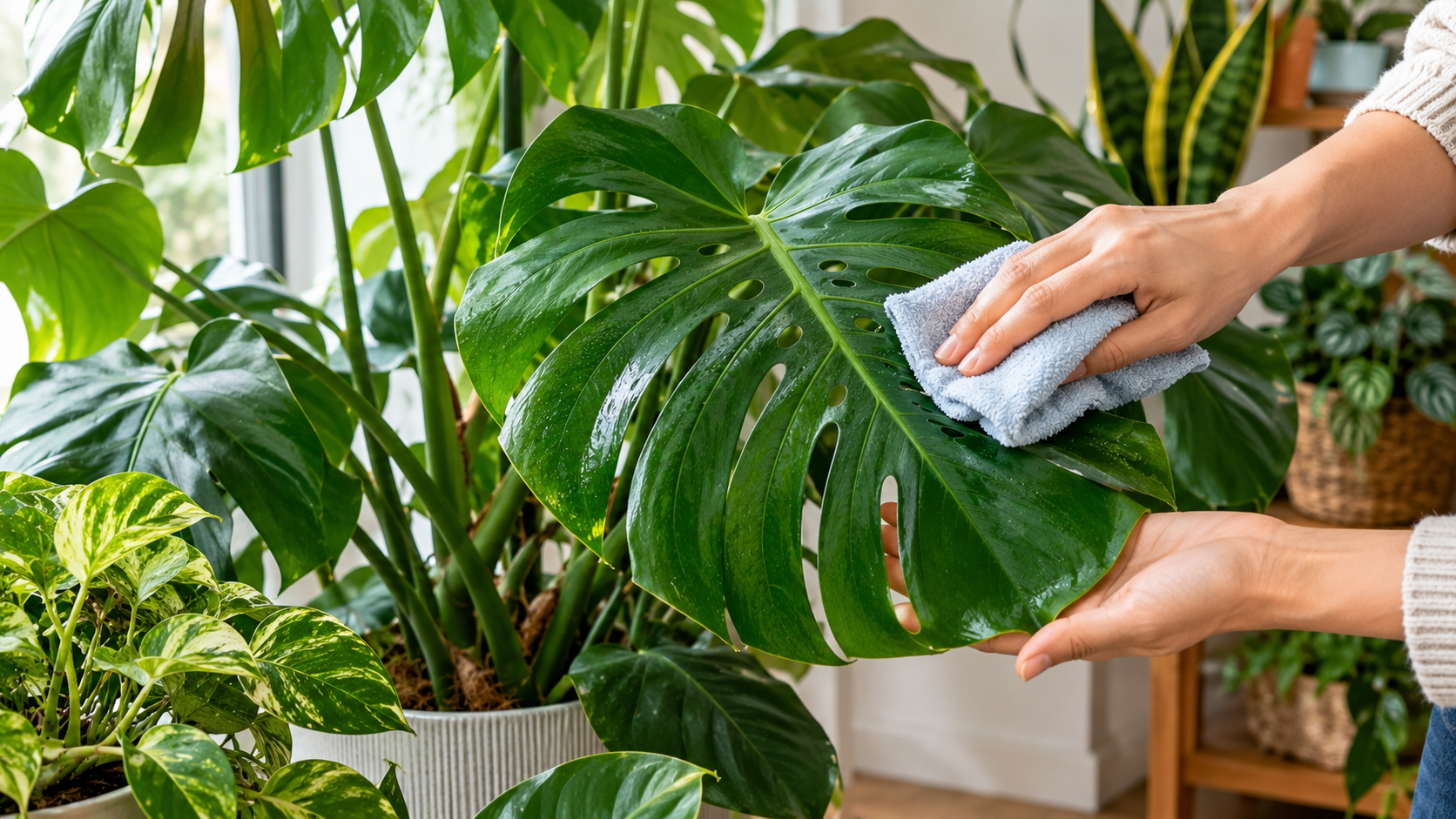
Dusty leaves can make a healthy houseplant look dull, but cleaning them requires more care than simply wiping away the dirt. Some plants have smooth, sturdy leaves that tolerate a damp cloth, while others have delicate hairs, fragile surfaces, or a natural coating that can be damaged by rubbing or household cleaning products.
The safest approach is to identify the type of leaf, choose a gentle cleaning method, and remove only what the plant does not need. With a few simple materials and the right technique, you can keep foliage clean without stripping away its natural protection.
Why Cleaning Plant Leaves Matters
Leaves capture light for photosynthesis, the process plants use to produce the energy needed for growth. When dust, household grime, or cooking residue accumulates on the surface, it can reduce the amount of light reaching the leaf. Keeping foliage clean also makes it easier to notice changes in color, texture, and growth.
Cleaning provides another useful opportunity: inspecting the plant for pests. Small insects, fine webbing, sticky residue, and unusual spots are often easier to detect when the foliage is no longer covered in dust. Washing can remove some pests from leaf surfaces, although a rinse alone may not eliminate an established infestation.
However, clean leaves do not need to look artificially glossy. Many plants naturally produce a thin protective outer layer, and preserving that surface is more important than making the foliage shine.
Identify Your Plant Before Choosing a Cleaning Method
The shape and texture of the leaves help determine which technique is safest. Before cleaning, look at both sides of a leaf and check whether the surface is smooth, fuzzy, delicate, or covered with a noticeable coating.
Plants with large, smooth leaves

Plants such as monstera, pothos, rubber plants, and many philodendrons usually tolerate gentle wiping with a soft, damp cloth. Their broad leaves make it relatively easy to remove dust without applying excessive pressure.
Support each leaf from underneath while cleaning. This prevents the stem or leaf blade from bending sharply, particularly when working with older or heavy foliage.
Plants with fuzzy or hairy leaves
African violets and some other plants have tiny hairs on their leaves. These structures can hold water and may be damaged by rubbing, so a wet cloth or strong spray is generally unsuitable.
Use a clean, soft, dry brush to lift dust gently. Work with light strokes and avoid pressing the bristles into the surface. If the foliage is already wet, allow it to dry naturally in a suitable environment rather than rubbing it.
Plants with delicate or wax-coated leaves
Some succulents and other plants have a natural, powdery or waxy coating that helps protect the leaf surface. Rubbing can remove this coating permanently from the affected area.
For these plants, avoid polishing or vigorous wiping. If cleaning is necessary, use a gentle, species-appropriate method and avoid touching the surface more than needed.
The key rule is simple: never assume that every plant benefits from the same cleaning routine. When the leaf type is uncertain, identify the plant first and check its care requirements.
Materials You Need to Clean Plant Leaves Safely
Most routine leaf cleaning requires very little equipment. Prepare the following:
- A soft, clean microfiber cloth or smooth cotton cloth.
- A small, soft-bristled brush for delicate or textured foliage.
- A container of clean, lukewarm water.
- A spray bottle or gentle shower setting, if appropriate for the plant.
- A second cloth for supporting leaves or catching drips.
- A towel to protect nearby furniture and flooring.
Avoid rough sponges, abrasive brushes, paper towels that shed fibers, and cleaning tools previously used with household chemicals. Residues from window cleaners, disinfectants, or detergents can transfer to the foliage.
For ordinary dust, plain water is usually the best starting point. Iowa State University Extension notes that a damp cloth with clear water is effective for most houseplants and avoids the potential damage associated with household detergents.
How to Clean Plant Leaves Step by Step
For most plants with smooth, sturdy leaves, a gentle wipe is enough. Follow these steps rather than rubbing the foliage repeatedly.
Step 1: Inspect the plant
Look for yellowing, brown patches, sticky deposits, fine webbing, insects, or unusual marks. These signs may indicate pests, mineral residue, or a plant health problem rather than ordinary dust.
If you find pests, keep the plant away from unaffected plants while you identify the problem. Cleaning can help remove some insects, but an infestation may require a separate treatment suited to the pest and plant species.
Step 2: Moisten the cloth
Dip a clean cloth in lukewarm water and wring it out until it is damp rather than dripping. Water that is excessively hot or cold can stress sensitive foliage.
Avoid adding soap automatically. Even products marketed for household use can contain ingredients that damage the leaf’s protective surface.
Step 3: Support and wipe each leaf
Place one hand underneath a leaf to support it. With the other hand, wipe gently from the base toward the tip, following the natural shape of the blade.
Use only enough pressure to lift the dirt. Do not pull, twist, or stretch the leaf, and do not scrub a mark that refuses to come off. If the cloth becomes dirty, rinse it before moving to another leaf.
Step 4: Clean the undersides
Dust and pests can also accumulate beneath the foliage. Turn each leaf carefully and inspect its underside, particularly along the veins and near the point where the leaf joins the stem.
Wipe the underside only if the plant tolerates it. For fragile foliage, a soft brush or another species-appropriate method may be safer.
Step 5: Remove excess moisture
Check for water trapped in leaf joints, tightly packed growth, or the center of plants with a crown or rosette. Gently blot accessible droplets if needed, without rubbing delicate surfaces.
Allow the plant to dry in a location with suitable air circulation and lighting. Do not immediately move a shade-loving plant into strong direct sunlight just because its leaves are wet.
When Is It Better to Rinse the Plant?
Wiping individual leaves is practical for large plants, but rinsing can save time when a plant has many small, sturdy leaves.
A gentle rinse may be useful when foliage has accumulated loose dust or light environmental grime. Use lukewarm water and low pressure, and protect the potting mix if the plant should not receive additional water.
Before rinsing, check three things:
- Leaf tolerance: delicate, fuzzy, or powder-coated leaves may not tolerate washing.
- Drainage: the pot should drain freely if water enters the soil.
- Drying conditions: the plant should be able to dry without remaining wet for an extended period.
The University of California’s Integrated Pest Management program recommends washing foliage periodically to help prevent some indoor plant pests, while emphasizing the importance of conditions that allow leaves to dry.
If your plant is sensitive to prolonged leaf wetness, or if you suspect a disease that worsens under damp conditions, use a dry brush or targeted wiping instead of soaking the foliage.
What You Should Never Use on Plant Leaves
A common mistake is treating foliage like furniture that needs polishing. Plant leaves are living surfaces, and products that create an artificial shine can leave residues that interfere with normal leaf function.
Avoid leaf-shine sprays and oily home remedies
Do not use furniture polish, cooking oil, mayonnaise, milk, or similar substances to make leaves glossy. These products can leave films that attract dust or interfere with the leaf surface. North Carolina State University Extension advises against leaf-shine products because their residues may clog stomata, the tiny pores involved in gas exchange.
A healthy, naturally glossy leaf does not need an additional coating. If it looks dull, remove the dust gently instead of trying to change its natural finish.
Use soap only when there is a clear reason
For routine dust removal, water is generally sufficient. A detergent may damage the waxy cuticle and cause discoloration or browning, particularly when used too strongly or left on the foliage.
If you need to address stubborn grime or an identified pest, first confirm that the plant tolerates the proposed product. Use a treatment specifically appropriate for the plant and problem, follow its label, and test on a small area when the instructions permit. Never assume that a homemade mixture is harmless simply because its ingredients are common in the kitchen.
How Often Should You Clean Plant Leaves?
There is no universal cleaning schedule. Dust accumulates at different rates depending on the room, ventilation, nearby cooking, open windows, and the plant’s leaf texture.
As a practical starting point, inspect indoor foliage every few weeks and clean it when a visible layer of dust appears. Some extension guidance recommends cleaning houseplants approximately every two or three months, but plants in dusty environments may need attention sooner.
Use these signs to decide when cleaning is needed:
- The leaves look dull or have a visible film of dust.
- Dust collects along the veins or near the leaf edges.
- The undersides have accumulated debris.
- You want to inspect the plant more closely for pests.
Avoid cleaning healthy foliage excessively just to maintain a particular appearance. Frequent rubbing can cause unnecessary wear, especially on delicate or naturally coated leaves.
Common Leaf-Cleaning Mistakes to Avoid
Even a simple task can damage foliage if the method is too aggressive. Watch out for these common errors:
- Rubbing too hard: pressure can tear leaves, damage hairs, or remove protective coatings. Use lighter strokes instead.
- Using dirty cloths: old dirt and residues may transfer between leaves or plants. Rinse the cloth regularly and clean tools after use.
- Spraying with excessive pressure: forceful water can tear delicate foliage and push water into tight growth.
- Leaving plants wet in poor conditions: prolonged moisture can encourage disease in susceptible plants. Choose a method that suits the plant and allows appropriate drying.
- Trying to create an artificial shine: polishing products and oily mixtures are unnecessary and may harm the foliage.
- Mistaking damage for dirt: brown spots, pale patches, sticky residue, and distorted leaves may indicate pests, mineral deposits, or disease. Repeated scrubbing will not resolve these causes.
If a mark remains after gentle cleaning, stop and investigate rather than applying more pressure or stronger products.
How to Keep Leaves Cleaner for Longer
Prevention makes plant care easier and reduces the need for frequent handling.
Keep plants away from persistent sources of airborne grease and dust where practical. In kitchens, foliage near cooking areas may collect a sticky film more quickly, so check it regularly. When dusting shelves or furniture, avoid directing loose dust onto nearby plants.
Inspect leaves during routine watering and pruning. This makes it easier to notice pests or buildup before it becomes extensive. Clean cloths and brushes should be stored separately from household cleaning equipment to avoid chemical contamination.
Finally, maintain the plant’s general care needs. Suitable light, watering, and airflow help support healthy growth, but they do not eliminate the need to inspect foliage occasionally.
Frequently Asked Questions
Can I clean plant leaves with tap water?
Usually, yes, for routine dust removal. However, some plants are sensitive to minerals or additives in certain water supplies, which may leave spots or damage leaf tips. If residue repeatedly appears after cleaning, consider using distilled or otherwise suitable low-mineral water for sensitive plants.
Should I wipe both sides of every leaf?
Inspect both sides, because dust and pests can occur on either surface. Clean each side only as needed and only with a method the plant tolerates. Delicate leaves may be better left undisturbed or cleaned with a soft, dry brush.
Can I use a spray bottle to clean plants?
A spray bottle can help rinse dust from suitable plants if it produces a gentle flow. Fine misting alone may not remove stubborn dirt, and it is not suitable for every species or every disease situation. Avoid keeping susceptible foliage wet for long periods.
Does cleaning leaves make a plant grow faster?
Cleaning can improve the amount of light reaching dusty foliage and helps you notice pests early. However, it does not guarantee faster growth. Growth also depends on light, water, nutrients, temperature, roots, and the plant’s natural growing cycle.
Protect the Leaf, Not Just Its Appearance
The safest way to clean plant leaves is to match the method to their natural texture. Start with a gentle inspection, use a soft cloth and plain water for suitable smooth leaves, and choose a dry brush or another appropriate method for delicate foliage.
After cleaning, observe the plant for changes rather than repeating the process unnecessarily. If spots, discoloration, or sticky residue persist, investigate their cause instead of scrubbing harder. Clean leaves should remain natural, healthy, and undamaged—not polished at the expense of the plant’s protective surface.