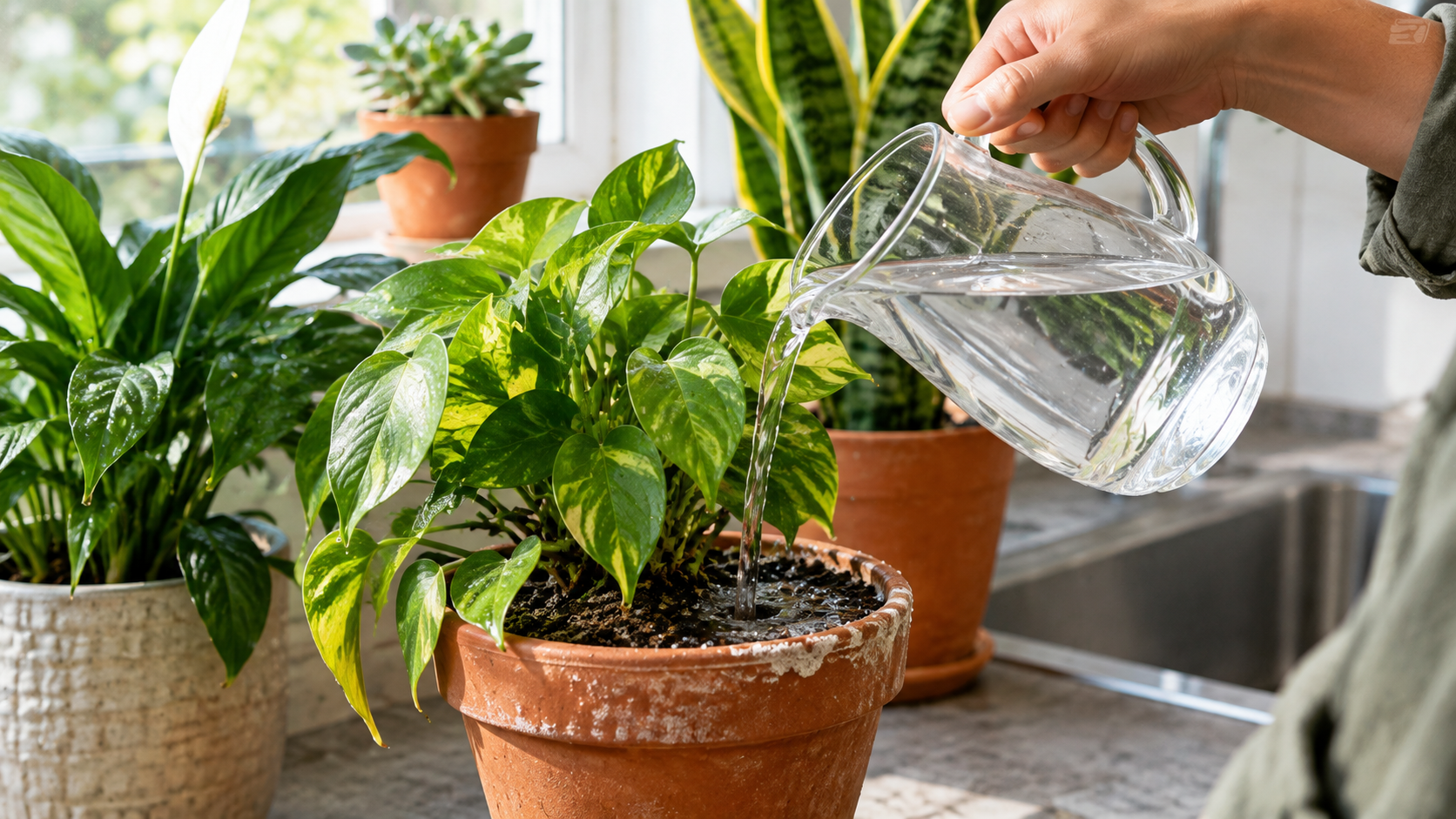
If your houseplants develop brown leaf tips, white deposits on the soil, or slower growth, you may start wondering whether tap water is the problem. Switching to rainwater, filtered water, or distilled water can seem like an easy solution, but not every plant needs a different water source.
Tap water is suitable for most houseplants. However, its mineral content, disinfection treatment, and any additional household water softening can affect certain species over time. The challenge is identifying whether the water is actually contributing to the problem or whether watering habits, fertilizer, drainage, or environmental conditions are responsible.
Before changing your watering routine, examine the plant’s symptoms, understand your water source, and consider the needs of the species you grow. This approach can help you avoid unnecessary expenses and choose a practical solution.
Is Tap Water Safe for Houseplants?
For most common indoor plants, municipal tap water is generally suitable. Its quality varies by location, but ordinary drinking water does not automatically harm plants because it contains disinfectants or dissolved minerals.
The important distinction is between water that is acceptable for most plants and water that is ideal for a particular species. Some plants tolerate a wide range of water conditions, while others are sensitive to specific minerals or accumulated salts.
For example, pothos, snake plants, and many common foliage plants usually tolerate ordinary tap water. Carnivorous plants, such as Venus flytraps, generally require water with very low mineral content because their natural growing environments contain few available nutrients.
Do not assume that every plant needs filtered or bottled water. First determine whether your water contains a substance that could affect the species you are growing.
1. Look for Signs of Mineral Buildup
One of the most useful first checks is to inspect the soil surface, pot, and leaves for visible residue.
White crust on the soil or pot
A white or pale crust may indicate mineral deposits from hard water, fertilizer salts, or a combination of both. Deposits may appear on the surface of potting mix, around drainage holes, or along the rim of an unglazed terracotta pot.
Hard water contains dissolved minerals, particularly calcium and magnesium. These minerals are not inherently harmful, but repeated watering can leave deposits as water evaporates.
Fertilizer also contributes soluble salts, so residue alone does not prove that tap water is responsible. Review your feeding schedule and look for deposits on several pots to see whether the problem follows a common pattern.
Brown leaf tips and edges
Brown, dry leaf tips may occur when salts accumulate in the growing medium and interfere with water uptake. However, low humidity, irregular watering, root damage, and other environmental stresses can produce similar symptoms.
Observe whether the damage affects several plants watered from the same source or only one species. If sensitive plants show recurring tip burn while other plants remain healthy, water quality deserves closer investigation.
Avoid removing healthy leaves or applying extra fertilizer before understanding the cause.
2. Check Whether Your Water Is Hard or Softened
Water hardness refers primarily to the concentration of dissolved calcium and magnesium. These minerals can contribute to deposits, but hardness is not the same as total salinity or alkalinity.
What hard water means for plants
Many plants tolerate moderately hard water without noticeable problems. Concerns are more likely when minerals accumulate over time, when the growing medium is small, or when a sensitive species is grown in a pot with limited opportunities for natural leaching.
If you notice persistent mineral deposits, contact your water supplier or check its water quality report. A suitable test can provide more useful information than judging hardness by taste or appearance.
Why softened water may be a problem
Some household water softeners replace calcium and magnesium with sodium. This can make the water less suitable for plants that receive it repeatedly, because sodium and other dissolved salts may accumulate in the growing medium.
If your home has a water softener, find out whether the tap you use for plants is connected to the treated supply. When possible, consider using an untreated tap or a suitable alternative source instead.
Do not assume that all filtration systems work the same way. A filter designed to improve taste may not remove dissolved salts, and a conventional softener does not necessarily produce low-mineral irrigation water.
3. Understand Chlorine, Chloramine, and Fluoride
Municipal water may contain disinfectants that help control harmful microorganisms. Chlorine and chloramine are not interchangeable, and their behavior differs when water is left standing.
Does leaving tap water overnight help?
Allowing water to stand in an open container may reduce free chlorine, but it is not a reliable way to remove chloramine. If your local water supplier uses chloramine, leaving water overnight should not be treated as a complete solution.
For most ordinary houseplants, disinfectant concentrations in treated drinking water are generally not a reason to switch sources automatically. Check the local water treatment information before spending money on special products.
What about fluoride-sensitive plants?
Some plants are more susceptible to fluoride injury than others. Certain sensitive foliage plants, including peace lilies, may develop brown leaf tips or margins under unfavorable conditions when fluoride accumulates.
However, similar symptoms can result from hard water, fertilizer salts, dry air, and watering problems. If a sensitive species repeatedly develops tip damage, investigate fluoride levels alongside other possible causes rather than assuming fluoride is responsible.
For plants known to be sensitive, rainwater or appropriately treated low-mineral water may be worth considering.
4. Consider the Plant Species Before Switching Water
The best water source depends on the plant’s natural requirements, growing medium, and exposure to minerals.
- Common tropical foliage plants: Many pothos, philodendrons, and snake plants tolerate ordinary tap water when watering and drainage are appropriate.
- Peace lilies and other sensitive foliage plants: Persistent brown tips may justify checking water quality, fluoride exposure, and salt buildup.
- Carnivorous plants: Venus flytraps and many other carnivorous species generally need rainwater, distilled water, or suitable reverse-osmosis water with very low dissolved mineral content.
- Seedlings and plants grown in small containers: Limited growing-medium volume can make water quality more important because dissolved substances may accumulate more quickly.
- Outdoor garden plants: Rainfall may dilute accumulated salts, although this depends on climate, soil drainage, and irrigation frequency.
A plant that grows well outdoors with occasional tap-water irrigation may respond differently when grown permanently in a small indoor pot. Indoor containers often receive repeated applications from the same source without the dilution provided by rainfall.
5. Compare Alternative Water Sources
If your observations suggest a water-quality problem, choose an alternative that addresses the suspected cause.
Rainwater
Cleanly collected rainwater is often useful for houseplants because it generally contains fewer dissolved minerals than hard tap water. Collect it in a clean container and protect it from contamination by debris, animal waste, dirty roofs, or unsuitable storage materials.
Rainwater quality can vary with collection conditions and local pollution. Avoid using visibly contaminated water, and do not assume collected water is safe for drinking.
Distilled water
Distilled water contains very few dissolved minerals and can be useful for sensitive plants. However, it also supplies virtually none of the mineral nutrients plants need for long-term growth.
When distilled water is used regularly, provide appropriate nutrition through a species-specific growing medium and fertilizer routine. Carnivorous plants have different nutritional requirements from ordinary houseplants, so they should not receive a standard fertilizer schedule without suitable guidance.
Reverse-osmosis water
Reverse-osmosis systems remove much of the dissolved material from water, although the exact result depends on the equipment and its maintenance. This option can be practical for people with many sensitive plants, but it may be unnecessary for a small collection of tolerant species.
Filtered water
The word filtered does not guarantee that a water source is suitable for every plant. Check which substances the filter is designed to reduce and whether it addresses the suspected problem, such as chlorine, chloramine, or dissolved salts.
Choose a solution based on the water’s actual characteristics rather than marketing claims.
6. A Step-by-Step Check Before Changing Your Water
Use this simple procedure to make a more informed decision.
- Record the symptoms. Note brown tips, white deposits, yellowing, or reduced growth. Photograph affected leaves and the soil surface.
- Review watering habits. Check how often you water, whether the soil dries appropriately for the species, and whether excess water drains freely.
- Check fertilizer use. Excess feeding can create salt buildup that resembles a water-quality problem.
- Inspect the water source. Find out whether your supply is municipal or from a private well and whether a household softener is involved.
- Consult water information. Review the supplier’s report or obtain appropriate testing if there is a persistent concern about hardness, fluoride, sodium, or salinity.
- Match the solution to the plant. Use an alternative source when there is a reasonable basis for doing so, particularly for species known to require low-mineral water.
- Monitor new growth. Keep light, temperature, fertilizer, and watering practices as consistent as practical while evaluating the change.
Avoid changing several growing conditions at the same time. Otherwise, it becomes difficult to tell whether a different water source actually helped.
7. Common Mistakes to Avoid
Several popular watering practices can be ineffective or counterproductive.
- Switching every plant to distilled water: Most common houseplants do not require it, and long-term use needs appropriate nutritional management.
- Assuming white residue always comes from tap water: Fertilizer salts can create similar deposits.
- Using softened water without checking its composition: Sodium-based softening can increase the risk of salt accumulation.
- Adding vinegar or other acids without testing: Incorrect acidification can damage roots and disrupt nutrient availability.
- Leaving water standing to remove every disinfectant: This may reduce free chlorine but does not reliably remove chloramine or dissolved minerals.
- Ignoring drainage: Even suitable water can contribute to problems when roots remain waterlogged or salts are allowed to accumulate.
If mineral deposits are extensive, a suitable leaching procedure or repotting may help, depending on the plant, potting medium, and severity of the buildup. Use water appropriate for the species, ensure adequate drainage, and never leave the pot sitting in the runoff.
Frequently Asked Questions
Should I boil tap water before watering plants?
Boiling is not a general solution to water-quality problems. It does not remove dissolved salts, and evaporation can concentrate some remaining substances. Use boiling only when a specific, appropriate purpose has been established.
Can I use bottled drinking water?
Possibly, but bottled water varies in mineral composition. Some products contain substantial dissolved minerals, so bottled water is not automatically better than tap water. Check the label and the plant’s requirements before choosing it for regular use.
How can I tell whether tap water is harming my plant?
Look for a consistent pattern, such as recurring mineral deposits or tip damage in sensitive species, and investigate other causes first. Water testing can help when symptoms persist despite appropriate care.
Choose Water Based on Evidence, Not Assumptions
Tap water is a reasonable choice for many houseplants, and changing the source is not always necessary when a plant looks unhealthy. Begin by checking the species, watering practices, drainage, fertilizer use, and visible mineral deposits.
If these observations suggest a water-quality issue, investigate the relevant properties and select an alternative that addresses them. Monitor subsequent growth before making further changes.
The goal is not to find one perfect water source for every plant, but to provide water that suits each plant’s needs and avoids unnecessary mineral or salt accumulation.