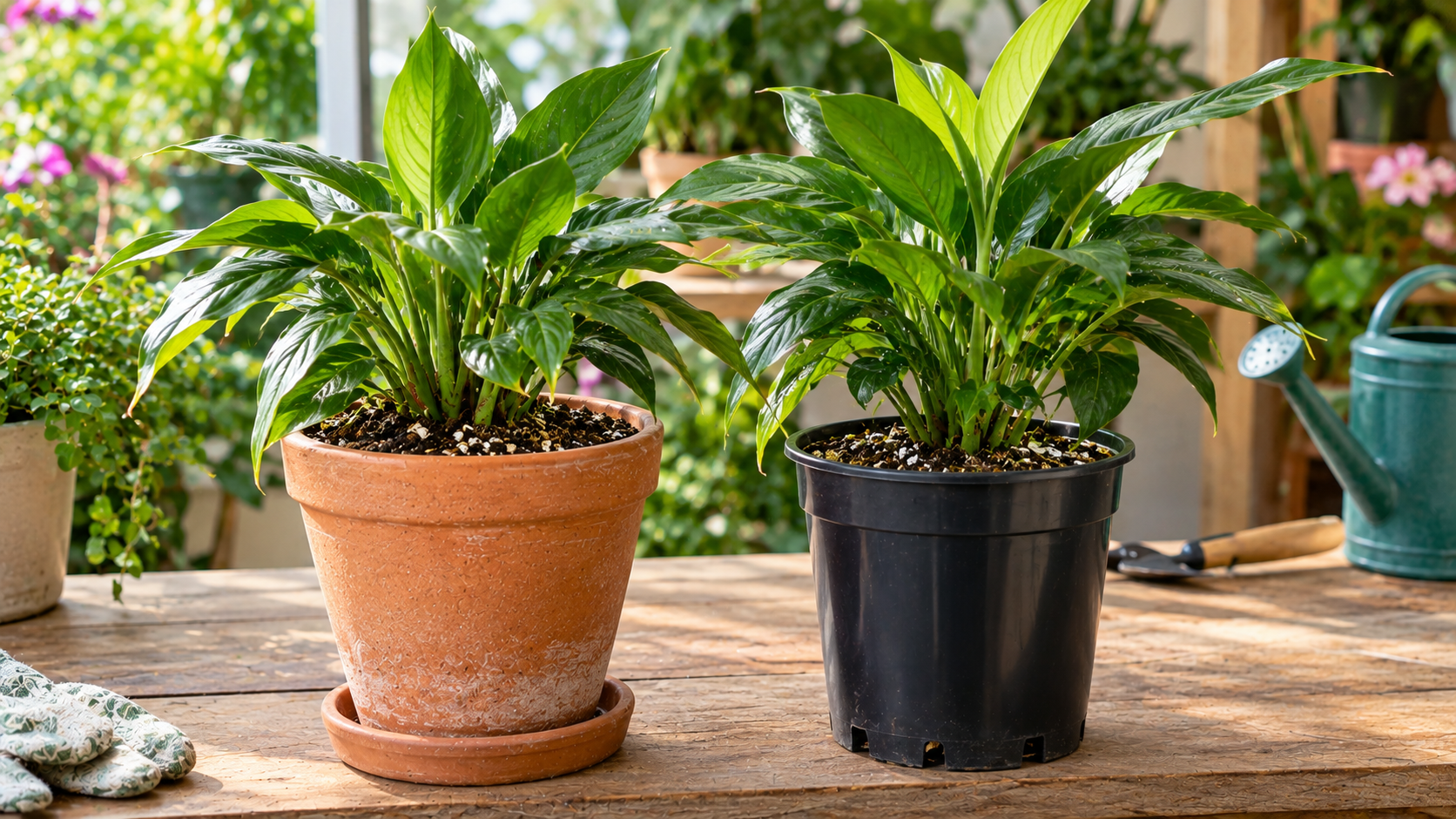
If your houseplants dry out too quickly or their soil stays wet for days, the pot itself may be part of the reason. Terracotta and plastic containers can hold the same potting mix and grow the same plant, yet the soil inside them may dry at noticeably different rates.
The main difference is porosity. Unglazed terracotta absorbs moisture and allows some of it to evaporate through the pot walls, while plastic is nonporous and retains moisture inside the container for longer. Understanding how this affects watering can help you choose the right pot, reduce plant stress, and avoid common problems such as underwatering and root rot.
Why Pot Material Affects Moisture Loss
Plants lose water through their leaves, but moisture also leaves the potting mix through evaporation. The container influences how much water escapes and how quickly the root zone dries.
Three processes are especially important:
- Evaporation through the pot walls: This occurs in porous materials such as unglazed terracotta.
- Evaporation from the soil surface: This happens in both terracotta and plastic pots.
- Water loss through drainage: Excess water exits through the drainage holes in either type of container.
The plant also absorbs water through its roots, and environmental conditions affect how quickly it uses that moisture. Temperature, sunlight, humidity, airflow, pot size, and the composition of the potting mix all influence drying time.
Virginia Cooperative Extension explains that unglazed terracotta allows moisture to evaporate through its walls, while plastic containers generally lose water through the soil surface and drainage holes. Consequently, the same plant may need different watering intervals depending on the container material. Virginia Tech Extension: Properly Watering Container Houseplants
How Terracotta Pots Change Moisture Loss

Terracotta pots are made from fired clay and are usually left unglazed. Their tiny pores absorb water from the surrounding potting mix, allowing some moisture to move through the clay and evaporate into the air.
This process means the root zone often dries faster than it would in a comparable plastic pot.
Advantages of terracotta
Terracotta can be useful for plants that prefer the potting mix to dry between waterings. It can also suit gardeners who tend to water too frequently, provided they still check the soil and respond to the plant’s actual needs.
Potential advantages include:
- Faster drying of the potting mix.
- Less prolonged moisture around the roots when other growing conditions are suitable.
- A stable, relatively heavy container that is less likely to tip over.
- A natural appearance that works well in indoor and outdoor gardens.
However, faster drying does not automatically mean healthier roots. Plants still need adequate moisture, and a terracotta pot cannot compensate for a poorly chosen potting mix or inadequate drainage.
Disadvantages of terracotta
The same porosity that helps terracotta release moisture can become a disadvantage in warm, dry, or windy environments. Small pots may dry especially quickly because they contain less potting mix to hold water.
You may need to water more often if your plant grows in terracotta and is exposed to strong sunlight, warm temperatures, or moving air. The outer surface may also develop pale mineral deposits as water evaporates and leaves dissolved salts behind.
Terracotta is heavier and more fragile than plastic. In climates with freezing temperatures, water absorbed into the clay can contribute to cracking during freeze-thaw cycles.
How Plastic Pots Change Moisture Loss

Plastic pots are nonporous, so water does not normally evaporate through their walls. Moisture leaves primarily through the soil surface, the drainage holes, and the plant itself.
As a result, potting mix in a plastic container often stays moist longer than the same mix in an unglazed terracotta pot under similar conditions.
Advantages of plastic
Plastic pots are lightweight, affordable, and available in many sizes. They are also convenient for hanging plants, large collections, and gardeners who need to move containers regularly.
Their moisture-retaining properties can be helpful when:
- A plant prefers consistently and evenly moist potting mix.
- The growing environment is warm or relatively dry.
- Frequent watering would be difficult.
- A small container would otherwise dry too rapidly.
Plastic can reduce watering frequency, but it does not eliminate the need to monitor soil moisture.
Disadvantages of plastic
Because plastic releases less moisture through its sides, the potting mix can remain wet for too long if the plant is watered too frequently, the container is oversized, or the growing medium drains poorly.
Roots need both water and oxygen. When the mix stays saturated, air spaces become filled with water, restricting oxygen availability and potentially contributing to root damage.
Dark plastic pots exposed to strong sunlight may also heat up, potentially raising the temperature around the roots. Plastic containers can become brittle after prolonged outdoor exposure, depending on their material and quality.
Important: Plastic is not inherently worse for plant health, and terracotta is not inherently better. The best choice depends on the plant’s water requirements, the potting mix, the environment, and how you water.
Terracotta vs. Plastic: Which Pot Dries Faster?
In most comparable growing conditions, unglazed terracotta dries faster because moisture can pass through its porous walls. Plastic usually retains moisture longer because its sides do not absorb water.
| Feature | Unglazed terracotta | Plastic |
|---|---|---|
| Moisture loss through walls | Yes | Generally no |
| Typical drying speed | Faster | Slower |
| Watering frequency | Often more frequent | Often less frequent |
| Weight | Heavier | Lighter |
| Risk of remaining wet too long | Often lower, depending on conditions | Can be higher if watering or drainage is unsuitable |
| Best general use | Plants that tolerate faster drying | Plants that benefit from longer moisture retention |
These are general tendencies, not fixed rules. A small plastic pot in a hot, sunny location can dry faster than a large terracotta pot in a cool, humid room. Potting mix, plant size, and drainage can also change the outcome.
Glazed ceramic pots are another option. Although made from clay, their nonporous glaze prevents the same moisture loss through the walls that occurs in unglazed terracotta.
Which Pot Material Is Best for Different Plants?
The best pot is the one that helps maintain moisture conditions suitable for the plant’s roots.
Succulents and cacti
Many cacti and succulents prefer a growing medium that dries relatively quickly. Unglazed terracotta can help achieve this, particularly when combined with a suitable, well-draining potting mix.
However, the pot alone does not prevent overwatering. A succulent planted in dense soil and watered too frequently can still develop root problems, even in terracotta.
Tropical foliage plants
Plants that prefer more consistent moisture may be easier to manage in plastic pots. Examples include some tropical foliage plants that are sensitive to repeated drying.
The mix must still contain enough air for healthy roots. Do not keep a plant permanently wet simply because it is growing in plastic.
Herbs and flowering plants
Basil and other moisture-demanding herbs may require closer monitoring in terracotta during hot weather. Mediterranean herbs such as rosemary often tolerate more drying between waterings, although their needs depend on their growing conditions.
Flowering annuals can also grow successfully in either material. The deciding factors include the species, container size, exposure, and how frequently you can check the soil.
How to Adjust Watering When Changing Pot Materials
Switching from terracotta to plastic—or the other way around—can change how quickly the root zone dries. Instead of following your previous watering schedule automatically, observe the plant and its soil after repotting.
- Check the soil before watering. Feel the potting mix with a finger or use an appropriate moisture meter. Check below the surface rather than relying only on the appearance of the top layer.
- Water thoroughly when needed. Apply water evenly until excess drains from the bottom, unless the species requires a different watering method.
- Empty the saucer. Do not leave the pot standing in collected drainage water.
- Recheck the moisture level. Observe how quickly the mix dries over the following days.
- Adjust your routine gradually. Water according to the plant’s requirements and the observed moisture level, not a rigid calendar.
University of Connecticut Extension emphasizes that watering needs depend on several factors, including plant species, light, temperature, humidity, pot size, and container type. Houseplant Watering Recommendations
Common Mistakes That Affect Moisture Retention
Even a well-chosen pot can cause problems if other growing conditions are unsuitable.
- Watering every plant on the same schedule: Different species and containers dry at different rates.
- Choosing a pot that is too large: Excess potting mix can retain more moisture than a small root system can use.
- Using a container without drainage holes: Water may accumulate around the roots, especially in plastic or glazed pots.
- Assuming terracotta prevents root rot: Poor drainage and excessive watering can still damage roots.
- Ignoring environmental changes: Seasonal temperatures, sunlight, and indoor heating can alter drying rates.
- Confusing a dry surface with a dry root zone: The top of the mix may dry while deeper layers remain moist.
Good drainage is essential regardless of material. Colorado State University Extension explains that waterlogged potting media restrict oxygen availability around roots and that porous containers generally lose moisture more quickly. Container Gardens
Frequently Asked Questions
Do terracotta pots always need more frequent watering?
Usually, under comparable conditions, but not always. Pot size, plant type, soil composition, weather, and light exposure all influence how often watering is necessary.
Are plastic pots bad for plants?
No. Plastic pots can support healthy growth when they are appropriately sized, have drainage holes, and are paired with a suitable growing medium. They simply tend to retain moisture longer than unglazed terracotta.
Can I put a plastic nursery pot inside a terracotta pot?
Yes. This can combine the convenience of a lightweight plastic growing pot with the appearance of terracotta. If the inner pot fits tightly against the outer pot, however, the moisture behavior may differ from that of a plant growing directly in terracotta. Remove the inner pot when watering if necessary, and make sure excess water cannot accumulate around it.
How can I tell if my plant is being overwatered?
Persistently wet soil, yellowing leaves, declining growth, and soft or discolored roots can indicate overwatering, although these symptoms can have other causes. Check the root zone, drainage, and plant-specific requirements before changing your watering routine.
Choose the Pot That Matches Your Plant’s Needs
Terracotta and plastic can both be excellent choices when used appropriately. Terracotta allows moisture to escape through its walls and often suits plants that tolerate faster drying. Plastic slows moisture loss through the sides and can make watering easier for plants that need a more consistent supply.
Start by considering your plant’s moisture requirements, then account for pot size, drainage, light, and temperature. After choosing a container, monitor how the soil dries before making further adjustments. This simple approach is more reliable than choosing a material based on appearance alone.