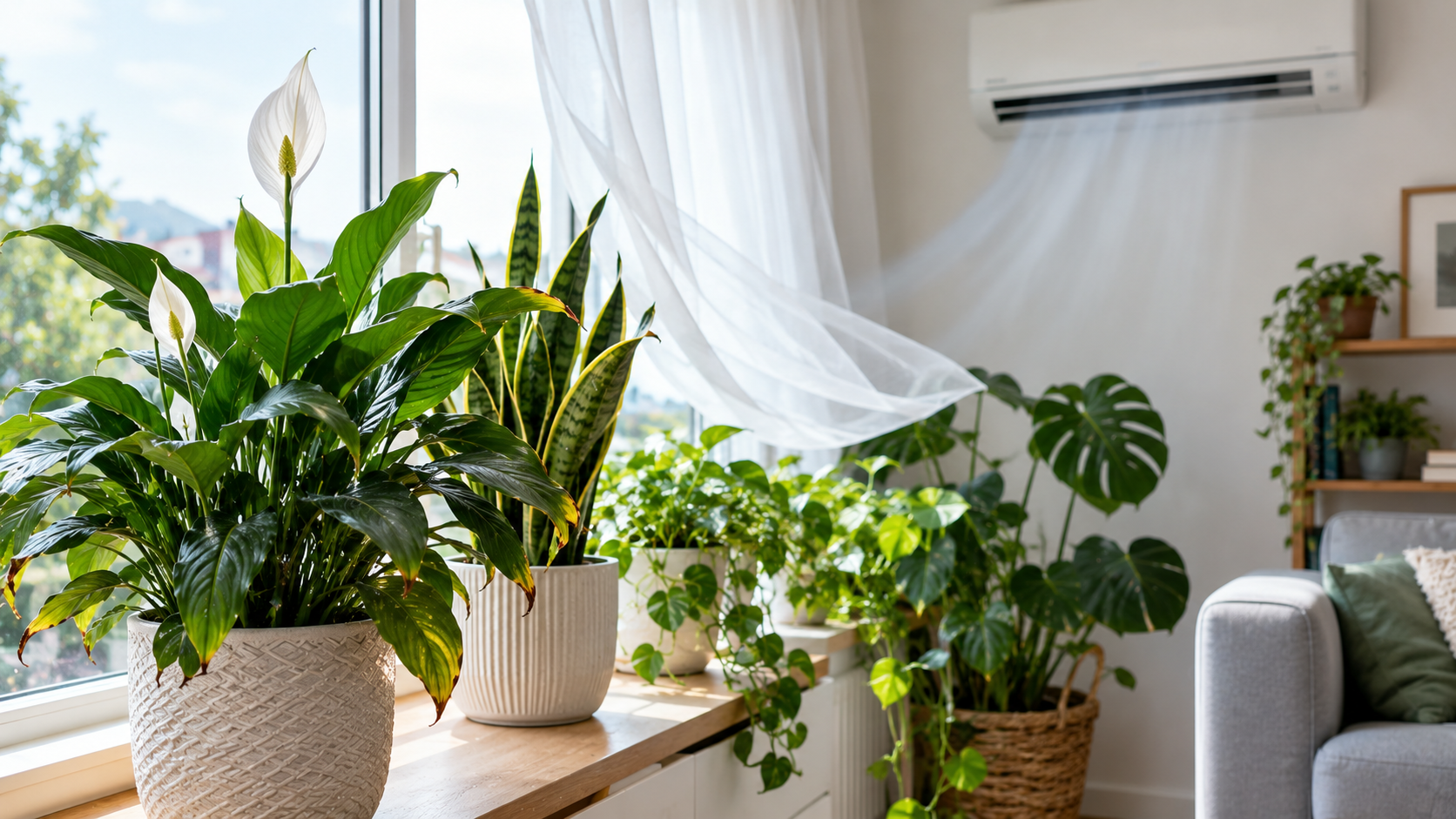
Air conditioning does more than lower the room temperature. Depending on the system, operating conditions, and outdoor humidity, it can also reduce indoor relative humidity and create localized drafts that affect plants near the unit.
1. It can lower relative humidity
Many air conditioners remove moisture from indoor air as they cool it. When relative humidity falls, water evaporates more readily from exposed leaf surfaces, and plants may lose moisture through transpiration more quickly.
Tropical plants such as calatheas, ferns, and some types of anthuriums can be especially sensitive to dry indoor conditions. Plants adapted to arid environments, such as many cacti and succulents, generally tolerate lower humidity better.
However, not every air-conditioning system produces the same humidity conditions. Use a hygrometer to measure the humidity around your plants instead of assuming the air is too dry simply because the AC is running.
2. It creates localized temperature changes
A plant directly beneath an air-conditioning outlet may experience much cooler air than a plant elsewhere in the room. Repeated exposure to cold drafts can stress sensitive foliage, especially when the airflow is strong or the temperature difference is substantial.
Look for leaves that develop damaged patches, curl, droop, or show signs of deterioration after a change in the plant’s position or the AC settings. These symptoms are not exclusive to cold-air exposure, so also check watering, light, and root health.
The University of Maryland Extension recommends keeping houseplants away from air-conditioning sources and other locations where they experience sudden temperature changes. Temperature and Humidity for Indoor Plants
3. It changes how quickly potting mix dries
The moisture level in a pot depends on several factors, including temperature, humidity, airflow, the plant’s water use, and the potting mix.
A plant near a strong air-conditioning draft may lose water through its leaves more quickly. However, cooler temperatures can also slow plant growth and water use. Depending on the conditions, the soil might dry faster, more slowly, or at a similar rate to before.
This is why increasing watering automatically when the AC is switched on can be risky. Check the soil before adding water.
Signs That Air Conditioning May Be Affecting Your Plants
Air-conditioning stress can resemble other common houseplant problems. Use the plant’s location, recent environmental changes, and the pattern of damage to help identify the likely cause.
| Sign | Possible explanation | What to check |
|---|---|---|
| Brown, crispy leaf edges | Low humidity, inconsistent watering, or salt buildup | Humidity, soil moisture, and fertilizer history |
| Drooping leaves | Water shortage, root problems, or temperature stress | Soil moisture and root condition |
| Yellowing leaves | Overwatering, underwatering, or other environmental stress | Drainage, watering routine, and light |
| Drying soil | Increased evaporation or greater plant water use | Pot size, airflow, and moisture below the surface |
| Damaged patches on exposed foliage | Cold drafts or another environmental issue | Whether the damage is concentrated on the side facing the outlet |
One symptom alone rarely identifies the cause. For example, a plant can wilt while its soil is wet if damaged roots cannot absorb water effectively. Check the growing conditions before deciding whether to water, move, or repot it.
How to Protect Houseplants in an Air-Conditioned Room
1. Move plants out of the direct airflow
Start by checking where the cooled air travels when the system is operating. Move sensitive plants away from the direct stream, including areas directly beneath wall-mounted units or in front of floor vents.
You do not necessarily need to move every plant to another room. A position with suitable light and a more stable temperature may be enough. Avoid replacing cold drafts with hot, direct sunlight or placing plants in a dark corner.
2. Monitor humidity rather than guessing
A small digital hygrometer can help you understand the conditions around your plants. Check it at different times, especially when the air conditioner has been running for several hours.
There is no single ideal humidity level for every houseplant. Many common indoor plants tolerate moderate household humidity, while humidity-sensitive tropical species may require more moisture in the air. Follow the needs of each species rather than trying to create a tropical environment for every plant.
If humidity remains too low for a particular plant, consider a room humidifier. Place it where moisture can circulate around the foliage without leaving leaves and nearby surfaces continuously wet.
Penn State Extension notes that grouping plants and using a humidifier can help with humidity management, while routine misting usually provides only a brief increase in moisture. Humidity and Houseplants
3. Adjust watering based on soil moisture
Do not water on a fixed schedule simply because the air conditioner is running. Instead:
- Check the potting mix at an appropriate depth for the plant.
- Consider the plant’s species and preferred moisture level.
- Water thoroughly when needed, allowing excess water to drain.
- Empty the saucer so the roots do not remain in standing water.
- Recheck the soil over the following days to understand its drying pattern.
Plants in bright light and warm conditions may use more water than plants growing in cooler, dimmer areas. Air conditioning can alter this balance, so monitor the plant’s response.
4. Group plants thoughtfully
Placing several plants near one another can create a slightly more humid local environment as moisture evaporates from the growing media and leaves. This approach may help when plants have similar light and temperature requirements.
Leave enough space for air circulation, and avoid crowding plants so tightly that foliage remains wet or pests become difficult to detect. Grouping plants will not fully compensate for a strong, dry air-conditioning draft.
5. Keep leaves clean and inspect them regularly
Dust on leaves can interfere with their normal function and make early signs of stress harder to notice. Gently wipe suitable foliage with a damp, soft cloth when needed.
Inspect leaf edges, undersides, stems, and the soil surface regularly. Look for pests such as spider mites, which can become more problematic on stressed plants in dry indoor conditions. If you notice webbing or stippled leaves, investigate pests rather than assuming the air conditioner is the only cause.
Common Mistakes to Avoid
- Watering more without checking the soil: Excess water can deprive roots of oxygen and contribute to root rot.
- Misting repeatedly as the only humidity solution: The effect is short-lived and may be unsuitable for some plants.
- Placing every plant in a humid room without checking the light: Bathrooms and kitchens may be humid but too dark for certain species.
- Moving plants into direct sunlight to escape the AC: Sudden increases in light can cause leaf scorch.
- Changing several care conditions at once: It becomes harder to identify which adjustment helped or harmed the plant.
Make one or two targeted changes at a time, then observe new growth and moisture patterns before making further adjustments.
Frequently Asked Questions
Should I turn off the air conditioner to protect my plants?
Not necessarily. Many houseplants can grow successfully in air-conditioned homes. The priority is to avoid direct cold drafts, maintain suitable temperatures, and provide appropriate light and watering.
Can air conditioning cause brown leaf tips?
It can contribute to dry-air stress, particularly in humidity-sensitive plants. However, brown tips may also result from inconsistent watering, fertilizer salts, root problems, or other environmental factors.
Do plants need more water when the air conditioner is on?
Not always. Dry air and airflow may increase moisture loss from leaves, but cooler temperatures can reduce water use. Check the soil and the plant’s requirements before changing your watering frequency.
Is a humidifier better than misting?
A humidifier generally offers more consistent humidity control when used appropriately. Misting raises humidity only briefly and is not a dependable substitute for measuring and managing the room’s conditions.
Create a More Stable Environment for Indoor Plants
Air conditioning does not automatically harm houseplants, but its effects on humidity, temperature, and airflow can change the conditions in which they grow. Sensitive tropical plants may need extra attention, while drought-adapted species often tolerate ordinary indoor air more easily.
Begin by moving plants away from direct drafts, measuring humidity where necessary, and checking soil moisture before watering. Observe new growth and changes in leaf condition over time. Small, informed adjustments are usually more useful than making dramatic changes to your entire plant-care routine.