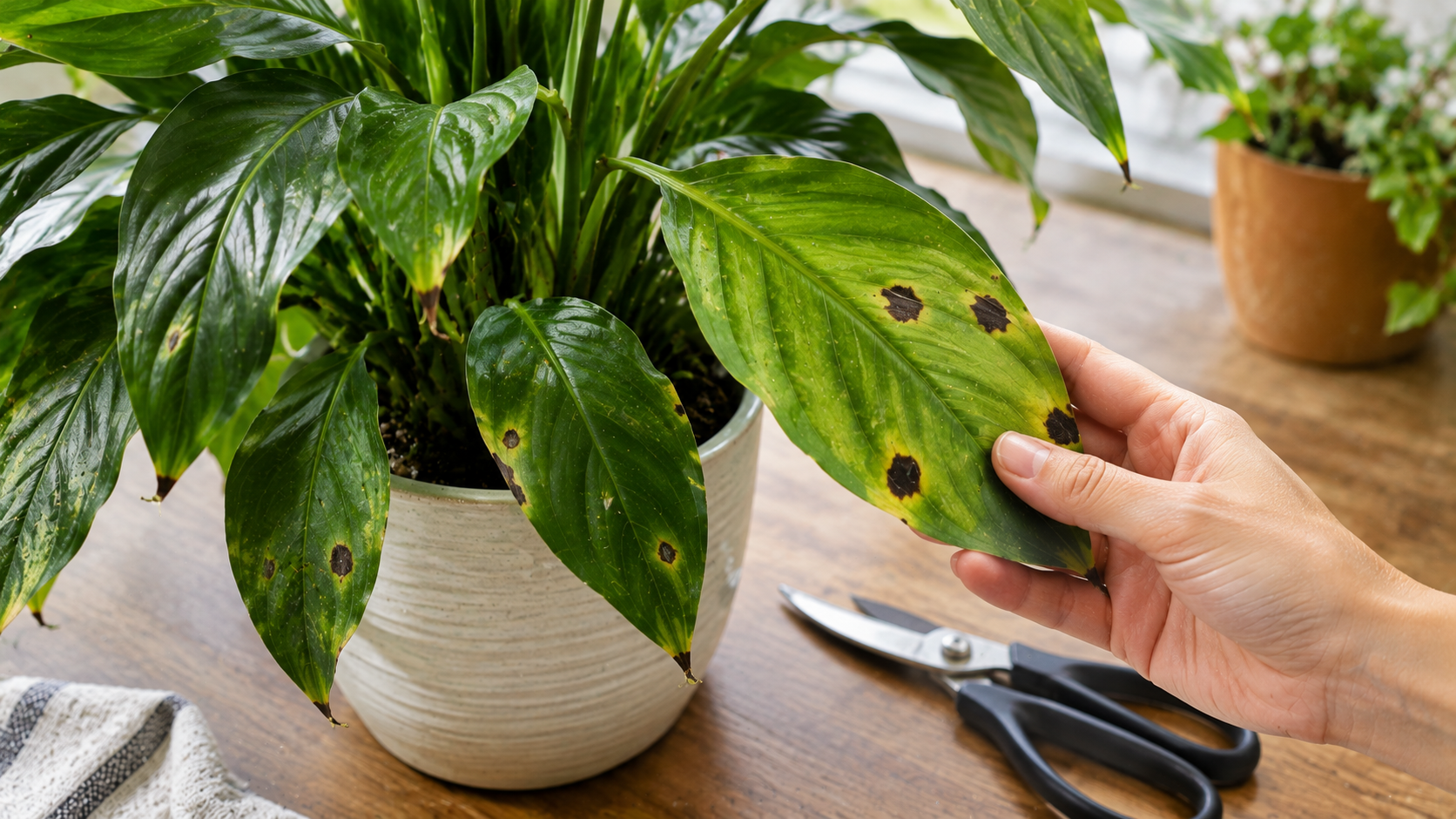
n be worrying, especially when they begin to appear on several leaves within a short period. A small brown mark might result from sunburn, irregular watering, physical damage, or a developing leaf disease. Because these problems can look similar at first, the most useful step is to observe the pattern of the spots before changing the plant’s care routine.
The location, color, shape, and progression of each mark can provide valuable clues. Some spots remain dry and stable, while others expand, develop yellow edges, or appear on new leaves. The surrounding conditions—such as humidity, airflow, watering habits, and recent exposure to sunlight—can help narrow down the likely cause.
Learning to recognize these differences helps you avoid unnecessary treatments and focus on the changes most likely to benefit your plant. Although not every dark spot can be diagnosed by appearance alone, a careful inspection and a few simple preventive measures can reduce the risk of further damage.
What Do Dark Spots on Plant Leaves Look Like?
Dark spots are areas of leaf tissue that have changed color, often becoming brown, dark brown, reddish-brown, or nearly black. Their appearance varies according to the plant species and the underlying cause.
Common patterns include:
- Small, round spots: These may occur with certain leaf diseases, although insect damage and physical injury can produce similar marks.
- Irregular, dry patches: These can be associated with sunburn, cold injury, or contact with irritating substances.
- Dark spots surrounded by yellow tissue: This pattern can occur with some leaf infections, but it is not proof of a specific disease.
- Soft, wet-looking areas: These may indicate tissue breakdown and deserve prompt attention, particularly when the plant has remained excessively wet.
- Spots concentrated along leaf edges or tips: These may be linked to moisture stress, salt accumulation, temperature exposure, or other growing conditions.
The plant’s natural features also matter. Some varieties have naturally dark markings, and older leaves may develop isolated areas of damage as they age. Compare affected leaves with healthy leaves from the same plant before assuming that a disease is present.
Common Causes of Dark Leaf Spots
1. Fungal and bacterial leaf diseases
Some fungi and bacteria cause lesions that begin as small discolored areas and gradually expand. Depending on the pathogen and host plant, the spots may have distinct margins, yellow halos, irregular shapes, or darker centers.
Conditions that keep foliage wet for extended periods can favor certain leaf diseases. Water splashed from one leaf to another may also help spread some pathogens. However, moisture alone does not establish that an infection is responsible.
Suspect a potentially infectious problem when new spots continue to appear, several leaves are affected, or the marks develop in a similar pattern across the plant. The correct diagnosis depends on the plant species, symptoms, and sometimes laboratory testing.
2. Excessive direct sunlight
A plant moved suddenly into stronger sunlight may develop scorched patches. These areas often appear pale, tan, brown, or dark and dry, particularly on leaves exposed to the brightest light.
Sun damage is more likely when the affected side faces a sunny window or when symptoms begin soon after the plant is moved outdoors. Unlike some spreading leaf diseases, sunburn generally remains limited to tissue that received excessive exposure.
Move the plant gradually into brighter conditions rather than making an abrupt change. Damaged tissue usually does not regain its original color, so judge recovery by the condition of new leaves and whether additional damage stops appearing.
3. Overwatering and poor drainage
Overwatering does not automatically cause dark leaf spots, but persistently wet soil can deprive roots of oxygen and encourage root problems. A plant with compromised roots may develop yellowing, wilting, and dark or deteriorating leaf tissue.
Check the soil rather than relying on a fixed watering schedule. If the potting mix remains wet for an unusually long time, inspect the drainage holes and consider whether the container, soil structure, or room conditions are preventing the root zone from drying appropriately.
Do not respond to every dark spot by withholding water for a long period. Underwatering can create additional stress, and different plants require different moisture levels.
4. Cold drafts and sudden temperature changes
Tropical houseplants can develop dark, damaged areas after exposure to cold air, contact with a cold window, or a sudden temperature drop. The affected tissue may become dark, limp, or translucent before drying.
Review the plant’s location if symptoms appear after a cold night, a change in season, or a period near an exterior door or air-conditioning outlet. Move sensitive plants away from direct cold drafts and maintain temperatures appropriate for the species.
5. Fertilizer and mineral buildup
Excess fertilizer can contribute to salt accumulation in the potting mix. In sensitive plants, this may damage roots and produce brown or darkened leaf tips and margins. Water quality and the plant’s nutritional needs can also influence symptoms.
Look for a recent change in fertilizer concentration, frequency, or product. A crusty residue on the soil surface or pot rim may support the possibility of mineral accumulation, although it is not conclusive.
Avoid adding more fertilizer to a plant that is already showing unexplained damage. Confirm its needs first and follow the product label.
How to Investigate Dark Spots Before Treating the Plant
Before pruning leaves or applying a product, collect a few clues. This makes it easier to distinguish an environmental problem from a possible infection.
Step 1: Examine the pattern
Look at the whole plant, not just the most damaged leaf.
- One or two spots on leaves facing a window: Consider sun exposure, cold glass, or contact with a spray.
- Similar spots on several leaves: Consider a shared environmental stress or a leaf disease.
- New spots appearing over several days: Increase your attention to possible infectious causes, especially if foliage stays wet.
- Damage concentrated on older leaves: Check watering, root health, and normal leaf aging, while keeping other causes in mind.
- Spots accompanied by fine stippling, webbing, or visible insects: Inspect the undersides of leaves for pests such as spider mites or thrips.
These patterns are clues, not definitive diagnoses. Different problems can occur at the same time.
Step 2: Check the underside of the leaves
Turn affected leaves over and examine them in good light. Look for water-soaked areas, tiny insects, webbing, unusual residue, or signs of fungal growth.
Also inspect the stems near the affected leaves. Dark lesions that extend into stems, soft tissue, or a foul smell deserve more attention than an isolated dry mark.
Avoid rubbing or scraping the spots aggressively. This can damage the leaf further and may transfer contaminants to your hands or tools.
Step 3: Review recent care changes
Think back over the previous week or two. Has the plant been moved, exposed to stronger sunlight, placed near an air conditioner, sprayed with a cleaning product, or watered more frequently?
Check the potting mix several centimeters below the surface, adjusting the depth to the plant’s size and needs. Confirm that excess water can drain and that the pot is not sitting in a full saucer.
Record what you observe and, if useful, take a clear photograph. A photo taken every few days from a similar angle can reveal whether spots are expanding or new ones are developing.
What to Do When Dark Spots Appear
The right response depends on the likely cause. Avoid making several major changes at once, because that can create additional stress and make the original problem harder to identify.
1. Separate the plant if an infection is possible
Move the affected plant away from nearby plants, particularly if new spots are appearing rapidly or the leaves have wet-looking lesions. This is a precaution, not confirmation of a contagious disease.
Keep the plant in a suitable location with adequate light and gentle air movement. Do not place it in harsh direct sunlight simply to dry the foliage.
2. Remove severely affected leaves when appropriate
If a leaf is extensively damaged or a leaf disease is suspected, removing it may help reduce potential sources of infection. However, do not strip the plant of most of its healthy foliage.
Use clean, sharp scissors or pruning shears. Disinfect the tool before and after cutting, especially when moving between plants, and follow the disinfectant’s directions. Place removed material in household waste rather than leaving it on the potting mix or composting it when an infectious disease is suspected.
If only a small, stable spot is present, removal may not be necessary. The decision should account for how much healthy foliage remains and whether the damage is progressing.
3. Correct watering and drainage
Water according to the plant’s needs, not simply because a fixed day has arrived. Many houseplants benefit from allowing the upper portion of the potting mix to dry somewhat between waterings, but moisture-loving species may need consistently more even moisture.
Use a pot with suitable drainage and empty the saucer after watering when water has collected. If the mix remains saturated for long periods or the plant wilts while the soil is wet, investigate possible root damage instead of adding more water.
4. Keep foliage appropriately dry
For plants susceptible to leaf diseases, avoid repeatedly wetting the foliage. Water the soil directly when practical, and allow splashed leaves to dry. Watering earlier in the day can give wet surfaces more time to dry before nighttime.
This does not mean every plant must have completely dry leaves at all times. Some species and growing systems tolerate or require different humidity conditions. The goal is to avoid prolonged leaf wetness where it contributes to the problem.
5. Use treatments cautiously
Do not apply a fungicide merely because a spot is black. Fungicides do not control every cause of leaf damage, and they are not a universal solution for bacterial problems or environmental injury.
If a disease is reasonably suspected and treatment is appropriate, choose a product labeled for the plant and intended use in your location. Follow all label directions, including precautions for indoor use, protective equipment, and keeping people and pets away as instructed.
Home remedies such as dish soap, vinegar, or concentrated oils can injure foliage and may not address the underlying cause. Correcting the growing conditions is often the safer first step while you assess the problem.
How to Prevent Dark Spots from Returning
Prevention begins with a growing environment suited to the particular plant.
- Provide appropriate light. Research the plant’s light requirements and acclimate it gradually when moving it into brighter conditions.
- Improve spacing and airflow. Avoid tightly crowding plants with foliage that stays damp. Air should move gently around leaves without exposing sensitive plants to cold drafts.
- Use a consistent watering method. Check soil moisture and pot weight rather than following a rigid schedule.
- Keep tools clean. Clean and disinfect pruning tools between plants, particularly when removing suspicious lesions.
- Inspect new plants. Keep newly purchased or gifted plants separate from the collection for an observation period, and examine both sides of their leaves.
- Avoid unnecessary fertilizer. Follow the needs of the species and the product instructions. More fertilizer does not automatically mean healthier foliage.
- Check plants regularly. Early detection makes it easier to remove affected material when appropriate and correct environmental problems before damage becomes extensive.
Different plants need different conditions. A fern, a succulent, and a tropical foliage plant should not automatically receive the same watering, humidity, or light treatment.
When Should You Be More Concerned?
An isolated, dry spot that remains unchanged is usually less urgent than rapidly expanding lesions accompanied by yellowing, wilting, or soft tissue.
Pay closer attention if:
- New spots develop quickly on multiple leaves.
- Dark lesions extend into stems or growing points.
- Leaves become soft, collapse, or fall in large numbers.
- The plant declines even though its basic care appears appropriate.
- Several plants develop similar symptoms after sharing tools, water splashes, or close contact.
If the plant is valuable or the symptoms continue despite sensible care adjustments, contact a local plant clinic, university extension service, or qualified horticultural professional. Clear photos, the plant’s name, watering routine, and a record of recent changes can help with diagnosis.
Frequently Asked Questions
Should I cut off every leaf with dark spots?
No. Remove badly damaged leaves when doing so is appropriate, but preserve healthy foliage. A few stable marks may not justify pruning, particularly on a plant with limited leaves.
Can dark spots disappear?
Dead or damaged leaf tissue generally does not turn green again. A successful response is indicated by the absence of new damage and the development of healthy growth, rather than by old spots vanishing.
Do dark spots always mean a fungal disease?
No. Fungi and bacteria are possible causes, but sunburn, cold injury, moisture stress, fertilizer salts, chemical exposure, and pests can create similar symptoms. Appearance alone may not establish the cause.
Should I mist a plant with spotted leaves?
Avoid misting when a leaf disease is suspected or when it keeps the foliage wet for long periods. Misting is also not a reliable way to maintain stable room humidity. Consider the species’ requirements and the conditions in your home.
Let the Plant’s Progress Guide Your Next Step
Dark spots are a sign to investigate, not a diagnosis by themselves. Start by examining the pattern of damage, checking the growing conditions, and reviewing recent changes. If a contagious disease is possible, reduce contact with other plants and avoid wetting the foliage unnecessarily.
Make targeted adjustments, document what changes, and inspect the plant again over the following days. Because damaged tissue rarely recovers its original appearance, focus on whether new leaves remain healthy and the problem stops progressing. That measured approach is more useful than applying multiple treatments without knowing what caused the spots.