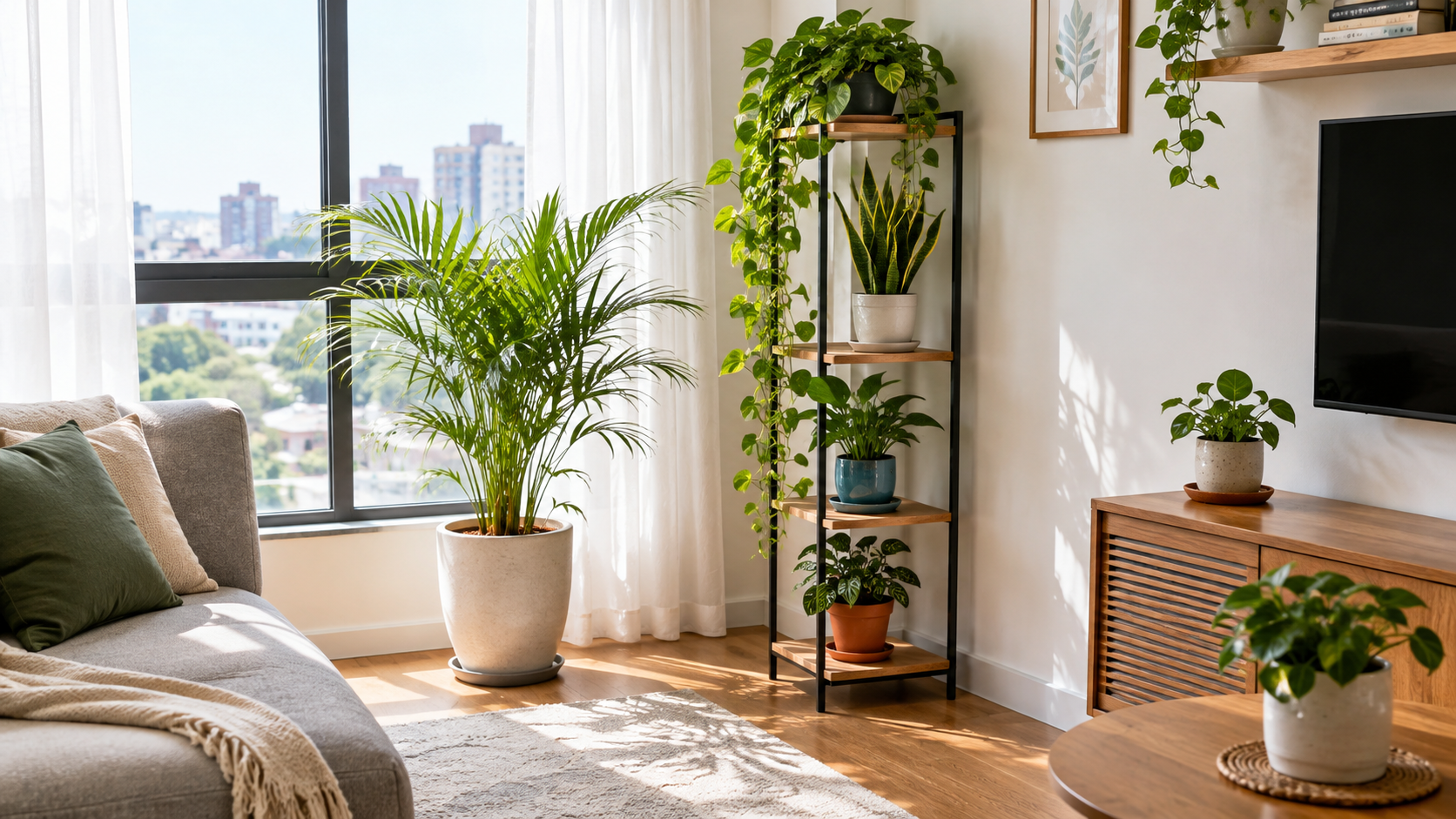
Living in a small apartment does not mean giving up on a beautiful indoor garden. Even with limited floor space, you can grow a variety of houseplants by using shelves, window areas, corners, and carefully selected plant stands. The key is to arrange pots according to each plant’s light requirements, growth habits, and watering needs rather than choosing locations based on appearance alone.
A crowded arrangement can block sunlight, restrict airflow, make watering difficult, and increase the risk of accidental damage. Some plants thrive near a bright window, while others need protection from strong direct sunlight. Understanding these differences will help you create a green, organized home without sacrificing your plants’ health or your available living space.
1. Start by Understanding the Light in Your Apartment
Before moving pots or buying new plants, observe how sunlight enters your rooms. A spot that looks bright to your eyes may still provide insufficient light for a plant that needs several hours of strong illumination.
Light intensity decreases as the distance from a window increases. Curtains, nearby buildings, balconies, and trees can also reduce the amount of sunlight that reaches indoor plants.
University of Maryland Extension
+1
Identify three practical light zones
- Bright, direct sunlight: Areas where sunlight falls directly onto leaves for part of the day. These can suit many cacti, succulents, and other sun-loving plants, provided the exposure matches their needs.
- Bright, indirect light: Locations receiving plenty of daylight without intense direct sun. Many tropical foliage plants grow well in these conditions.
- Low-light areas: Corners farther from windows or rooms with limited natural illumination. Some plants tolerate these locations, but low light does not mean complete darkness.
Remember that a window’s direction alone does not determine its suitability. The size of the window, surrounding buildings, season, and distance from the glass all influence available light.
Match the plant to the location
Instead of trying to make every corner suitable for every species, group plants according to their needs. A succulent placed in a dim hallway may gradually become weak and stretched, while a shade-adapted foliage plant beside intense afternoon sun may develop scorched leaves.
If a plant develops unusually long stems, pale foliage, or poor flowering, insufficient light may be involved. Bleached patches and dry brown areas can indicate excessive sunlight, although watering problems and other stresses can produce similar symptoms. Check the growing conditions before changing the plant’s position.
2. Use Vertical Space Without Blocking Light

Vertical arrangements are especially useful in small apartments because they allow you to display several plants without filling the floor with pots.
Consider these options:
- Narrow plant shelves: Suitable for small and medium-sized pots when the shelves are sturdy and receive adequate light.
- Wall-mounted planters: Useful for lightweight containers, provided the wall fixings can safely support the combined weight of the pot, soil, and water.
- Hanging planters: Ideal for trailing plants when suspended securely away from walkways and frequently opened windows.
- Tiered plant stands: Allow plants of different heights to share a compact footprint.
However, placing plants on several levels does not automatically improve their growing conditions. Upper plants can shade those below, and shelves positioned too far from a window may leave lower foliage in insufficient light.
Arrange the plants so their leaves receive suitable illumination and do not press tightly against neighboring foliage. Rotate the arrangement when necessary, but avoid repeatedly moving sensitive plants between very different light conditions.
3. Arrange Plants Around Windows Carefully
Windows are valuable growing areas, but they should not become overcrowded storage spaces for pots.
Place plants with higher light requirements closer to the window and those that tolerate indirect light farther away, adjusting the distances to suit each species. Leave enough room for curtains to open and close without crushing leaves.
Protect plants from excessive sun and temperature changes
Direct sunlight can heat leaves and containers, particularly near west-facing windows during hot afternoons. If a plant develops bleached or brittle patches, try filtering the strongest sunlight with a sheer curtain or moving the pot slightly farther away.
Also avoid placing foliage directly against cold glass or positioning sensitive plants next to air-conditioning outlets, heaters, or persistent drafts. These conditions can create additional stress even when the light is appropriate.
University of Maryland Extension
+1
For a narrow windowsill, use only stable containers that cannot easily fall. Avoid placing heavy pots where they could be knocked over when opening windows or cleaning.
4. Choose Pots That Fit the Available Space
The right container should accommodate the root system without taking up unnecessary room. A large decorative pot may look attractive, but it can make a small apartment harder to organize and leave the growing medium wet for too long.
When choosing containers, consider:
- The mature size of the plant, not just its current height.
- The width and depth of its root system.
- The weight of the pot when filled and watered.
- The availability of drainage and a suitable saucer.
- Whether the container can be reached easily for watering and maintenance.
Drainage is essential. Most houseplants should be grown in containers with drainage holes so excess water can escape. If you prefer a decorative pot without holes, keep the plant in a separate nursery pot with drainage and remove excess water from the outer container after watering.
Adding gravel to the bottom of a pot does not replace drainage holes. It can also leave the root zone exposed to unsuitable moisture conditions.
Yard and Garden
+1
In a small home, lightweight pots may be easier to move for cleaning and watering. However, tall plants in lightweight containers may need a wider, more stable base to prevent tipping.
5. Leave Enough Space Between Plants
A collection of plants can look fuller when the leaves overlap, but tightly packed pots make routine care more difficult. Crowded foliage can restrict airflow, hide early signs of pests, and prevent you from inspecting stems and the surface of the soil.
There is no single spacing measurement suitable for every houseplant. A compact succulent, a broad-leaved monstera, and a tall snake plant have very different growth habits.
Use these practical guidelines:
- Leave enough room to see the main stems and inspect both sides of the leaves.
- Keep broad foliage from being permanently compressed against neighboring plants or walls.
- Allow access to the soil so you can check its moisture before watering.
- Separate plants with suspected pest problems from healthy plants while you investigate.
- Reassess the arrangement as plants grow rather than waiting until they become difficult to handle.
Good airflow does not mean placing every plant in front of a fan. Strong, continuous airflow can stress some species. The aim is to avoid stagnant, tightly packed arrangements while maintaining suitable temperatures and humidity.
Recognize when a plant needs more room
Look for leaves trapped between pots, stems growing into walkways, and foliage that remains wet because it cannot dry properly. If you see these problems, spread the pots across another shelf or remove a few plants from the grouping.
When a plant becomes too large for its location, pruning may be appropriate for certain species. For others, moving the pot or choosing a different display position is safer. Always check the plant’s growth habits before cutting healthy stems.
6. Organize Pots to Make Watering Easier
In a small apartment, watering can be one of the biggest practical challenges. Pots placed on high shelves, crowded windowsills, or furniture without waterproof protection are more likely to be neglected or watered carelessly.
Create a layout that allows you to reach every pot without moving several others. Place plants that need frequent inspection in accessible positions, and keep watering equipment nearby without blocking walkways.
Prevent water from damaging floors and furniture
Use suitable saucers or waterproof trays beneath containers, especially on wooden floors, shelves, and tables. Empty collected water after watering; roots should not remain submerged in standing water.
If possible, move smaller plants to a sink for watering and allow excess water to drain before returning them to their usual positions. For larger pots, water carefully where they stand and check that the drainage system works properly.
Do not water every plant on the same day simply because they share a shelf. Different species, pot sizes, growing media, and light conditions affect how quickly their soil dries.
Check the soil before watering
Touch the growing medium to assess its moisture and follow the needs of the individual plant. Some species prefer the upper layer to dry between waterings, while others require more consistently moist soil.
Plants in dim corners often use water more slowly than those in bright, warm locations. Consequently, a fixed watering schedule can cause overwatering in one location and underwatering in another.
University of Maryland Extension
+1
7. Make Different Rooms Work for Your Plants

Each area of an apartment presents different opportunities and limitations. Instead of distributing pots evenly throughout the home, choose locations based on the conditions they provide.
Living room
Use a corner near a suitable window for a larger floor plant, and reserve shelves or side tables for smaller specimens. Keep leaves away from doors, walking paths, and furniture that is moved frequently.
Bedroom
A compact bedside plant or a small group on a bright dresser can work well. Avoid placing pots where they could fall from a shelf or interfere with ventilation. Select species that suit the actual light available rather than assuming every bedroom plant will tolerate shade.
Kitchen
A bright windowsill may suit culinary herbs such as basil or parsley when the light is sufficient. Keep plants away from hot stovetops, splashing grease, and excessive heat from appliances. Herbs generally need more light than a dim kitchen corner can provide.
Bathroom
Some bathrooms offer useful humidity for moisture-loving tropical plants, but many have limited natural light. Humidity cannot compensate for inadequate illumination, so assess daylight before choosing this location. A bathroom with no natural light may require a suitable grow light to support continued growth.
Hallways and darker corners
Use these areas selectively for plants that tolerate the available light. If the space is consistently too dark, relocate the plant periodically to an appropriate brighter area or consider supplemental horticultural lighting.
8. A Simple Step-by-Step Plan for Arranging Your Plants
You do not need to buy new furniture or repot everything to improve your indoor garden. Start by reorganizing the plants you already own.
- List your plants. Identify each species, its approximate size, and its general light and watering requirements.
- Observe the apartment. Check which areas receive direct sunlight, bright indirect light, or relatively little daylight throughout the day.
- Choose the main locations. Reserve the brightest suitable areas for plants that need stronger light, while assigning lower-light positions only to plants that tolerate them.
- Group by care needs. Keep plants with similar requirements near one another when practical, but do not sacrifice suitable lighting just to create a visually uniform group.
- Check stability and drainage. Confirm that shelves, hooks, pots, and saucers are secure and suitable for their intended use.
- Leave access space. Make sure you can inspect foliage, reach the soil, and remove each pot without disturbing the entire arrangement.
- Monitor the results. Over the following weeks, look for new growth, leaf discoloration, stretched stems, pests, and changes in soil-drying time.
Change one or two things at a time when possible. If a plant starts deteriorating after being moved, review the new light exposure, temperature, watering, and other recent changes before making additional adjustments.
9. Common Mistakes to Avoid in a Small Apartment
Several decorating choices can unintentionally make plant care harder.
- Choosing plants before choosing their locations: Determine the available light first, then select species suited to those conditions.
- Putting every pot beside the window: Some plants need filtered light, while others may tolerate lower illumination. Match each plant to its requirements.
- Overcrowding shelves: A visually dense display can make watering, cleaning, and pest inspection difficult.
- Using pots without drainage: Decorative containers should not trap excess water around the roots.
- Ignoring mature size: A small plant may eventually develop broad leaves or long trailing stems that require more room.
- Moving plants too frequently: Repeated changes in light and temperature can create stress and make it harder to identify the cause of a problem.
- Watering according to appearance alone: Dry leaf edges, yellowing, and wilting can have several causes. Check the soil and growing conditions before adding water.
The most effective arrangement is one that remains practical as the plants grow. A few well-positioned pots are often easier to maintain than a large collection competing for limited light and space.
Frequently Asked Questions
How many plants can I keep in a small apartment?
There is no universal maximum. The appropriate number depends on available light, ventilation, floor space, shelf capacity, and the time you can devote to maintenance. Start with a manageable collection and add plants only when you can provide suitable conditions.
Can I place plants on shelves far from a window?
Only if the available light meets their needs. Some species tolerate low-light environments, but no plant can grow indefinitely without adequate light for photosynthesis. Supplemental grow lights may help when natural illumination is insufficient.
Should all my plants be grouped together?
Not necessarily. Grouping can make maintenance easier, but plants with different light, moisture, and temperature requirements may need separate locations. Keep enough space between pots to inspect leaves and reach the soil.
Why are the leaves of my indoor plants turning yellow?
Possible causes include overwatering, underwatering, insufficient light, nutrient problems, pests, and normal aging of older leaves. Check the soil moisture, drainage, recent light exposure, and the distribution of affected leaves before deciding what to change.
Can I use hanging pots to save floor space?
Yes, provided the ceiling or wall fixtures are strong enough to support the wet containers. Position hanging plants where they receive appropriate light and cannot obstruct doors, walkways, or windows. Check them regularly because watering and inspecting elevated pots can be less convenient.
Create a Small Indoor Garden That Works for Your Home
A healthy apartment garden begins with observing the space rather than filling every available corner with pots. Identify the brightest areas, match plants to their light requirements, use stable containers with suitable drainage, and leave enough room for watering and inspection.
Start by rearranging a few plants and observing their response over the next several weeks. Healthy new growth, manageable soil moisture, and foliage without new signs of stress will help you decide whether the arrangement is working or needs adjustment.