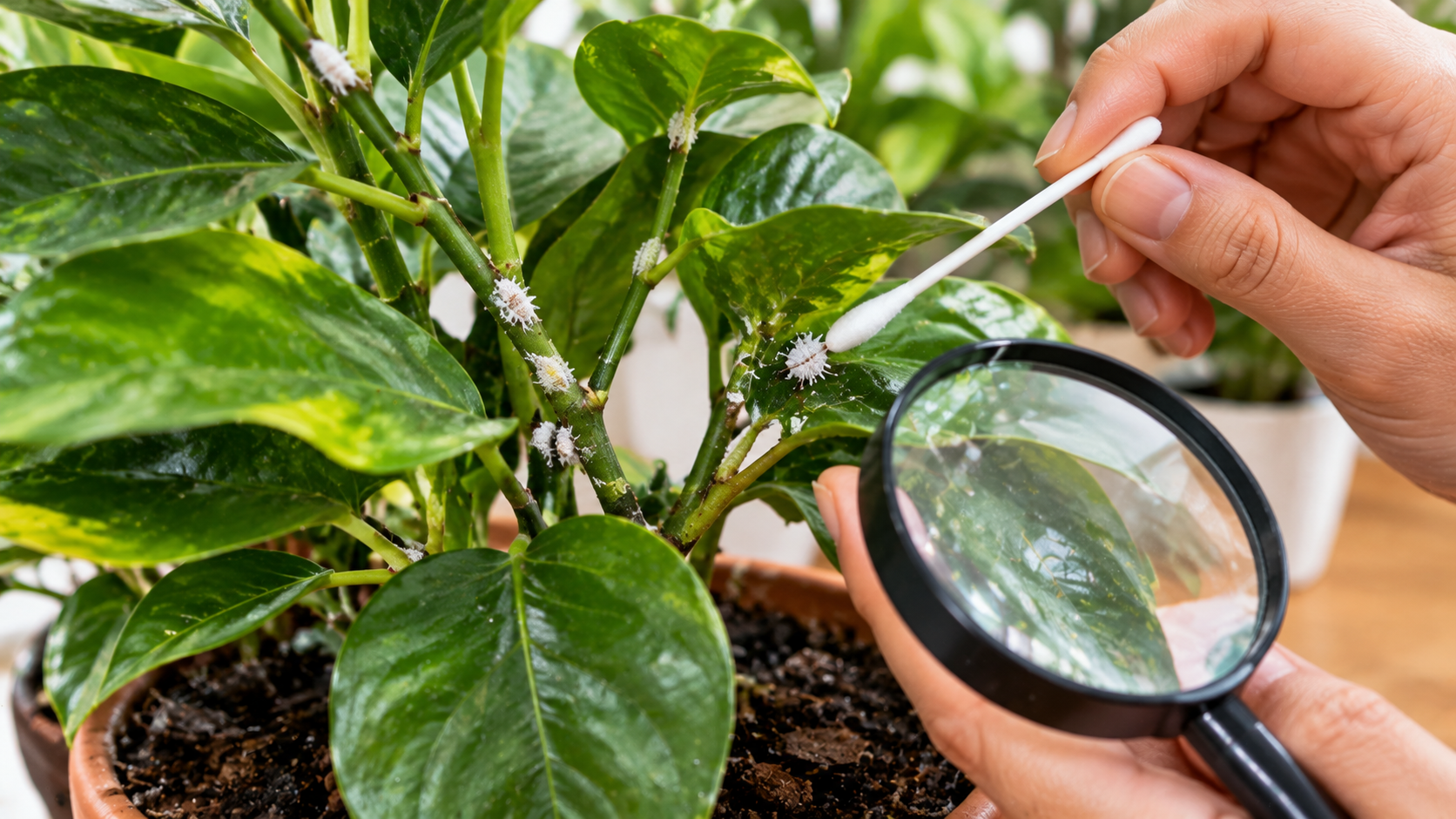
White, cotton-like patches on a plant’s stems or leaves can be an early warning sign of mealybugs. These small sap-feeding insects often hide in places that are easy to overlook, such as leaf joints, folded new growth, and the undersides of leaves. If left unchecked, they can weaken a plant, slow its growth, and spread to nearby pots.
The good news is that a small infestation may be manageable when detected early. The first step is to confirm that the white material is actually mealybugs rather than mold, mineral residue, or another plant problem. Then, use a careful combination of isolation, physical removal, appropriate treatment, and follow-up inspections.
What Are Mealybugs?
Mealybugs are small insects related to scale insects. Their soft bodies are often covered with a white, powdery or waxy substance that makes them look like tiny cotton balls. Some species also produce waxy filaments around the edges of their bodies.
They feed by piercing plant tissue and sucking sap. Many common houseplants can be affected, including orchids, succulents, cacti, citrus plants, and various tropical foliage plants. Mealybugs may remain active indoors throughout the year when conditions allow.
Some species also attack roots, where they can be harder to detect. A plant may decline even when no obvious insects are visible on its leaves or stems.
How to Recognize Mealybugs on Plants
1. Look for white, cotton-like clusters
The most recognizable sign is a white, waxy mass in a sheltered part of the plant. Look where leaves join stems, around new shoots, beneath leaf sheaths, and between overlapping leaves.
Gently examine the material with a magnifying glass. You may see small, oval insects beneath the wax or tiny pinkish or orange-colored eggs, depending on the species and life stage.
Do not mistake every white mark for a pest. Mineral deposits from water, dried sap, and some fungal growths can look similar. Mealybugs are more likely when the white material is concentrated around plant joints and contains visible insects.
2. Check for sticky leaves
Mealybugs excrete a sugary liquid called honeydew as they feed. This residue can make leaves, stems, plant stands, and nearby surfaces feel sticky.
Honeydew is not exclusive to mealybugs. Aphids and some scale insects produce it too, so inspect the plant for other clues before identifying the pest.
3. Notice black, soot-like patches
A black coating on leaves may be sooty mold growing on honeydew. It does not necessarily mean the plant has a fungal infection that began inside the leaf; the sticky residue from sap-feeding insects can support this surface growth.
Finding sooty mold alongside cottony clusters or sticky foliage makes a mealybug infestation more likely. However, the insects should still be identified before choosing a treatment.
4. Watch for changes in plant health
As a population increases, feeding damage may cause:
- Slower growth or smaller new leaves.
- Yellowing or premature leaf drop.
- Weak, stressed-looking stems.
- Distorted new growth.
- Reduced vigor, especially in young or already weakened plants.
These symptoms can also result from overwatering, underwatering, poor light, or root damage. Use them as warning signs, not as proof of mealybugs on their own.
Where Mealybugs Usually Hide
A quick look at the top of the leaves is not enough. Inspect the entire plant, including places that are difficult to reach.
- Leaf axils: where a leaf attaches to the stem.
- Undersides of leaves: particularly near the main vein.
- New growth: tender shoots and tightly folded leaves.
- Stem crevices: cracks, overlapping stems, and areas beneath loose bark.
- Roots and potting mix: some species live around the roots and may be suspected when a plant declines despite apparently reasonable care.
If a plant has white deposits around the drainage holes or roots, do not immediately assume root mealybugs are responsible. Examine the root system carefully if necessary, and seek a reliable identification before undertaking major repotting or treatment.
Why Mealybugs Appear on Houseplants
Mealybugs are often introduced on an infested plant. A new purchase may appear healthy while small insects or eggs remain hidden in its foliage, making inspection and temporary isolation important.
Warm indoor conditions can also allow populations to persist for long periods. Crowded plants and dense growth make pests harder to detect because they provide sheltered places to feed and reproduce.
Poor growing conditions do not automatically cause mealybugs, and a healthy plant can still become infested. However, inappropriate watering, inadequate light, or root stress may make an affected plant less able to tolerate damage.
Step-by-Step: How to Reduce a Mealybug Infestation
The best approach depends on how many insects are present, which plant is affected, and how sensitive its foliage is.
Step 1: Isolate the affected plant
Move the plant away from other houseplants, if practical. Avoid letting its leaves touch neighboring plants, and wash your hands after handling it.
Inspect nearby pots, particularly plants that were touching the affected one. Mealybugs are often introduced through infested plants, and early separation can reduce the risk of spread.
Step 2: Remove visible insects manually
For a small infestation, use a damp cotton swab or soft cloth to remove visible clusters. Work carefully around leaf joints and stems, where insects may be concealed.
Check the same areas again after cleaning. Removing the insects you can see is a useful first step, but it may not eliminate eggs or individuals hidden deeper in the plant.
Some extension services describe using a cotton swab with household rubbing alcohol on individual mealybugs. Alcohol can damage plant tissue, however, so do not apply it broadly or assume every plant tolerates it. If considering this method, test a tiny, inconspicuous area first, avoid sensitive foliage, and stop if discoloration or damage occurs.
Step 3: Rinse the plant if it can tolerate water
Plants with sturdy leaves may benefit from a gentle rinse that dislodges some insects. Direct the water toward affected areas without using a forceful spray that damages delicate foliage.
This method may be unsuitable for plants with fragile leaves, flowers that are easily damaged, or species that are vulnerable to prolonged moisture. Let the plant dry appropriately and avoid leaving the potting mix waterlogged.
Step 4: Consider a suitable labeled treatment
If the infestation persists, an insecticidal soap or another product labeled for the specific plant and pest may help. Choose a product approved for the intended use in your location, and follow the label’s application, ventilation, protective equipment, and repeat-treatment instructions.
Test the product on a small area when the label permits, particularly for delicate plants. Do not apply treatments in strong direct sunlight or combine products unless the label specifically permits it.
Mealybugs hide in crevices, so a single treatment may not reach every individual or egg. Reinspection and repeat applications may be needed according to the product directions and the pest’s life cycle.
Step 5: Clean the surrounding area
Remove fallen leaves and plant debris, and clean surfaces where sticky honeydew has accumulated. Keep any removed infested material contained rather than moving it around the plant collection.
Clean tools between plants, especially when you have handled a suspected infestation. These steps support pest management, although cleaning alone will not eliminate insects still feeding on the plant.
How to Monitor Recovery
Continue inspecting the plant every few days while the infestation is active, then maintain weekly checks after the situation appears controlled. Examine the same hiding places each time so you can compare observations consistently.
Record whether you find new white clusters, sticky residue, or fresh damage. Take photographs to distinguish old scars from symptoms that are still developing.
Existing yellow leaves or damaged tissue may not return to normal even after the insects are removed. Judge progress by whether new insects appear, whether the damage stops spreading, and whether healthy new growth develops.
If the plant continues declining despite repeated, appropriate treatment, reassess the identification. Root mealybugs, scale insects, root damage, and watering problems may require different responses. For a heavily infested plant that repeatedly spreads pests, disposal may be more practical than continued treatment.
How to Prevent Mealybugs from Returning
Prevention begins before a new plant joins your collection. Inspect leaves, stems, leaf joints, and the pot before purchasing. When possible, keep new plants separate from established ones for about a month and monitor them for hidden pests.
Other useful habits include:
- Inspect plants weekly, including the undersides of leaves and new growth.
- Remove dead leaves and plant debris that can conceal pests.
- Avoid overcrowding pots, which makes inspection and treatment more difficult.
- Provide suitable light, watering, and drainage for each species.
- Clean tools after working on an infested plant.
- Check neighboring plants whenever an infestation is discovered.
Do not use insecticides routinely as a preventive measure unless a product label specifically supports that use. Regular observation and prompt, targeted action are usually a more sensible starting point.
Frequently Asked Questions
Can mealybugs spread to other plants?
Yes. They can move between nearby plants, and infestations are often introduced through new purchases. Isolating affected plants and inspecting neighboring pots helps reduce the risk of spread.
Will dish soap remove mealybugs?
Ordinary dishwashing liquid is not necessarily safe for plants and may damage leaf surfaces. If treatment is needed, choose an insecticidal soap specifically labeled for the intended plant and pest, and follow its instructions.
Why do mealybugs keep coming back?
Some insects or eggs may survive in hidden crevices or escape an initial treatment. Reinfestation may also occur if nearby plants are affected. Repeated inspections and treatment according to the product label help address these possibilities.
Should I throw away a plant with mealybugs?
Not always. A small infestation may be manageable with careful removal and monitoring. However, a severely infested plant that continues to decline or threatens a large collection may be better discarded.
Protect Your Plants with Consistent Monitoring
The most important step is to identify the pest before choosing a treatment. White cottony clusters, sticky honeydew, and insects around leaf joints are useful clues, but careful inspection helps distinguish mealybugs from other problems.
Isolate affected plants, remove visible insects where practical, and use only suitable treatments when necessary. Continue checking the plant and its neighbors, because the absence of visible insects after one cleaning does not necessarily mean the infestation has ended.