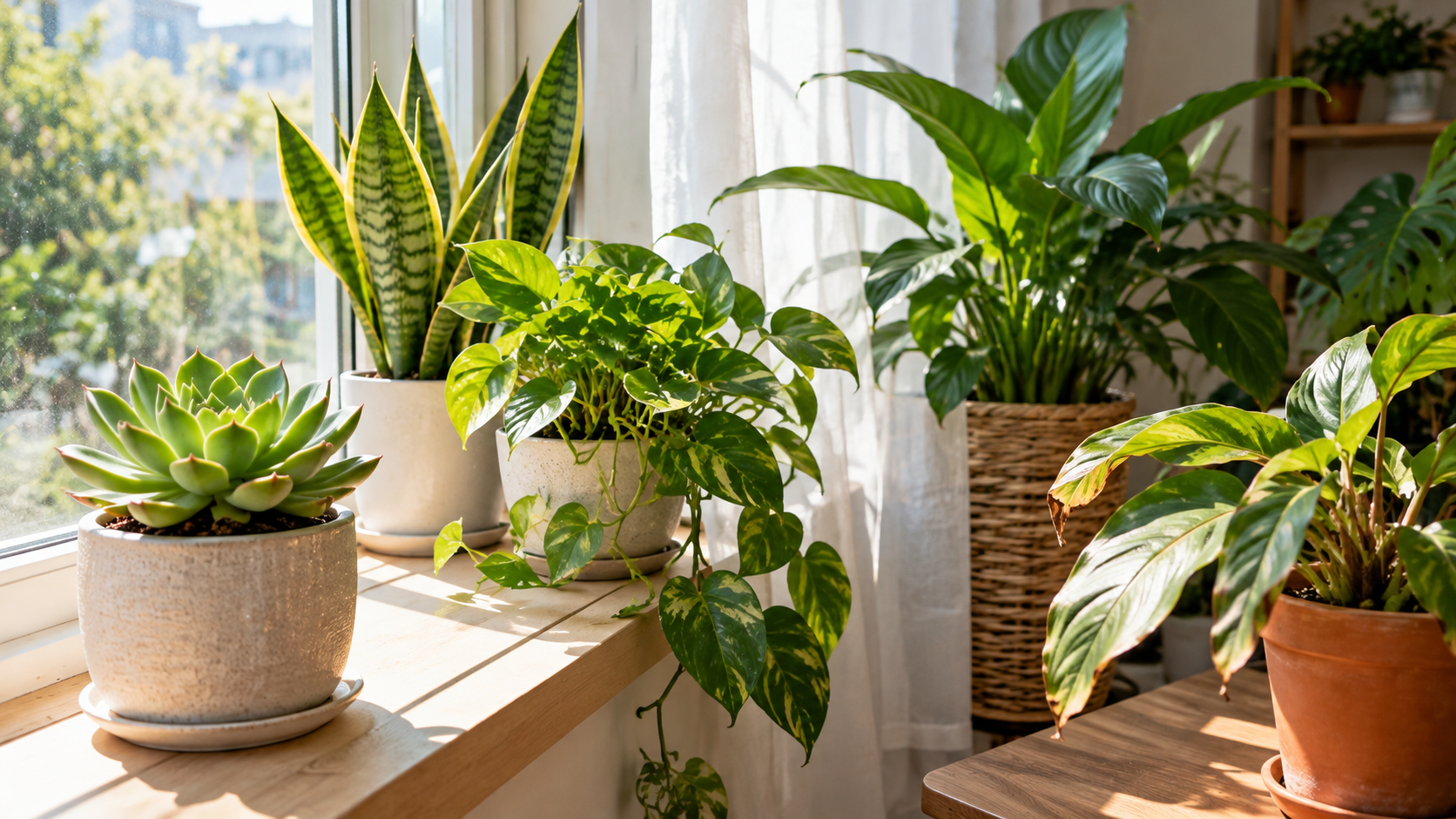
Placing houseplants near a window is one of the easiest ways to provide natural light indoors. However, a spot that looks bright and comfortable to you may expose certain plants to more direct sunlight than they can tolerate. Leaves can develop pale patches, dry brown edges, or scorched areas, especially after a plant is moved suddenly from a shaded room to a sunny windowsill.
The solution is not necessarily to move every plant away from the window. Many indoor plants grow better when they receive sufficient natural light, and some species need several hours of direct sun to thrive. The key is understanding how sunlight enters your home, how different plants respond to it, and how to recognize early signs of stress.
With a few simple observations, you can choose a suitable window, adjust the distance from the glass, and protect your plants without depriving them of the light they need.
Why Can Sunlight Near a Window Burn Plant Leaves?
Sunlight provides the energy plants use for photosynthesis, the process that allows them to produce sugars for growth. Problems arise when the intensity or duration of exposure exceeds what a particular plant can tolerate under its current conditions.
Direct sunlight can heat leaf surfaces and damage tissues that are not adapted to strong exposure. A plant accustomed to indirect light may develop sunburn after being placed in a bright, south-facing window, even if the same species can eventually tolerate more sun after gradual acclimation.
Window glass does not provide complete protection from sunlight. Depending on the type of glass, window orientation, season, and angle of the sun, substantial visible light and heat can still reach indoor foliage.
Three factors are particularly important:
- Light intensity: Direct sunlight is generally more intense than light reflected from walls or filtered through a curtain.
- Exposure duration: A short period of gentle morning sunlight differs from several hours of intense afternoon sun.
- Plant adaptation: Species that naturally grow beneath forest canopies often respond differently from succulents and other plants adapted to open, sunny habitats.
Heat from the glass, nearby radiators, and poor airflow can add to the stress. For this reason, the brightest position is not automatically the best position for every houseplant.
How to Recognize Sunburn on Indoor Plants
Sunburn can resemble other problems, including dehydration, nutrient deficiencies, and certain diseases. Examine the pattern of damage and consider recent changes in the plant’s environment before deciding what to do.
Common signs of excessive sunlight
Look for the following symptoms:
- Pale, bleached, cream-colored, or tan patches on exposed leaves.
- Dry, papery areas that become brown as the damage progresses.
- Damage concentrated on the side facing the window.
- Scorched patches that appear after a sudden move into stronger light.
- Leaves that feel unusually warm during periods of intense sun.
Sunburn often affects exposed areas rather than appearing uniformly across the entire plant. However, this is a clue, not definitive proof.
How sunburn differs from underwatering
Underwatered plants may develop dry edges, curled leaves, and wilting. The potting mix is often dry, and the plant may improve after appropriate watering if its roots remain healthy.
Sunburn is more likely when damaged patches correspond to exposed areas and the soil moisture is appropriate. Watering will not restore tissue already damaged by intense light.
If the soil is wet and leaves are yellowing or wilting, investigate root health and drainage instead of assuming the problem is sunlight.
Important: Brown or bleached areas will not usually turn green again. Recovery means preventing further damage and encouraging healthy new growth.
Which Window Is Best for Your Houseplants?
The direction a window faces influences the amount and timing of sunlight entering a room. However, window orientation should be treated as a starting point rather than a fixed rule because nearby buildings, trees, curtains, and seasonal changes also affect the light.
East-facing windows: Gentle morning sunlight
East-facing windows generally receive direct sunlight in the morning, when temperatures are often lower than in the afternoon. They can be useful for plants that benefit from some direct light but may struggle with prolonged exposure to intense afternoon sunshine.
Many tropical foliage plants can do well near an east-facing window, although sensitive species may still need a little distance or a sheer curtain.
West-facing windows: Strong afternoon light
West-facing windows often receive warmer, more intense afternoon sunlight. This can be excellent for sun-loving plants but challenging for shade-adapted species.
If leaves develop scorched patches during the afternoon, try moving the plant slightly to the side of the window or filtering the sunlight during the hottest hours.
South-facing windows: Bright conditions for sun-loving plants
In the Northern Hemisphere, south-facing windows generally provide strong light for much of the day. They can suit cacti, many succulents, and other plants that prefer high light levels.
In the Southern Hemisphere, the pattern is reversed: north-facing windows generally receive more direct sunlight over the course of the year. This distinction matters when applying gardening advice from sources based in different countries.
Even a suitable window can become too intense for a plant that has not adjusted to the exposure. Observe the foliage, especially after seasonal changes.
North-facing windows: Lower light levels
In the Northern Hemisphere, north-facing windows usually provide less direct sunlight. They may be appropriate for plants that tolerate lower light, although not every plant described as a low-light species will thrive in a dim room.
In the Southern Hemisphere, south-facing windows are generally the lower-light equivalent.
The University of Maryland Extension explains that plant placement depends on light intensity, duration, and the characteristics of the room. Its guide, Lighting for Indoor Plants, offers additional guidance for matching houseplants to available light.
How Far Should Plants Be From the Window?
There is no universal distance that prevents sunburn. A plant positioned 30 centimeters from a shaded window may receive less intense light than one placed a meter away from an unobstructed window.
Start by identifying whether the plant needs low, moderate, bright indirect, or direct light. Then consider how sunlight actually reaches its leaves throughout the day.
Use these practical adjustments:
- Direct sunlight is too intense: Move the plant to the side of the window, place it behind a sheer curtain, or increase its distance from the glass.
- The room is bright but the leaves receive no direct sun: Keep the plant where it receives sufficient ambient light, provided its species prefers indirect light.
- The plant stretches toward the window: It may need more light rather than less. Move it gradually closer to a suitable light source.
- The leaves become hot or bleached: Reduce exposure and check whether heat from the window is contributing to the damage.
Remember that light intensity decreases rapidly as distance from a window increases. Moving a plant too far into the room can solve a sunburn problem while creating a new problem caused by insufficient light.
How to Acclimate a Plant to Stronger Sunlight
A plant that has grown in a dim room for months may be vulnerable to sudden changes in exposure. Gradual acclimation gives newly developing foliage an opportunity to adjust to the new conditions.
Follow these steps when moving a plant to a brighter window:
- Begin with filtered light. Place the plant in a bright position without prolonged direct sunlight.
- Introduce mild morning sun if appropriate. Start with a short exposure, provided the species can tolerate direct sunlight.
- Increase exposure gradually. Over the following days or weeks, adjust the duration according to the plant’s response.
- Inspect the foliage regularly. Watch for pale patches, browning, curling, or unusual wilting.
- Pause if damage appears. Return to a less intense position and reassess before attempting another adjustment.
Some plants, especially shade-adapted tropical species, may not benefit from direct sun at all. Acclimation does not make every species suitable for a sunny windowsill.
If you move houseplants outdoors during warm weather, take extra care. Outdoor sunlight is often much more intense than indoor window light, even when both locations seem bright.
Common Mistakes to Avoid When Placing Plants Near Windows
Small placement mistakes can gradually affect plant health, even when the room looks ideal.
- Assuming every tropical plant prefers shade: Some tropical species need brighter conditions than others. Identify the needs of each plant instead of grouping them all together.
- Placing leaves directly against hot glass: Maintain enough distance to avoid excessive heat and temperature fluctuations. In cold weather, prevent sensitive foliage from touching chilly glass.
- Using dark curtains throughout the day: Heavy coverings may reduce light below what the plant needs. A sheer curtain can soften direct sunlight while preserving more natural brightness.
- Ignoring seasonal changes: The sun’s angle and daily exposure change throughout the year. A location that works in winter may become too intense in summer.
- Moving plants abruptly: Sudden changes in light can stress foliage. Make adjustments gradually whenever possible.
- Watering more because the plant is near a window: Sunlight and warmth can increase water use, but the correct response is to check soil moisture rather than automatically increasing watering frequency.
Frequently Asked Questions
Can plants get sunburned through window glass?
Yes. Glass does not block all sunlight or prevent leaves from overheating. Sensitive plants can develop sunburn when exposed to strong direct sunlight through an unobstructed window.
Should I put a sheer curtain between my plants and the sun?
A sheer curtain can help when direct sunlight is too intense for the species. It reduces and diffuses incoming light, making the exposure gentler. Monitor the plant afterward to ensure it still receives enough light for healthy growth.
Which houseplants are suitable for sunny windowsills?
Many cacti and succulents, jade plants, and some sun-loving flowering plants can thrive in bright windows. Their requirements differ, however, and plants accustomed to lower light should not be exposed to intense sun without assessing their tolerance.
Can a plant recover after sunburn?
A plant can often continue growing if its roots and growing points remain healthy and its environment is corrected. Damaged leaf tissue generally stays discolored, so monitor new growth rather than expecting scorched patches to disappear.
How can I tell if a window provides enough light?
Observe the plant’s growth over time. Long, weak stems, unusually small leaves, and poor flowering can indicate insufficient light, although other factors may contribute. A light meter can provide a more objective estimate when the correct light level is difficult to judge.
Create a Bright Window Garden Without Damaging Your Plants
A successful window garden begins with choosing plants that match the light your home naturally provides. Instead of placing every pot directly on the windowsill, arrange plants according to their individual needs, using curtains, distance, and gradual acclimation to manage exposure.
Check the foliage regularly, especially after seasonal changes or when moving a plant to a new position. If signs of sunburn appear, reduce the intensity of the exposure and allow the plant to adjust before making further changes.
The goal is not to avoid sunlight, but to provide the right amount of light for each plant. With thoughtful placement and consistent observation, your windows can become productive growing spaces without unnecessary leaf damage.