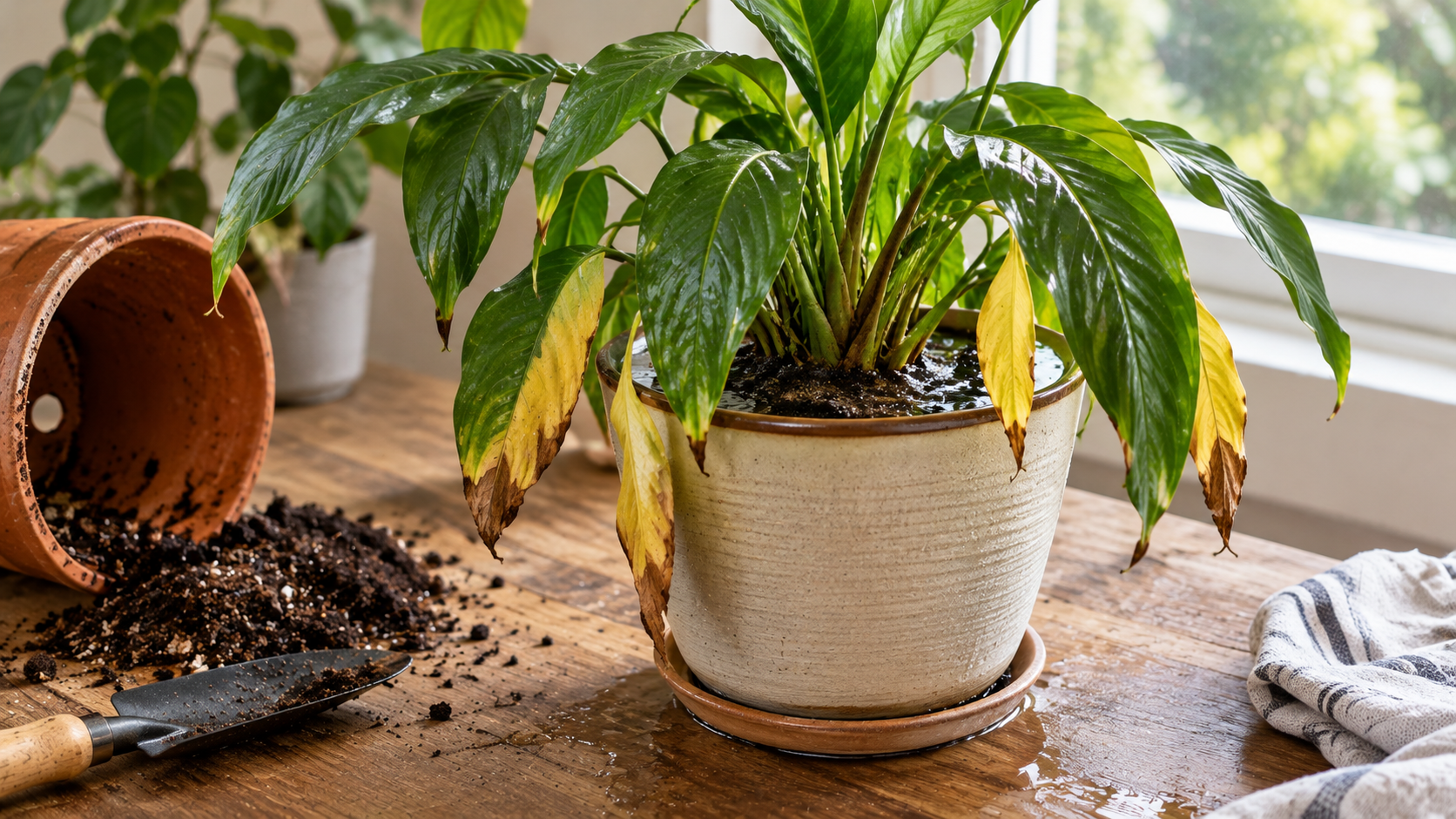
A plant that has spent several days in soggy soil may start showing yellow leaves, drooping stems, or a generally unhealthy appearance. You might assume it needs more water because it looks wilted, but adding more moisture can make the problem worse.
When soil remains saturated for too long, the roots may not receive enough oxygen to function properly. Some roots can become damaged, and prolonged wet conditions may encourage root rot. The good news is that a plant can sometimes recover if the problem is identified early and the growing conditions are corrected.
The best solution depends on the plant species, how long the soil has remained wet, the drainage of the container, and the condition of the roots. Learning how to assess these factors will help you decide whether to let the soil dry, repot the plant, or remove damaged roots.
Why Waterlogged Soil Can Harm Plant Roots
Healthy potting mix contains a balance of water and air. Roots absorb water and nutrients, but they also need oxygen for respiration, the process that helps them function and support the rest of the plant.
When soil becomes saturated, water fills many of the spaces that would normally contain air. As oxygen becomes less available, roots may lose their ability to absorb water and nutrients efficiently. If the condition persists, some roots can die and become vulnerable to decay.
This explains a confusing symptom: a plant can wilt while sitting in wet soil. The problem may not be a lack of water around the roots, but an inability of damaged roots to absorb it effectively.
Different plants tolerate moisture differently. A moisture-loving tropical plant may handle consistently damp soil better than a cactus or succulent. Temperature, light, pot size, and soil composition also influence how quickly the growing medium dries.
The goal is not to dry the plant out as quickly as possible. It is to restore the balance of moisture and oxygen that its roots need.
1. Recognize the Signs of Overwatering
Yellow leaves are common in overwatered plants, but they are not proof of excessive moisture on their own. Similar symptoms can result from insufficient light, nutrient problems, pests, natural leaf aging, or other forms of stress.
Look for several signs together before deciding what to do.
Signs that the soil is staying too wet
- The soil remains saturated or muddy for several days.
- The pot feels heavy long after watering.
- Water collects in the saucer or decorative outer container.
- The potting mix smells sour or unpleasant.
- The container has blocked drainage holes or no drainage holes at all.
These clues suggest that moisture may be accumulating around the roots. However, the appropriate drying time depends on the plant and its growing conditions.
Signs of possible root damage
- Several leaves turn yellow or collapse over a short period.
- The plant wilts even though the soil is wet.
- The stem base becomes soft, dark, or unstable.
- Roots visible near drainage holes appear mushy or deteriorated.
- The root zone develops an unpleasant smell.
Healthy roots vary in color between species, so brown roots are not automatically rotten. Texture and condition matter more than color alone. Firm roots may still be healthy, while soft, decaying roots are more concerning.
2. What to Do First When the Soil Is Waterlogged
If the soil is still saturated, start with simple steps before disturbing the roots. Repotting is not always necessary when the drainage works properly and the roots remain healthy.
- Stop watering temporarily. Do not add more water until you have checked the moisture in the root zone and considered the plant’s needs.
- Empty the saucer. Remove standing water from underneath the pot. If the plant sits inside a decorative container, take out the inner pot and allow it to drain.
- Check the drainage holes. Make sure they are open and that water can escape freely.
- Assess the growing environment. Keep the plant in a location with suitable light and temperature for its species.
- Monitor the soil. Check below the surface rather than relying only on how the top layer looks.
Avoid placing the plant in intense direct sunlight or next to a heater to force evaporation. Excessive heat can stress the leaves and roots without correcting the underlying problem.
If the pot has no drainage holes and the soil remains saturated, moving the plant to a suitable container may be necessary. Simply waiting for a poorly designed container to dry may not be enough.
3. Decide Whether the Plant Needs Repotting
The most important decision is whether the plant can recover in its current pot or needs its roots inspected.
When you can let the soil dry naturally
Waiting may be appropriate if the plant is still reasonably firm, the pot drains properly, and there are no clear signs of root rot. If the soil is gradually drying and the plant is not deteriorating rapidly, avoid disturbing the roots.
Keep the plant in suitable light and check the moisture periodically. The goal is to let the medium return to a moisture level appropriate for the species, not to leave it completely dry for an extended period.
When repotting is necessary
Consider repotting when the soil remains saturated, the mix is compacted, the container has inadequate drainage, or the plant shows signs of root decay.
A sour smell, soft roots, and a mushy stem base are stronger warning signs than yellow leaves alone. These symptoms justify inspecting the root system instead of simply waiting for the pot to dry.
4. How to Repot a Plant Damaged by Waterlogged Soil
Prepare a clean pot with drainage holes and fresh potting mix suitable for your plant before removing it from its container.
You may need:
- A clean container sized appropriately for the remaining roots.
- Fresh potting mix suited to the species.
- Clean, sharp pruning scissors or shears.
- Gloves, if appropriate for the plant.
- A clean work surface.
Follow these steps:
- Remove the plant carefully. Support the plant near its base and ease it out of the pot. Avoid pulling forcefully on the stems.
- Inspect the roots. Healthy roots are generally firm, although their natural color varies. Rotten roots are often soft, mushy, or unpleasant-smelling.
- Trim clearly rotten tissue. Use clean, sharp tools to remove decaying roots. Avoid cutting healthy roots unnecessarily.
- Remove unsuitable soil gently. Loosen compacted or saturated mix without damaging healthy roots just to make the root system completely bare.
- Select the right pot. Choose a container with drainage holes that accommodates the remaining roots without leaving an excessive amount of wet soil around them.
- Add fresh potting mix. Use a medium appropriate for the species. Many common houseplants benefit from an airy, well-draining mix, while some plants prefer more moisture retention.
- Replant at the correct depth. Keep the crown and stem base at their normal growing level.
- Follow appropriate watering guidance. Some plants benefit from watering after repotting, while succulents or plants with freshly cut roots may require a different approach. Avoid applying one rule to every species.
Do not add fertilizer immediately to force new growth. Damaged roots may be sensitive to concentrated nutrients, and fertilizer cannot repair decaying tissue.
5. Adjust Care While the Plant Recovers
After correcting the drainage problem, give the plant stable conditions instead of making several changes at once.
Provide appropriate light
Many indoor plants recover well in bright, indirect light, but the correct exposure depends on the species. Avoid placing a stressed plant in intense direct sunlight simply to help the soil dry faster.
Keep its environment reasonably stable. Frequent changes in location can introduce additional temperature and light stress.
Water according to the plant’s needs
Check the potting mix before watering again. The surface may dry while the deeper root zone remains wet, especially in a large container.
Moisture-loving tropical plants generally need a different watering approach from succulents. Allow the medium to reach the appropriate level of dryness for the species rather than following a fixed calendar.
Remember that a plant with fewer functioning roots may use less water than before. Its pot may therefore take longer to dry even after repotting.
Avoid excessive pruning
Yellow leaves will not turn green again, but removing every imperfect leaf is usually unnecessary. Healthy foliage supports photosynthesis and can help the plant rebuild its resources.
Remove fully dead leaves and tissue affected by decay. Use clean tools and avoid cutting healthy stems unless there is a clear reason.
6. How to Tell Whether the Plant Is Recovering
Recovery time varies according to the species, the extent of root damage, and the growing environment. A mildly stressed plant may improve relatively quickly, while a plant that has lost many roots may need weeks or longer to produce visible new growth.
Look for gradual improvement rather than expecting damaged leaves to become healthy again.
Positive signs include:
- Remaining leaves become more stable and stop collapsing.
- The stem base stays firm.
- The soil begins drying at a reasonable rate.
- New growth appears when conditions support active growth.
Some yellow leaves may continue to deteriorate after the original problem has been corrected. That does not automatically mean recovery has failed. Pay closer attention to whether the decline is spreading and whether the roots and stem base remain healthy.
7. Mistakes That Can Make the Problem Worse
Avoid these common responses to a waterlogged plant:
- Watering because the leaves are drooping: Wet soil and wilted foliage can indicate root damage rather than a lack of water.
- Adding gravel to the bottom of the pot: Gravel does not replace drainage holes or correct compacted soil.
- Choosing an oversized container: Excess soil can retain more moisture than the reduced root system can use.
- Applying fertilizer too soon: Extra nutrients will not restore damaged roots.
- Using intense heat to dry the pot: Hot air and direct sun may increase stress.
- Repotting repeatedly: Unnecessary disturbance can damage recovering roots.
Correct the underlying cause first, then observe the plant before making further adjustments.
Give Your Plant the Best Chance to Recover
A plant that has spent days in waterlogged soil may still recover, particularly if most of its roots remain healthy. Start by removing standing water, checking drainage, and assessing the condition of the plant.
If the soil is drying and the roots appear healthy, careful monitoring may be enough. If the mix remains saturated or the roots are decaying, repotting may be necessary.
The most useful next step is to restore suitable moisture and oxygen conditions, then allow the plant time to respond. Healthy recovery begins with correcting the cause of the problem, not adding more water or treatments.