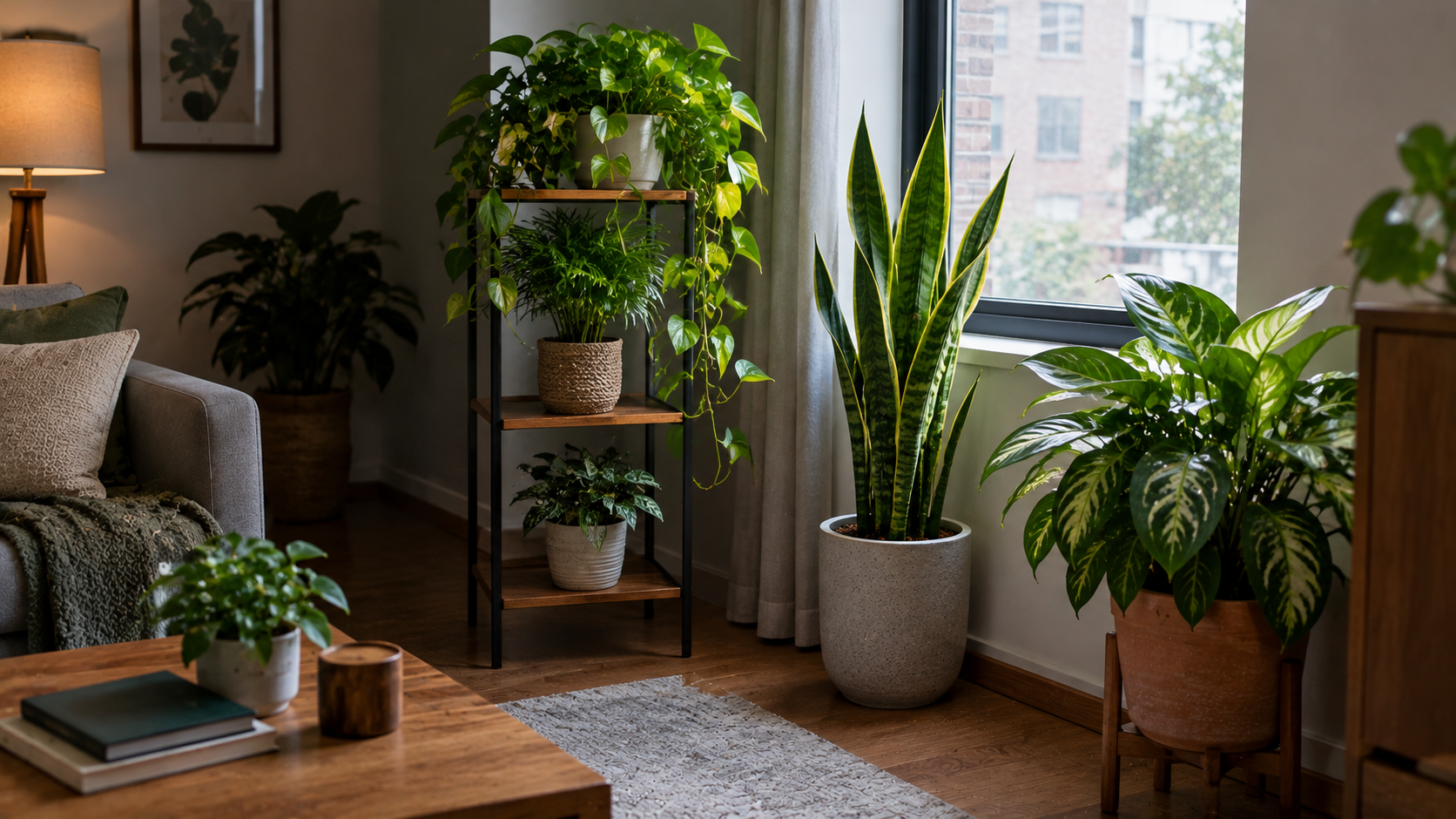
A home with small windows, shaded rooms, or buildings blocking the sunlight can still accommodate beautiful indoor plants. The challenge is deciding which plants belong near the windows, which can tolerate dimmer corners, and how to arrange pots so that every plant receives enough light to remain healthy.
The key is to organize your plants according to their light requirements rather than placing them wherever they look best. A plant that tolerates low light may survive several feet from a window, while a sun-loving succulent may gradually weaken in the same location. Furniture, curtains, window direction, and even the distance between plants and glass can make a meaningful difference.
With a few practical adjustments, you can create a greener home without overcrowding your windowsills or constantly moving pots from room to room. Here is how to evaluate your available light, select suitable plants, and arrange your collection for healthier growth.
1. Understand How Much Natural Light Your Home Receives
Before deciding where each pot should go, observe how daylight enters your home. A room that feels bright to your eyes may still provide too little light for a plant that needs strong illumination. Human vision adapts to dim environments, but plants depend on the light available for photosynthesis.
Identify your brightest areas
Start by observing your rooms at different times of day. Notice which windows receive direct sun, which provide bright indirect light, and which are shaded by nearby buildings, trees, balconies, or curtains.
Consider these general patterns:
- Near a bright window: Often suitable for plants needing medium to bright indirect light, depending on the window direction and obstructions.
- Several feet from a window: May suit certain low- or medium-light foliage plants, but light intensity declines with distance.
- A shaded corner: Best reserved for plants that tolerate low light, provided the area still receives useful daylight.
- A room with almost no daylight: Usually unsuitable for long-term plant growth without supplemental lighting.
Window direction is only a starting point. A south-facing window in one hemisphere receives a different pattern of sunlight from a south-facing window in the other, and nearby buildings can change the situation substantially. Evaluate the actual conditions rather than relying on direction alone.
Watch how the light changes
Light levels change with the season, weather, and the position of the sun. A shelf that works in summer may become too dim during winter, particularly if daylight hours are shorter or trees and buildings block the window.
Observe the room over several days before settling on a permanent arrangement. If plants consistently lean toward the glass, develop unusually long stems, or lose their normal leaf color, reassess whether their position provides enough light.
2. Choose Plants That Match Your Available Light
The easiest way to arrange plants in a dim home is to select species that can tolerate the conditions you actually have. Moving a high-light plant into a dark corner and hoping it adapts is rarely a reliable strategy.

Chinese evergreen (Aglaonema)
A useful option for rooms with relatively low light. It is grown primarily for its foliage and generally does not need a sunny windowsill. Variegated varieties may need brighter conditions to maintain their pattern.

Parlor palm (Chamaedorea elegans)
Its fine fronds work well beside furniture or in a softly lit room. Growth may be slower in low light, so avoid treating slow growth alone as a sign that the plant needs fertilizer.

Snake plant (Dracaena trifasciata)
This plant tolerates a range of indoor light conditions and suits narrow spaces. It can survive in low light, but it still needs light and should not be placed in permanent darkness.

Pothos (Epipremnum aureum)
Its trailing stems make it useful for shelves and plant stands. It tolerates lower light, although growth and leaf variegation can change when illumination is insufficient.
Other possibilities include heartleaf philodendron, peace lily, and some ZZ plant varieties. Suitability varies by cultivar and growing conditions, so check the needs of the particular plant you own.
Cacti, most succulents, many flowering plants, and several herbs generally need brighter light. If your home has very little daylight, choose them only if you can provide a brighter position or supplemental grow lighting.
3. Arrange Pots According to Their Distance From Windows
Once you know which areas receive the most light, divide your home into practical planting zones. This makes it easier to position each pot according to its needs rather than treating the whole room as equally bright.
Zone 1: The brightest window areas
Reserve the brightest positions for plants that need more light, including suitable flowering plants and many variegated foliage varieties. Check whether direct sunlight reaches the leaves, because some plants need bright indirect light rather than strong midday sun.
Place pots where they will not block the entire window or interfere with curtains. A narrow plant stand can create several levels of display while keeping the plants close to the light source.
Zone 2: A short distance from the window
This area may suit plants that tolerate low to medium light. Use a shelf or compact stand to keep the pots visible while allowing daylight to reach them.
Remember that a small increase in distance can noticeably reduce the light a plant receives. If a plant grows poorly in this zone, move it closer to the window before assuming that it needs fertilizer or more frequent watering.
Zone 3: Dimmer corners and interior shelves
Reserve these positions for plants known to tolerate lower light. A snake plant or Chinese evergreen may be a better choice here than a succulent or a plant grown for abundant flowering.
Do not fill every dark corner with greenery simply to complete the decoration. If a space receives almost no natural light, it may be better suited to a decorative arrangement of nonliving objects or a plant supported by an appropriate grow light.
4. Use Shelves and Plant Stands Without Blocking Light
Vertical arrangements help make the most of limited floor space, but they can also create unintended shade. A large plant on an upper shelf may block light from reaching smaller pots below it.
Use a few simple principles when arranging a group:
- Place taller plants toward the sides or back where they are less likely to shade smaller plants.
- Keep light-demanding plants closest to the window rather than automatically putting them on the highest shelf.
- Leave gaps between pots so leaves do not overlap excessively and each plant remains easy to inspect.
- Use narrow shelves near windows to avoid blocking a large portion of the available light.
- Keep trailing plants where their stems can hang freely without covering neighboring foliage.
A tiered stand can work well when the plants have similar light requirements. If one plant needs substantially brighter conditions than the others, give it a separate position instead of forcing every pot into one display.
Consider access as well. You should be able to lift each pot, inspect the soil, remove dead leaves, and water without spilling onto furniture or neighboring plants.
5. Adjust Watering to Low-Light Conditions
One of the most common mistakes in dim homes is continuing to water plants at the same frequency they needed in a brighter location.
Lower light often means slower growth and lower water use. As a result, potting mix may take longer to dry. If you water according to a fixed weekly schedule, the roots may remain wet for too long.
Before watering, check the soil moisture at a depth appropriate for the plant. The surface can look dry while the deeper mix is still damp. For succulents, allow the medium to dry thoroughly between waterings; moisture-loving plants generally require a different approach.
Container size also matters. A small plant in a large pot may not use the water held in all that soil quickly, especially in a dim room. Always use containers with drainage holes and avoid leaving pots standing in water.
Do not compensate for low light by adding more fertilizer or water. First confirm that the plant is receiving suitable light and that the roots are healthy.
6. Recognize When a Plant Needs a Better Position
Plants often show gradual signs when their environment does not provide enough light. These symptoms can overlap with other problems, so look at the overall pattern before moving the pot.
Long, weak stems
If new stems become unusually stretched, with large gaps between leaves, the plant may be reaching toward a light source. Move it to a brighter location gradually, especially if it has been in dim conditions for a long time.
Pale leaves or loss of variegation
Insufficient light can cause some plants to produce paler foliage or lose distinctive leaf patterns. However, yellowing may also result from overwatering, nutrient issues, or natural aging. Check the soil and the condition of the roots before deciding that light is the only cause.
Slow growth or fewer flowers
Slow growth is expected for many plants in low light. Flowering species may produce few or no blooms when illumination is insufficient, even if their foliage remains healthy.
If a plant looks stable but grows slowly, it may simply be tolerating the location rather than thriving in it. Decide whether healthy foliage is enough for your goal or whether the plant needs a brighter position.
7. When Artificial Grow Lights Make Sense
If you want to grow plants in an interior room with very limited daylight, supplemental lighting can provide the energy they need. A suitable grow light may be more effective than repeatedly moving pots between rooms.
Choose a light designed for growing plants, and follow the manufacturer’s guidance for distance and operating time. The required intensity depends on the plant species and whether you are supporting foliage growth, flowering, or propagation.
For many foliage houseplants, a consistent daily lighting period can help compensate for low natural light. A timer makes it easier to maintain a routine. Plants also need a dark period, so leaving grow lights on continuously is not a good solution.
Start by lighting the plants that need it most rather than illuminating the entire room. Check their response over time and adjust the distance or duration according to the product instructions and the plants’ needs.
8. A Simple Weekly Routine for a Low-Light Home
A consistent routine helps you identify problems before they become severe.
- Check the leaves. Look for stretching, unusual discoloration, or leaf drop.
- Inspect the soil before watering. Do not rely solely on the calendar.
- Check the light arrangement. Make sure taller plants have not shaded smaller ones.
- Rotate pots when useful. Turning a plant occasionally can help distribute the light it receives, but rotation cannot make an excessively dark location brighter.
- Reassess with the seasons. Move plants or adjust grow lights if daylight conditions change substantially.
Keep notes if you have many plants. Recording where each one sits and how quickly its soil dries can help you distinguish a light problem from a watering issue.
Create a Greener Home by Matching Each Plant to Its Place
A home with limited natural light can still support a healthy indoor garden when the arrangement reflects the needs of the plants. Start by identifying the brightest spots, choose species suited to the available conditions, and reserve darker areas for plants that tolerate lower illumination.
Use shelves and stands to save space without blocking daylight, and remember that plants in dim rooms may need less frequent watering. If a location provides almost no useful light, supplemental grow lighting or a different decorative choice may be the most practical solution.
The best arrangement is not the one with the most pots in every corner. It is the one that gives each plant a realistic chance to grow well in the space available.