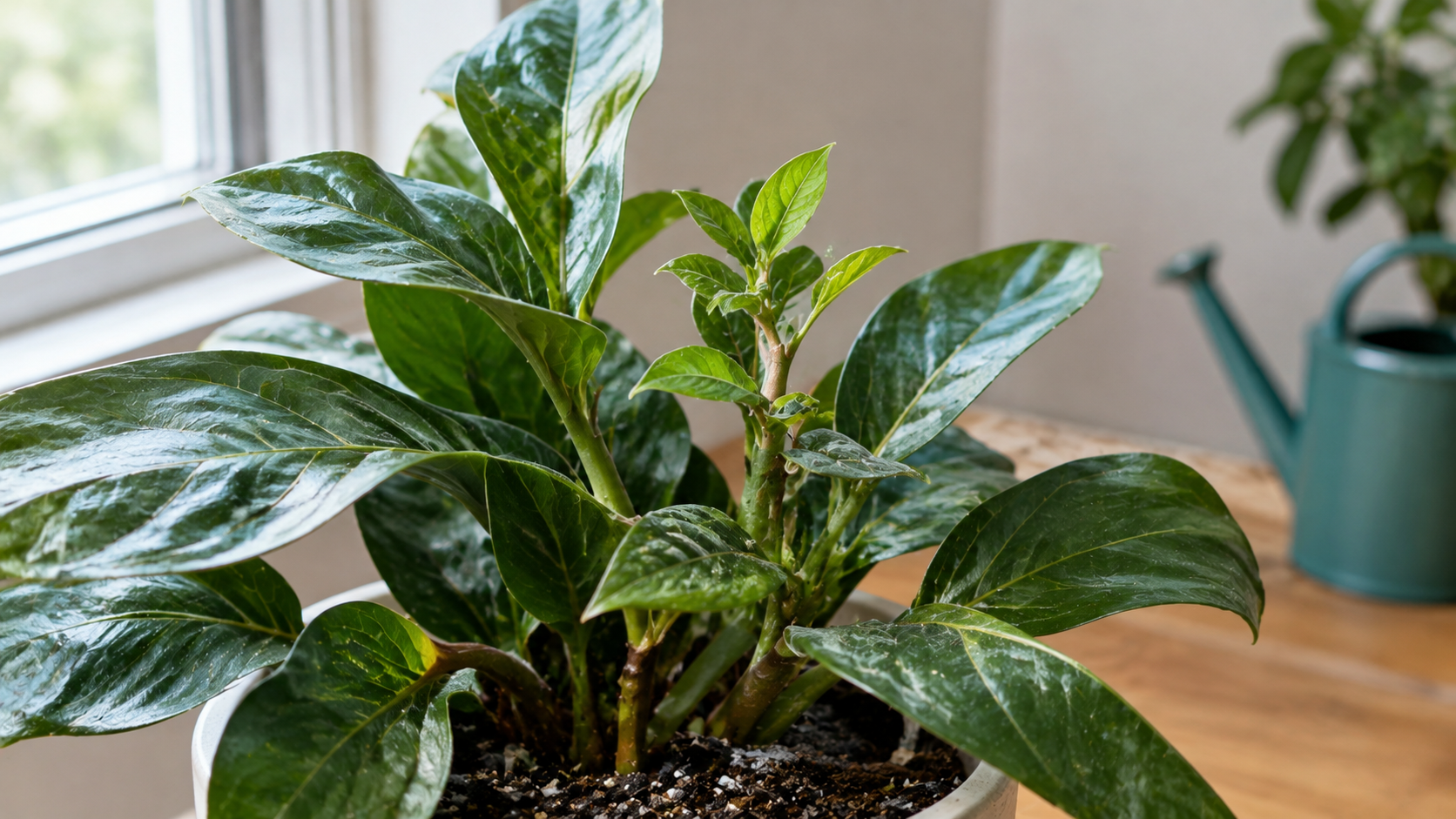
When a houseplant produces new leaves that are noticeably smaller than its older foliage, it can be a sign that something in its growing environment has changed. The plant may be receiving less light, struggling with damaged roots, lacking available nutrients, or adjusting to a new location. In some cases, however, small leaves are simply part of normal growth.
The key is to look beyond the size of a single leaf. Repeatedly smaller new leaves, especially when accompanied by slow growth, pale foliage, or weak stems, deserve closer attention. By examining the plant’s light exposure, watering routine, roots, and overall condition, you can narrow down the likely cause before changing its care.
This guide explains why new leaves may remain small, how to distinguish between common causes, and what you can do to help your plant produce healthier growth.
1. Is It Normal for New Leaves to Be Small?
Not every small leaf indicates a problem. Many plants produce leaves that emerge folded, tightly curled, or partially developed before gradually expanding to their mature size.
This is particularly noticeable in plants such as pothos, philodendrons, monstera, and other tropical foliage plants. Their newest leaves may initially appear pale and delicate, becoming larger and darker as they mature.
Before changing your care routine, consider three questions:
- Has the leaf finished unfolding and expanding?
- Are several consecutive new leaves smaller than previous mature leaves?
- Is the plant also showing other signs of stress, such as yellowing, weak stems, or reduced growth?
If a newly emerged leaf is still expanding, give it time. If several fully developed leaves remain unusually small, investigate the growing conditions.
Also consider the plant’s natural characteristics. A young cutting may produce smaller leaves than a mature plant, and some compact varieties naturally maintain smaller foliage. Comparing your plant with its own previous growth is usually more useful than comparing it with a different plant of the same broad type.
2. Insufficient Light: One of the Most Common Causes
Light provides the energy plants use for photosynthesis. When a plant receives less light than it needs, it may reduce its growth, produce smaller leaves, or develop elongated stems as it responds to its environment.
Indoor plants are particularly vulnerable when moved farther from a window, placed behind heavy curtains, or kept in a room that receives little daylight.
How to recognize insufficient light
Look for a combination of symptoms rather than relying on leaf size alone:
- New leaves are consistently smaller than older leaves.
- Growth becomes slower or less frequent.
- Stems stretch toward a window.
- The spaces between leaves become longer.
- Variegated foliage may lose some of its contrasting patterns.
These symptoms vary by species. A plant adapted to shade will respond differently from one that naturally requires bright light.
How to improve light conditions
Move the plant gradually to a brighter position with suitable indirect light. An east-facing window may provide gentle morning sunshine, while a bright location near a south- or west-facing window may require filtering to prevent excessive direct exposure. The best position depends on your hemisphere, window orientation, and local conditions.
If natural light is limited, consider a plant grow light. Follow the manufacturer’s recommendations for distance and daily operating time.
Do not immediately place a shade-adapted plant in intense direct sunlight. Sudden exposure can scorch leaves, creating a second problem while you are trying to correct the first.
3. Watering Problems and Damaged Roots
Watering affects more than the moisture available to the leaves. It also determines whether roots receive enough oxygen to function properly.
Both underwatering and overwatering can restrict growth. A plant with insufficient water may not maintain the hydration needed for leaf expansion. Conversely, roots sitting in saturated soil can deteriorate and become less effective at absorbing water and nutrients.
Signs of underwatering
Possible clues include:
- Soil that dries out rapidly or pulls away from the pot.
- Drooping foliage or leaves that curl.
- Dry, crispy edges.
- Slow development of new leaves.
Check the moisture throughout the root zone rather than judging the surface alone. If the mix is dry, water thoroughly until excess water drains through the pot’s holes.
Signs of overwatering
Excess moisture may be more likely when you notice:
- Soil that remains wet for many days.
- Yellowing leaves combined with sluggish growth.
- Soft stems or a persistent musty smell.
- Dark, mushy roots when the root system is inspected.
If these symptoms appear, check the drainage and condition of the roots. Remove rotten tissue with clean tools if necessary and repot healthy portions in fresh, well-draining potting mix.
Do not assume that a wilted plant always needs more water. Damaged roots can prevent water uptake even when the soil is wet. Check the growing medium before deciding what to do.
4. Is the Plant Root-Bound?
A plant may produce smaller leaves when its roots have occupied most of the available space in the pot. As the root system becomes crowded, the plant may have less room to develop new roots and may dry out more quickly between waterings.
However, being root-bound does not automatically mean a plant needs repotting. Some species tolerate crowded roots, and other growth limitations may be responsible for the small foliage.
How to identify a root-bound plant
Look for several clues:
- Roots emerging from the drainage holes.
- A root ball densely packed with circling roots.
- Potting mix that dries much faster than before.
- Water running rapidly through the pot without evenly moistening the root ball.
- Slower growth despite appropriate light and watering.
If these signs occur together, gently slide the plant out of its container to inspect the roots. Healthy roots should generally be firm, although their color varies by species.
When repotting is necessary, choose a container only one size larger, with drainage holes, and use a suitable potting mix. An excessively large pot can retain more water than the root system can use, increasing the risk of root problems.
5. Nutrient Deficiencies and Excess Fertilizer
Plants need essential nutrients to produce leaves, stems, and roots. If a plant has been growing in the same potting mix for a long time without appropriate feeding, nutrient availability may become limiting.
However, small leaves alone cannot confirm a nutrient deficiency. Poor light, unhealthy roots, and unsuitable watering can produce similar symptoms.
When should you consider fertilizing?
Nutrient limitations are more plausible when the plant is actively growing but has consistently weak development, especially if it has remained in the same depleted potting medium for an extended period.
During active growth, use a balanced fertilizer suitable for the plant and follow the label directions. Do not increase the concentration in an attempt to force larger leaves.
Too much fertilizer can damage roots and cause salt accumulation in the growing medium. This may lead to brown leaf tips, poor growth, and additional stress.
If the plant was recently repotted into fresh potting mix, check whether that mix already contains fertilizer before adding more. Newly purchased or recently repotted plants may also need time to adjust before feeding.
6. Low Humidity and Environmental Stress
Some tropical plants develop smaller or distorted leaves when conditions change during leaf formation. Low humidity, fluctuating temperatures, cold drafts, and irregular watering can interfere with normal leaf expansion in sensitive species.
Humidity is not equally important for every houseplant. Many common indoor plants adapt to ordinary household conditions, while certain tropical species benefit from higher relative humidity.
What should you check?
Consider whether the plant is positioned near an air conditioner, heater, frequently opened window, or another source of temperature fluctuations.
If the newest leaves are crinkled, stuck together, or have irregular edges, examine the watering routine and temperature changes as well as humidity. Small leaves without these symptoms are not enough to identify dry air as the cause.
For humidity-sensitive plants, a room humidifier can provide more consistent moisture in the air. Avoid keeping the roots continuously wet or relying on frequent misting as a substitute for appropriate environmental conditions.
7. Pests That Can Restrict New Leaf Growth
Sap-feeding insects and mites can damage developing leaves, leaving them smaller, distorted, discolored, or unable to unfold normally.
Common indoor plant pests include thrips, spider mites, aphids, and mealybugs. Some are difficult to spot without examining the undersides of leaves and the growing tips.
How to inspect your plant
- Examine the newest leaves, stems, and leaf joints.
- Look for tiny insects, fine webbing, sticky residue, silvery marks, or unusual stippling.
- Check nearby plants for similar symptoms.
- Isolate the affected plant if you suspect an infestation.
If pests are present, identify them before choosing a treatment. Removing visible insects and washing suitable foliage may help with some infestations. If a plant protection product is needed, select one labeled for the identified pest and plant, and follow all label precautions and local requirements.
Do not apply pesticides simply because new leaves are small. Treating an unconfirmed pest problem will not correct insufficient light, poor drainage, or other underlying causes.
8. A Practical Checklist for Diagnosing Small New Leaves
Rather than changing several aspects of care at once, use the following sequence to narrow down the likely cause.
- Wait for the leaf to mature. Confirm that it has finished unfolding before comparing its size with older leaves.
- Review the light. Check whether the plant has recently been moved or receives less daylight than before.
- Check the soil. Determine whether it is excessively dry, persistently wet, or drying much faster than usual.
- Inspect the roots if needed. If poor drainage, persistent wilting, or root crowding is suspected, examine the root system carefully.
- Look for pests. Inspect developing leaves and growing points for insects and feeding damage.
- Review feeding and environmental changes. Consider recent fertilization, repotting, temperature fluctuations, and the season.
Once you identify a likely cause, make a targeted adjustment. For example, move a plant to brighter indirect light if illumination is inadequate, but do not simultaneously repot it, increase fertilizer, and change its watering schedule unless there is a clear reason to do so.
Record the date of the change and observe subsequent growth. Existing leaves may not become larger, but new leaves can provide a useful indication of whether conditions have improved.
Frequently Asked Questions
Will small leaves become larger later?
Sometimes. Leaves that have not finished expanding may continue growing. Once a leaf has matured, however, it generally will not grow substantially larger simply because you improve the plant’s care.
Does fertilizer make new leaves bigger?
Only when nutrient availability is genuinely limiting growth. Fertilizer cannot compensate for insufficient light or damaged roots, and excessive feeding may worsen the problem.
Should I repot a plant whenever new leaves are small?
No. Repot only when there is evidence that the current container or growing medium is contributing to the problem. Unnecessary repotting can add stress.
Help Your Plant Produce Healthier New Growth
Small new leaves are a useful signal, but they are not a diagnosis on their own. Light, root health, watering, nutrients, pests, and environmental changes can all influence leaf development.
Begin with the simplest checks: compare several mature leaves, assess the light, and examine soil moisture. Investigate the roots or pests when other symptoms point in that direction.
Make one well-supported change at a time and monitor the next few leaves. This approach helps you identify what is limiting growth without exposing the plant to unnecessary watering, fertilizer, or repotting.